
On 09 August, the Ukrainian government reported that its security forces used a first-person-view (FPV) drone to target, attack, and destroy a flying Russian Mi-28 attack helicopter. This is the second reported use of a FPV drone against a helicopter, with the first purportedly being used on a Russian Mi-8 transport or utility helicopter.
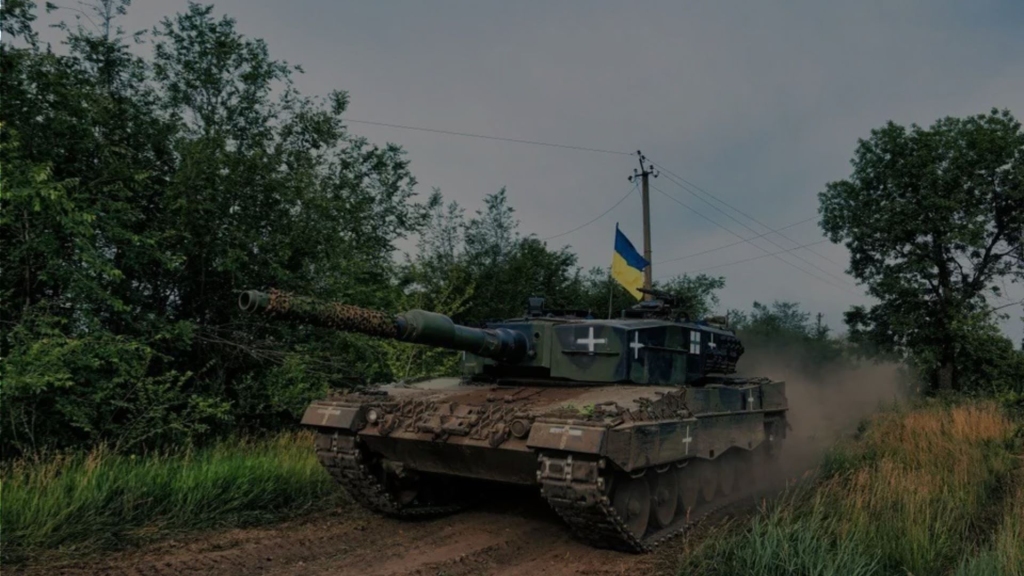
Throughout the course of the Russia-Ukraine War, headlines have repeatedly painted the narrative that specific weapon types – especially loitering munitions and guided artillery – are displacing more traditional armaments, such as main battle tanks (MBT), infantry fighting vehicles (IFV), and attack helicopters.
However, the reality of the situation is more nuanced. Analysts, for example, have pegged the majority of Russia’s armour losses to inadequate preparation, planning, and execution more so than solely a shift in technology. For example, in the earlier stages of the war, Russian armoured units were told to advance in the absence of sufficient artillery, electronic warfare (EW), and air defence coverage. Thus, these Russian columns were left exposed, giving Ukraine an advantage.
The counterpoint to this argument would be that the new technology enabled Ukraine to quickly exploit the gaps in Russia’s strategy, perhaps more quickly than had it solely relied on traditional weapon systems or methods. Thus, there is no doubt that loitering munitions, guided surface-to-surface missiles (SSM), advanced surface-to-air missiles (SAM), and drones have cemented their respective positions in military arsenals.
The real question is whether these systems have displaced the importance of traditional weapons, such as MBTs, among others.
Stay up to date with the latest Pakistani defence news with reliable research and accurate forecasting
Click Here
The lesson for other countries could be to invest in attack helicopters with reinforced armour protection, integrated electronic countermeasures (ECM) suites, and compatibility with long-range/stand-off range air-to-surface munitions, including miniature air-launched cruise missiles (ALCM).
On the other hand, countries could also go another direction and, instead, focus on rotary unmanned combat aerial vehicles (UCAV) to supplant crewed attack helicopters. In this sense, armies could still leverage close air support (CAS) from a flexible rotary platform, but it would be controlled remotely (or autonomously), less costly, and, overall, more expendable. Or, countries could opt to build a fleet that mixes crewed and drone rotary/helicopter designs in a manned-unmanned teaming combination.
That said, the advent of drones, loitering munitions, and guided SSMs have had an impact. While Russia did not execute optimally, Ukraine was also under-equipped in the early days of the war. Yet, it was easier for Ukraine to deploy drones and loitering munitions, enabling Kyiv to exploit key weaknesses in Russia’s doctrine much earlier and, potentially, buy the necessary time to modernize and expand its own military.
Moreover, Ukraine did not plan to build a doctrine around these weapons, so its best practices emerged due to the war itself. Today, major military powers – including Pakistan – are now actively stockpiling such weapons. Thus, it is possible that these weapons could have a more significant impact when deployed in ways that leverage large and immediately available stockpiles and established doctrines.
Don't Stop Here. Unlock the Rest of this Analysis Immediately
To read the rest of this deep dive -- including the honest assessments and comparative analyses that Quwa Plus members rely on -- you need access.