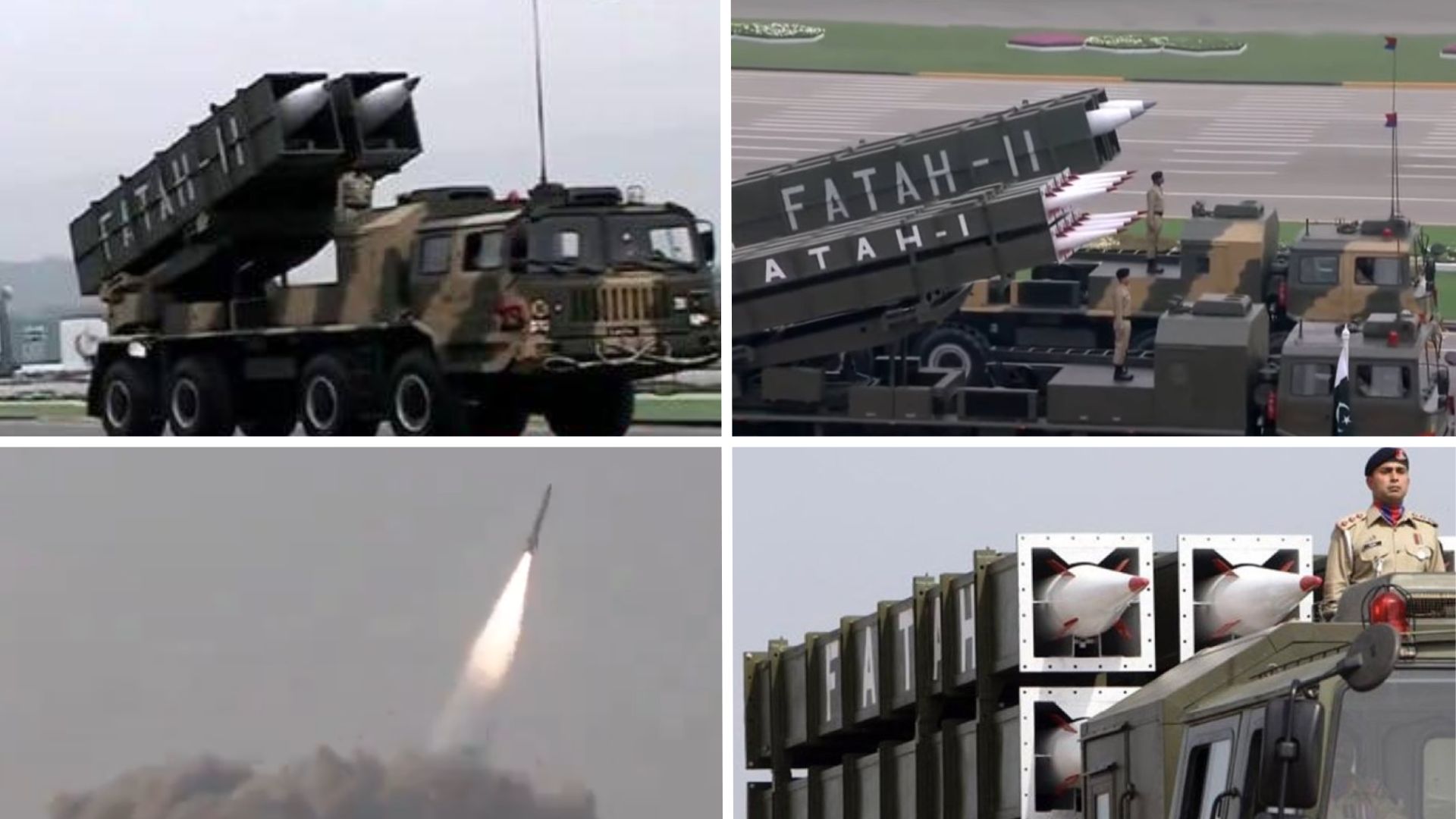
In February 2021, Pakistan conducted training launches of its Ghaznavi short-range ballistic missile (SRBM) and Babur 1A ground-launched cruise missile (GLCM).[1][2] The Army Strategic Forces Command (ASFC) had conducted the training launches to assess various operational and technical parameters for each missile.
The Hatf-III Ghaznavi SRBM offers a stated range of 290 km, while the Hatf-VII Babur 1A GLCM can reach a stated range of 450 km. According to Inter Services Public Relations (ISPR), the press arm of the Pakistani armed forces, the Ghaznavi and Babur 1A are capable of carrying nuclear and conventional warheads.
Though capable of conventional strikes, the primary mission (at least at the time of initial deployment) of Pakistan’s ballistic missiles and cruise missiles is nuclear deployment. The cruise missiles – i.e., the Babur-series as well as the Ra’ad-series – are particularly important because they can carry Pakistan’s miniature nuclear warheads (a key component of its ‘tactical nuclear weapon’ doctrine).
Limiting ballistic missiles and cruise missiles to strategic attacks also makes economic sense. These missiles are among Pakistan’s most expensive munitions. Moreover, Pakistan’s industrial limitations may constrain its ability to manufacture these missiles at a high-enough rate to support wide-scale conventional attack strategy. The Pakistan Air Force (PAF) will likely carry the bulk of such strikes through Mk80-series Range Extension Kit (REK)-equipped JF-17s and Mirage III/5 fighters.
However, Pakistan might be working towards improving its surface-based conventional attack capabilities, especially in the maritime environment. In 2018, Pakistan started test firing the Harbah-series of anti-ship cruising missile (ASCM), and in 2020, the Pakistan Navy (PN) announced that it was developing a new anti-ship ballistic missile (ASBM), the P282. Pakistan is also working on a supersonic-cruising ASCM.
Quwa Plus
Go Beyond the Headlines on Pakistan’s Defence and Security.
Quwa Plus gives you deeper reporting, briefings, and analysis on Pakistan’s defence programs, foreign policy, national security, and regional strategy. Follow the developments that matter to professionals, analysts, and serious readers tracking Pakistan’s security landscape.
Join ($29.99/Year) Already a subscriber?Sign in