
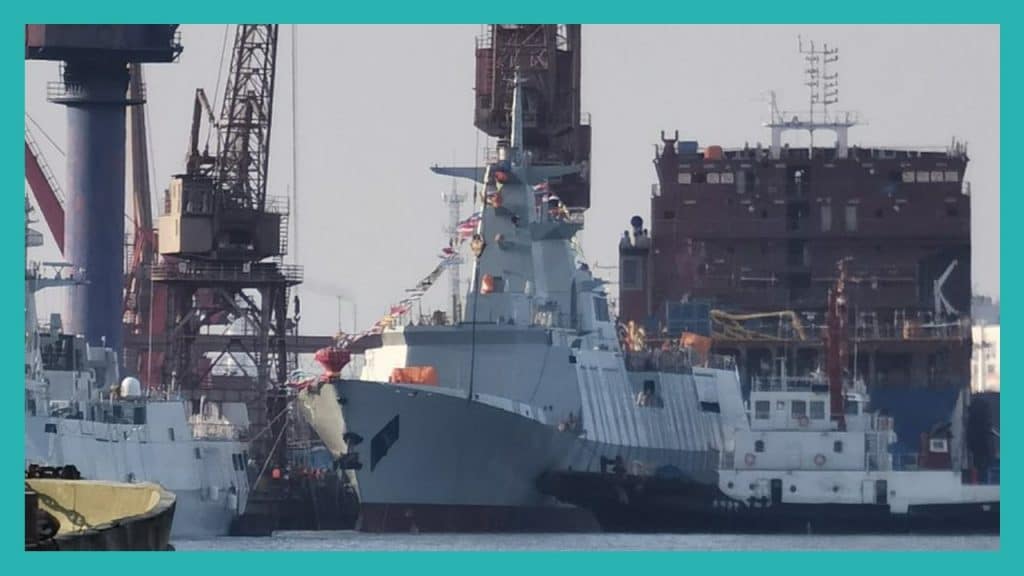
The last week of January 2021 saw the progress of two key Pakistan Navy (PN) programs, i.e., the MILGEM corvette project, and the Type 054A/P multi-mission frigate.
On 24 January 2021, ASFAT A.Ş. (Military Factory and Shipyard Corporation) cut the steel for the PN’s third MILGEM corvette.[1] This is the second ship under construction in Turkey, with the first entering production in September 2019 at Istanbul Shipyard. Pakistan’s Karachi Shipyard and Engineering Works (KSEW) began work on its first of two MILGEM corvettes in June 2020. The PN will receive its first two MILGEM corvettes by 2023, and its last two ships by 2024 to 2025.[2] The PN will also own the design rights of the ships.[3]
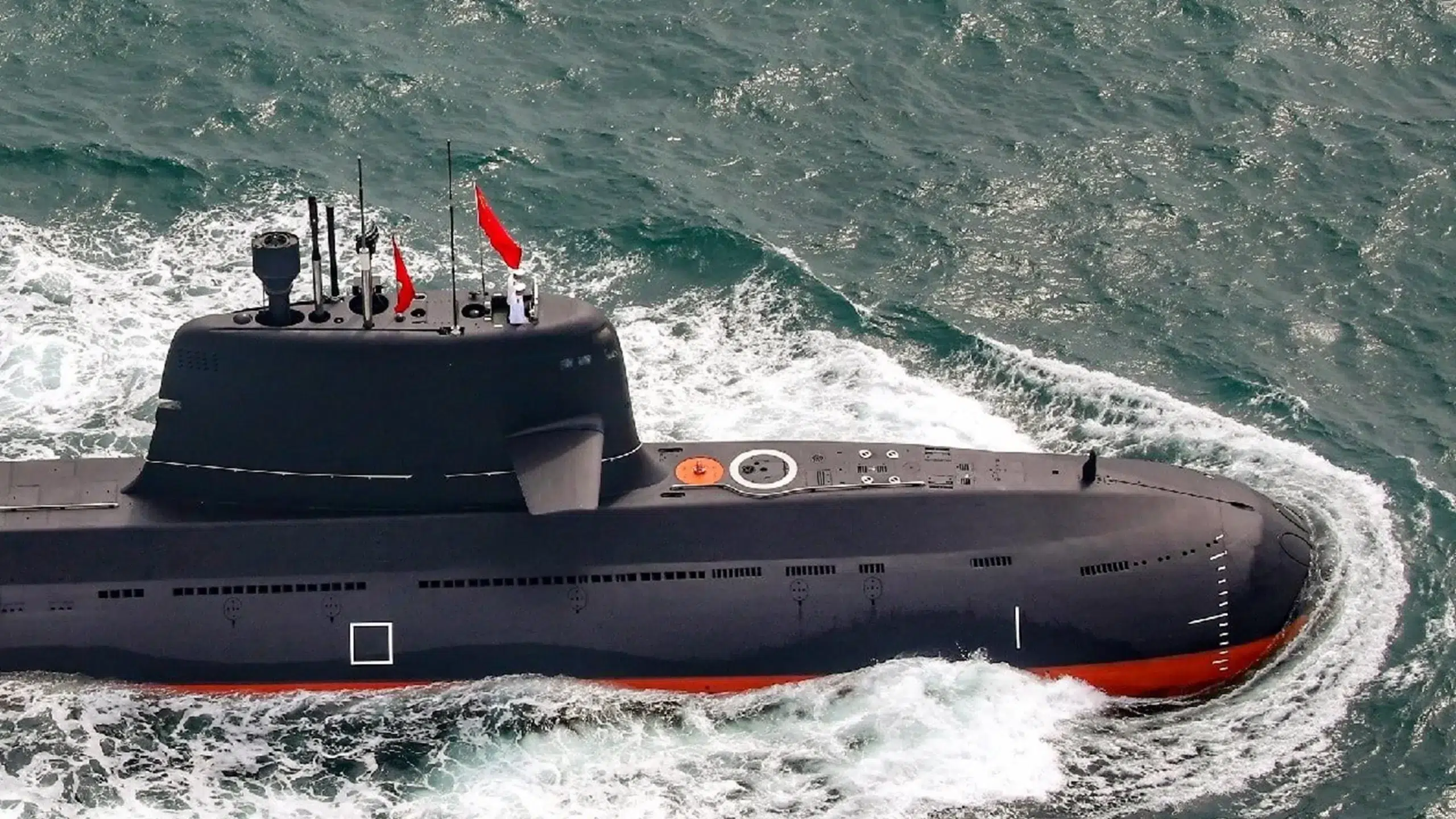
On 30 January 2021, China Shipbuilding Trading Co., Ltd. (CSTC) launched Pakistan’s second Type 054A/P multi-mission frigate at Hudong Zhonghua.[4] CSTC launched the first Type 054A/P in August 2020. The PN currently has four Type 054A/Ps on order through contracts it signed in 2017 and 2018. According to the Navy’s Director General of Public Relations (DGPR), CSTC will deliver the ships “as per planned schedule.”
The PN is aiming to build a 50-ship fleet that would comprise of 20 “major surface vessels” plus fast attack crafts (FAC) and other surface assets. The Type 054A/P and MILGEM are critical elements of the PN’s plans to both modernize and expand its fleet of ‘major surface vessels,’ which seem to refer to 2,500+ ton ships with anti-ship warfare (AShW), anti-submarine warfare (ASW), and anti-air warfare (AAW) capabilities.
To achieve its goals, the PN is relying on both off-the-shelf acquisitions (e.g., Type 054A/P from China) and original design and development work. It is looking to achieve the latter through the MILGEM. In addition to delivering a customized version of the Ada corvette, ASFAT A.Ş. is also assisting the PN in designing its own frigate. [5] The PN is referring to this follow-on effort as the Jinnah-class frigate program.
Quwa Plus
Go Beyond the Headlines on Pakistan’s Defence and Security.
Quwa Plus gives you deeper reporting, briefings, and analysis on Pakistan’s defence programs, foreign policy, national security, and regional strategy. Follow the developments that matter to professionals, analysts, and serious readers tracking Pakistan’s security landscape.
Join ($29.99/Year) Already a subscriber?Sign in