Pakistan Army News

Heavy Industries Taxila to Develop Active Protection System (APS) for Tanks Plus

HIT's ARDIC released a tender calling for lab testing and other equipment for a project to develop an APS for MBTs.


Linkedin


Twitter

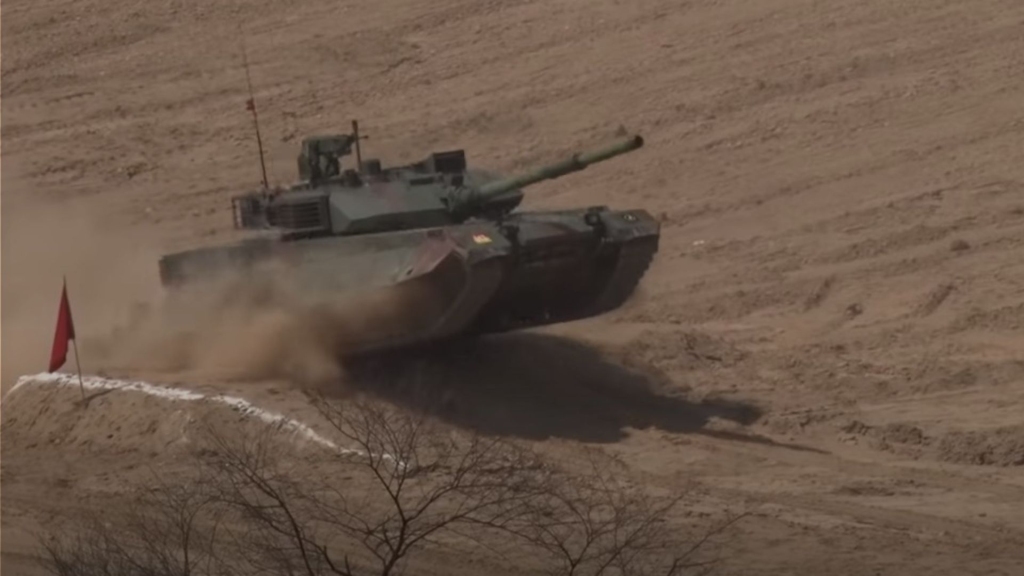
On 14 October 2024, Pakistan’s Heavy Industries Taxila’s (HIT) Advanced Research Development and Information Center (ARDIC) released a tender calling for lab testing and other equipment for a project to develop an active protection system (APS) for main battle tanks (MBT).

An APS is a defensive suite that helps armoured vehicles, such as MBTs, detect and neutralize incoming threats, such as anti-tank guided missiles (ATGM) and loitering munitions.

APS suites involve two main subsystems: a sensor to detect incoming objects and a solution to deprecate or destroy the threat. The latter element can involve either ‘soft-kill’ or ‘hard-kill’ measures.

HIT is increasingly becoming adept at sourcing its own subsystems. Its work in this area started with the al-Khalid program via HIT’s solid state auto-loader (SSAL) and battle management system (BMS), among other inputs. With the Haider MBT, HIT’s inputs have grown to include the FCS, GCS, and, potentially, an APS as well as optronics, such as thermal imaging, for example.

While designing original platforms may still be a long-term goal, HIT could see more near-term business by offering original subsystems, especially vital inputs like an APS and FCS. HIT can market subsystems for use on platforms from different places, be it the West, China, Turkey, or Russia. It could also partner or collaborate with smaller platform makers by inserting its subsystems as the default, thus opening up more market opportunities.

By pursuing its own APS program, it is clear that HIT is looking to delve deeper into subsystem work. So, as this subsystem portfolio grows, it would be interesting to see if HIT spins these products into their own subsidiary or business unit. In fact, some of HIT’s solutions are a result of partnerships with other industry players in Pakistan, such as TeReSol, which co-developed an automatic target tracker for the al-Khalid-I in collaboration with HIT. Thus, a standalone brand for subsystems could make it easier for potential buyers to see that they can acquire those solutions without needing to invest in the al-Khalid or Haider.

However, HIT’s long-term aspirations still likely involve the development of original solutions. While the al-Khalid 2 MBT program did not materialize, it is still designing its own platforms. For example, HIT has been working on a homegrown 155 mm artillery gun since at least 2021.

While it is unclear if this gun is meant for the PA or an overseas buyer, HIT could eventually upgrade the system into a self-propelled howitzer (SPH) via a 6×6 or 8×8 truck platform. Using its own FCS, APS, and other subsystems, HIT could have a complete package. Moreover, it can connect its own SPH with other Pakistani products, such as Global Industrial and Defence Solutions’ (GIDS) Tipu guided artillery shell or Artillery Forward Observer Simulator (AFOS), among others. This can further connect into a wider system of training and custom integration work, giving Pakistan a clearer sense of its unique value in the market.

Quwa Plus

Don't Stop Here. Unlock the Rest of this Analysis Immediately

To read the rest of this deep dive -- including the honest assessments and comparative analyses that Quwa Plus members rely on -- you need access.

Join Today

USD $29.99/Year