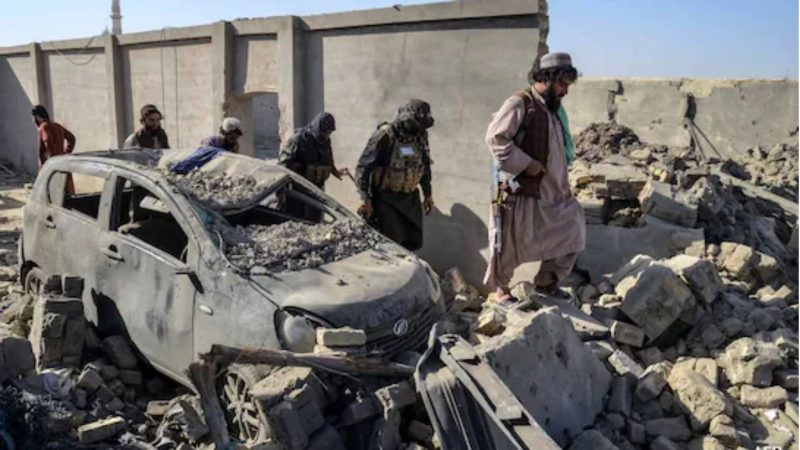

The Strategic Mutual Defence Agreement (SMDA) between Pakistan and Saudi Arabia – signed six months ago on the principle that aggression against either country would be treated as aggression against both – is now being tested by the Iran war.
Pakistani Foreign Minister Ishaq Dar has publicly invoked the pact in conversations with Tehran. Field Marshal Asim Munir has made an emergency visit to Riyadh. Saudi analysts are openly discussing a Pakistani nuclear umbrella. The question is what the SMDA actually requires Pakistan to do, and whether Islamabad’s response will determine how seriously the Gulf takes its commitments for a generation.
The Pact and Its Origins
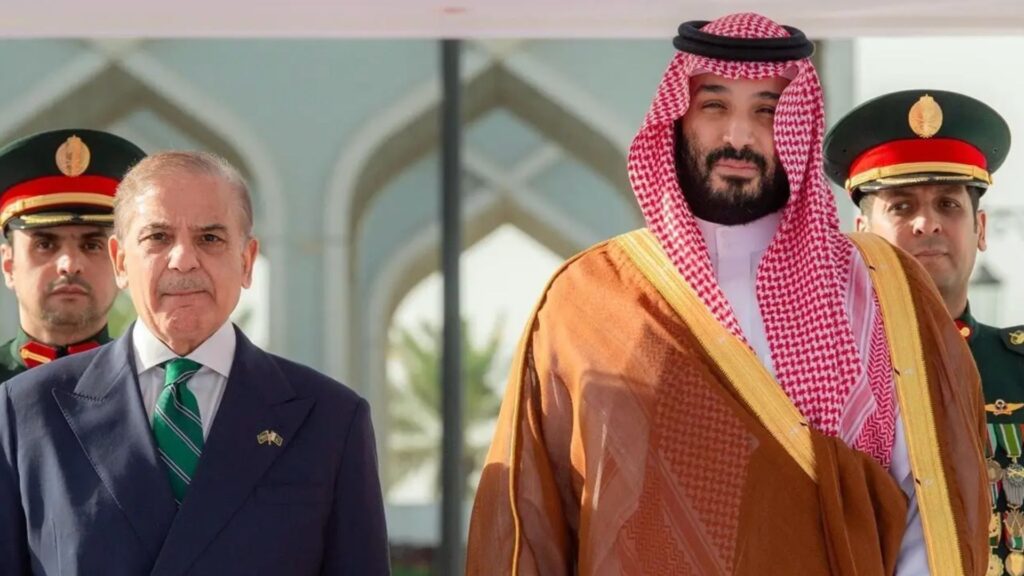
The SMDA was signed on 17 September 2025 at Al Yamamah Palace in Riyadh by Crown Prince Mohammed bin Salman and Prime Minister Shehbaz Sharif. Its core clause states that any aggression against either country shall be considered an aggression against both – wording modelled on collective defence principles comparable to NATO’s Article 5, though analysts have cautioned against interpreting it as an automatic trigger for military intervention.
The agreement was motivated in part by Israel’s 9 September 2025 airstrikes on Hamas officials in Doha, Qatar. The Financial Times reported that the strikes deeply unsettled Gulf states’ confidence in US security guarantees, and the SMDA followed weeks later as a direct response.
The Belfer Center for Science and International Affairs assessed the SMDA as serving to “signal unity and deter common threats” rather than creating an automatic military commitment. Joshua White of Brookings told the Financial Times: “You can’t have deterrence without some constructive ambiguity.”
That ambiguity is now the central tension. As Quwa assessed in September 2025, the SMDA was a framework through which Pakistan could anchor its westward orientation – committing to Gulf security while using Saudi institutional and financial depth to underwrite its own conventional modernization. The Iran war is compressing that timeline from years to weeks.
Dar, Munir, and the Nuclear Umbrella
On 3 March, FM Dar offered the clearest indication yet that the SMDA could apply in a confrontation involving Iran. Speaking in the Senate and at a news conference the same day, Dar told reporters: “We have a defence pact with Saudi Arabia, and the whole world knows about it. I told the Iranian leadership to take care of our pact with Saudi Arabia.”
The Middle East Council on Global Affairs assessed that Dar “spent that ambiguity in a single press conference.” By publicly invoking the pact to Iran, he raised the cost of Pakistani inaction to a level Islamabad may be unable to pay.
Tehran responded by seeking assurances that Saudi territory would not be used as a launchpad for attacks against Iran.
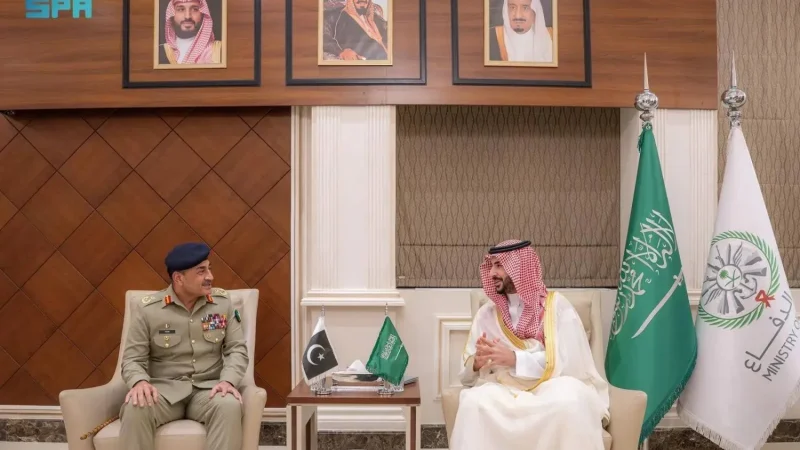
Within hours of Saudi Arabia intercepting three ballistic missiles targeting Prince Sultan Air Base on 5–6 March, Field Marshal Munir was in Riyadh. He met Saudi Defence Minister Prince Khalid bin Salman, where ISPR confirmed they discussed “joint measures within the SMDA framework.” Prince Khalid posted on X confirming the meeting and the SMDA’s activation as a framework for coordination.
Don't Stop Here. Unlock the Rest of this Analysis Immediately
To read the rest of this deep dive -- including the honest assessments and comparative analyses that Quwa Plus members rely on -- you need access.