
Pakistan has escalated its military response against the Afghan Taliban and associated militant groups through a sustained air campaign across multiple Afghan provinces under Operation Ghazab Lil Haq.
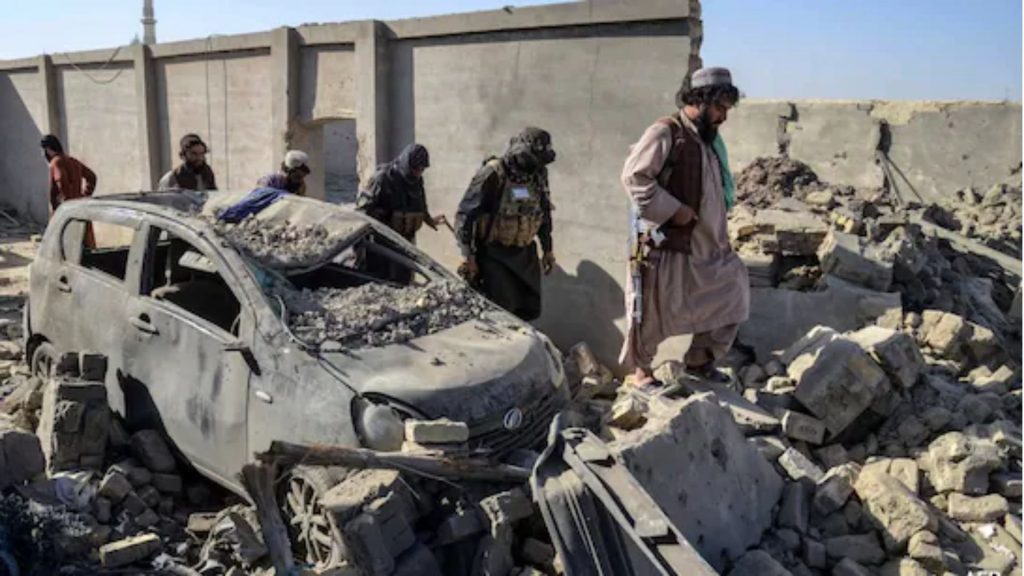
The Pakistan Air Force (PAF) conducted overnight strikes between 12 and 13 March targeting suspected militant infrastructure in Kabul, Kandahar, Paktia, and Paktika. According to Pakistani security officials, the strikes hit logistics hubs, equipment depots, and training camps linked to the Tehrik-i-Taliban Pakistan (TTP) and affiliated groups.
In Kandahar, Pakistani forces reportedly destroyed an oil depot at the airfield belonging to the private airline Kam Air, as well as an underground tunnel used for storing equipment and logistical supplies. The 313 Corps infrastructure in Kabul and camps in Paktia – including the Tarawo and Sherinaw facilities – were also among the stated targets.
Escalation Timeline
The current cycle of hostilities traces back to 21 February, when the PAF struck seven alleged TTP and Islamic State – Khorasan Province (ISIS-K) camps in the provinces of Nangarhar, Paktika, and Khost. Pakistan stated those strikes were in retaliation for attacks in Islamabad, Bajaur, and Bannu – attacks Islamabad attributed to groups operating from Afghan soil.
Afghanistan’s Taliban administration condemned the February strikes, claiming they hit civilian areas and religious centres in Nangarhar. The Afghan side followed with cross-border fire on 26 February, including drone attacks against Pakistani positions in Khyber Pakhtunkhwa and artillery exchanges along the Durand Line.
Pakistan responded by launching Operation Ghazab Lil Haq – translated roughly as ‘Wrath for the Truth’ – with air and ground operations targeting Afghan Taliban positions across Kabul, Kandahar, Paktia, and Nangarhar. Defence Minister Khawaja Asif declared the situation an “open war,” while the governor of Khyber Pakhtunkhwa stated that the Afghan Taliban had started the conflict and Pakistan would be the one to end it.
As of 15 March, Pakistan’s Information Minister Ataullah Tarar reported that 684 Afghan Taliban and militant fighters had been killed and over 912 wounded during the operation. Pakistani officials also claimed the destruction of 252 posts, 229 tanks and armoured vehicles, and 73 targeted sites across Afghanistan through airstrikes. However, Reuters has noted that neither side has provided verifiable evidence for their casualty claims.
Civilian Cost and Contested Narratives
The civilian toll remains a point of sharp disagreement. The United Nations Assistance Mission in Afghanistan (UNAMA) recorded 185 civilian casualties – 56 killed and 129 injured – between 26 February and 5 March alone, with 55% of those casualties being women and children.
In one incident on 27 February in the Barmal district of Paktika, UNAMA documented 14 civilian deaths from airstrikes, including women and children.
Following the 12–13 March strikes, UNAMA documented at least four additional civilian deaths and 14 injuries in the Pul-e-Charkhi area of Kabul. By 13 March, the mission’s cumulative count since 26 February stood at 75 civilians killed and 193 injured across Afghanistan.
Pakistan has consistently denied targeting civilian infrastructure, stating its operations are intelligence-based and directed exclusively against militant positions. The Afghan Taliban, for its part, denies hosting the TTP or other armed groups, and has accused Pakistan of striking residential areas, civilian airlines, and fuel infrastructure.
Given the Taliban’s directive restricting media access to strike sites – with the General Directorate of Intelligence reportedly ordering Afghan domestic outlets not to cover targeted areas – independent verification of casualties on either side remains difficult.
China’s Mediation and the Outlook
China has emerged as the most active mediator in the conflict. Beijing’s special envoy for Afghan affairs, Yue Xiaoyong, met with Afghanistan’s acting Foreign Minister Amir Khan Muttaqi in Kabul before travelling to Islamabad on 12 March for talks with Pakistan’s Special Representative for Afghanistan, Mohammad Sadiq, and Foreign Secretary Amna Baloch. Chinese Foreign Minister Wang Yi separately urged both sides to exercise restraint and pursue face-to-face talks.
That said, China’s diplomatic push has produced mixed results. While Pakistani airstrikes reportedly paused briefly following a message from President Xi Jinping to Prime Minister Shehbaz Sharif, the 12–13 March and 14–15 March strike waves indicate the campaign has resumed. Pakistan has stated it is “in no hurry” to end Operation Ghazab Lil Haq, and that strikes will continue until the Taliban provides verifiable guarantees that it is acting against TTP elements on Afghan soil.
The Afghan Taliban responded to the 13 March strikes with drone attacks on the Pakistani garrison town of Kohat, injuring two civilians. Afghanistan’s Defence Ministry also claimed retaliatory operations along the Durand Line in Kunar and Nangarhar.
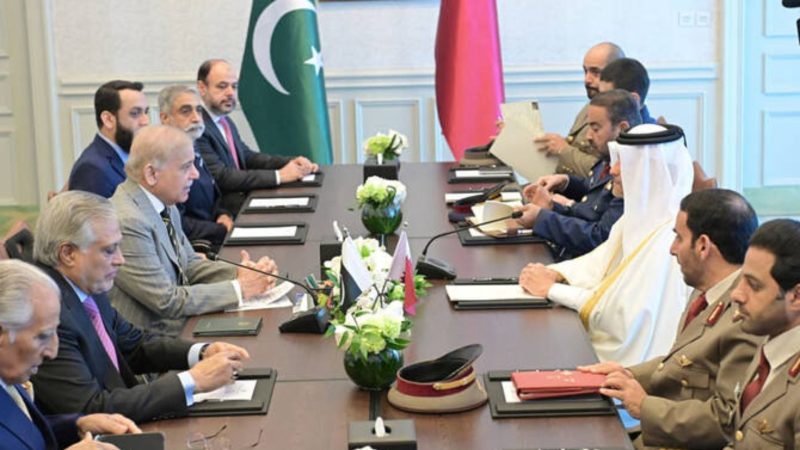
One can see the conflict entering a cycle where each side’s retaliatory strikes feed further escalation – with neither possessing the conventional capacity nor the political incentive to force a decisive outcome. Previous mediation efforts, including a Qatari-brokered ceasefire in October 2025 and Turkish-hosted talks in November, failed to produce lasting arrangements. It remains unclear whether Beijing – which has invested over $65 billion in Belt and Road Initiative projects in Pakistan and holds growing mining interests in Afghanistan – can apply sufficient pressure to bring both parties to meaningful negotiations.