
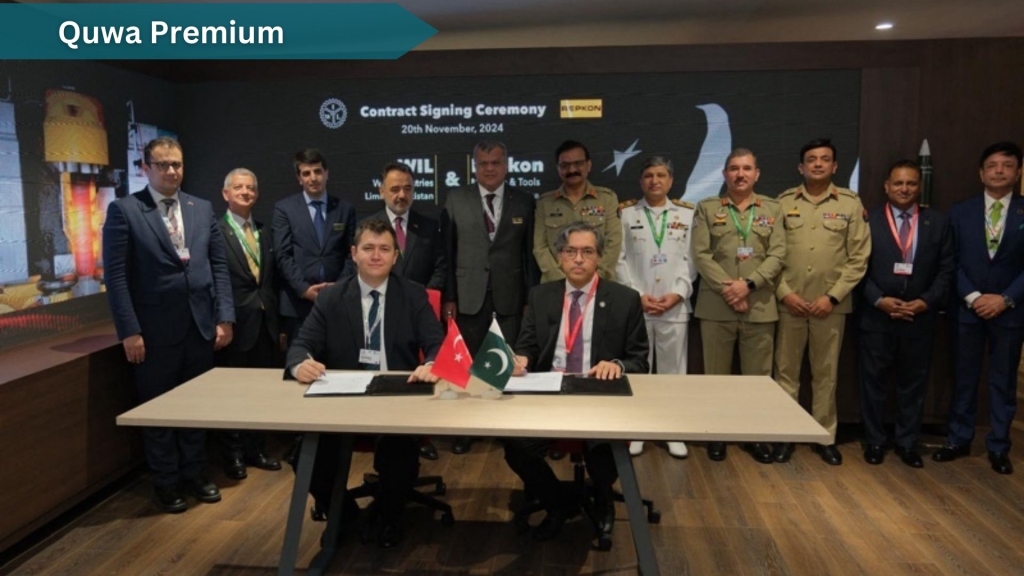
On 21 November, Pakistan’s Wah Industries Limited (WIL) signed an agreement with the Turkish defence contractor Repkon to set up an ammunition body production and filling line at WIL’s facilities for 155 mm artillery shells. This new facility will be able to manufacture 120,000 artillery shells per year.
Repkon is an industrial systems company that supplies machinery for aerospace, oil and gas, automotive, and petrochemical industries. The company also carries out its own original R&D to “develop strategically important technologies” for Turkiye across both defence and civilian sectors.
WIL was established in 1958 as a commercial subsidiary of Pakistan Ordnance Factories (POF), which is the country’s primary manufacturer of small arms, small arms ammunition, and artillery shells.
While WIL markets and sells some POF goods to the domestic civilian market, its work has expanded into numerous products for industrial uses, such as steel, gases, and explosives, among others.
This new agreement with Repkon suggests that WIL is directly entering the defence industry as a vendor of artillery shells. Granted, WIL does manufacture small arms ammunition, but those can be marketed to civilian and defence buyers alike. Artillery shells, on the other hand, are purely defence applications.
Quwa Plus
Go Beyond the Headlines on Pakistan’s Defence and Security.
Quwa Plus gives you deeper reporting, briefings, and analysis on Pakistan’s defence programs, foreign policy, national security, and regional strategy. Follow the developments that matter to professionals, analysts, and serious readers tracking Pakistan’s security landscape.