29755Views
What Pakistan’s Defence Planners Get Wrong About Self-Sufficiency Quwa Premium
Last month, the German newspaper Frankfurter Allgemeine interviewed Saab’s CEO, Micael Johansson, about the company’s programs in general and, in particular, its efforts in the German market.
Saab AB is a notable defence original equipment manufacturer (OEM) in that its platform offerings are more the result of original design and integration work than of indigenous sourcing. In fact, at times, one can use Saab AB and Sweden interchangeably, as the OEM operates solely on the basis of its country’s core industrial strengths and a pragmatic supply-chain sourcing approach.
The methodology is grounded in the reality that Sweden cannot develop and/or feasibly scale all the inputs required for a complex defence platform, such as a fighter aircraft.
For example, if it attempted to develop the turbofan engine, flight control systems, alloys, electronics, and all munitions from scratch, indigenously, the best-case outcome would be a high-cost product that it could not amortize because it would never generate sufficient orders.
Hence, over the decades, Sweden – or Saab AB – gradually shifted its focus to becoming a strong, if not among the world’s strongest, integrator.
For example, Sweden’s 2025 Defence Industry Strategy formalizes an integrator-centric approach by identifying specific “strategic” materiel categories – e.g., combat aircraft, underwater platforms such as submarines, command-and-control, and cartridge ammunition – and calling for partnerships and industrial measures centred on those categories rather than on indigenizing every input.
A recent – and fast-growing success story – of this example is the GlobalEye platform. The aircraft platform, surface-facing radar, and many other inputs are sourced from abroad.
The base aircraft is the Canadian Bombardier Global Express 6000, the surface radar is the Leonardo SeaSpray series, and the optronics are from Star. However, the airborn early warning (AEW) radar, the Erieye-ER, was indigenously developed.
Thus, Saab AB integrated readily available off-the-shelf components and its proprietary systems into a cohesive package, one that evidently performs at a level comparable to most of the wider industry. With French orders on the books, the GlobalEye may rise to become Western Europe’s choice for airborne early warning and control (AEW&C) systems.
Of course, this does not mean Saab AB does not build its own platforms. It evidently does via the Gripen fighter and A26 submarine. However, Saab AB designs its products using the inputs it can readily source domestically and abroad. It strategically integrates its proprietary IP to ensure that multinational sourcing operates as a package, and in doing so, is rewarded with orders worldwide, particularly in Europe.
If one imagines defence suppliers on a spectrum, at one end are turnkey powers such as the United States and China. These countries drive high R&D volumes and rapidly scale production (on the back of large domestic orders) to deliver advanced products at relatively accessible prices (relative to the capabilities on offer). On the other end of the spectrum are countries that strictly assemble or, in Pakistan’s case, manufacture at the downstream using mostly – if not solely – foreign-sourced inputs.
Emerging defence industry players, such as South Korea and Türkiye, are actively working to catch up with the U.S. and China. Others, like the European Union, leverage consortia to build R&D funding capacity and scale. Sweden operates in the middle of the spectrum and will focus its R&D on the design and integration of platforms rather than on pursuing every critical input. However, Saab AB takes design and integration work seriously.
For example, the company’s history indicates that significant funding is allocated to design- and platform-level R&D. Studies on next-generation fighter aircraft (NGFA) and unmanned combat aerial vehicles (UCAV) date back to the mid-to-late 2000s.
Saab states its 2025-2027 order (worth about SEK 2.6 billion) includes “conceptual studies of manned and unmanned solutions in a system of systems perspective” plus “technology development and demonstrators,” and that it extends an earlier contract signed in March 2024.
In other words, Saab AB’s readiness to pursue these projects was built on several decades of direct prior preparation, compounded by even longer experience managing fighter production programs.
Within the interview, Johansson made it clear that Saab AB’s next-generation fighter aircraft (NGFA) would be a Swedish-led project. The goal is to ensure that Sweden maintains a certain level of the technology stack and industrial base, and that it does not become part of a consortium where Stockholm’s voice is diluted.
With that in mind, Johansson expects that Saab AB will develop its NGFA in about 10 years, with the target of inducting it in the late 2030s, provided the Swedish government and armed forces freeze their requirements.
The Kamra Dynamic: Assembly vs. Design Authority
Reading through Saab AB’s work and history, one can get a sense of how well (or poorly) Pakistan generally understands its defence industry’s gaps and strengths.
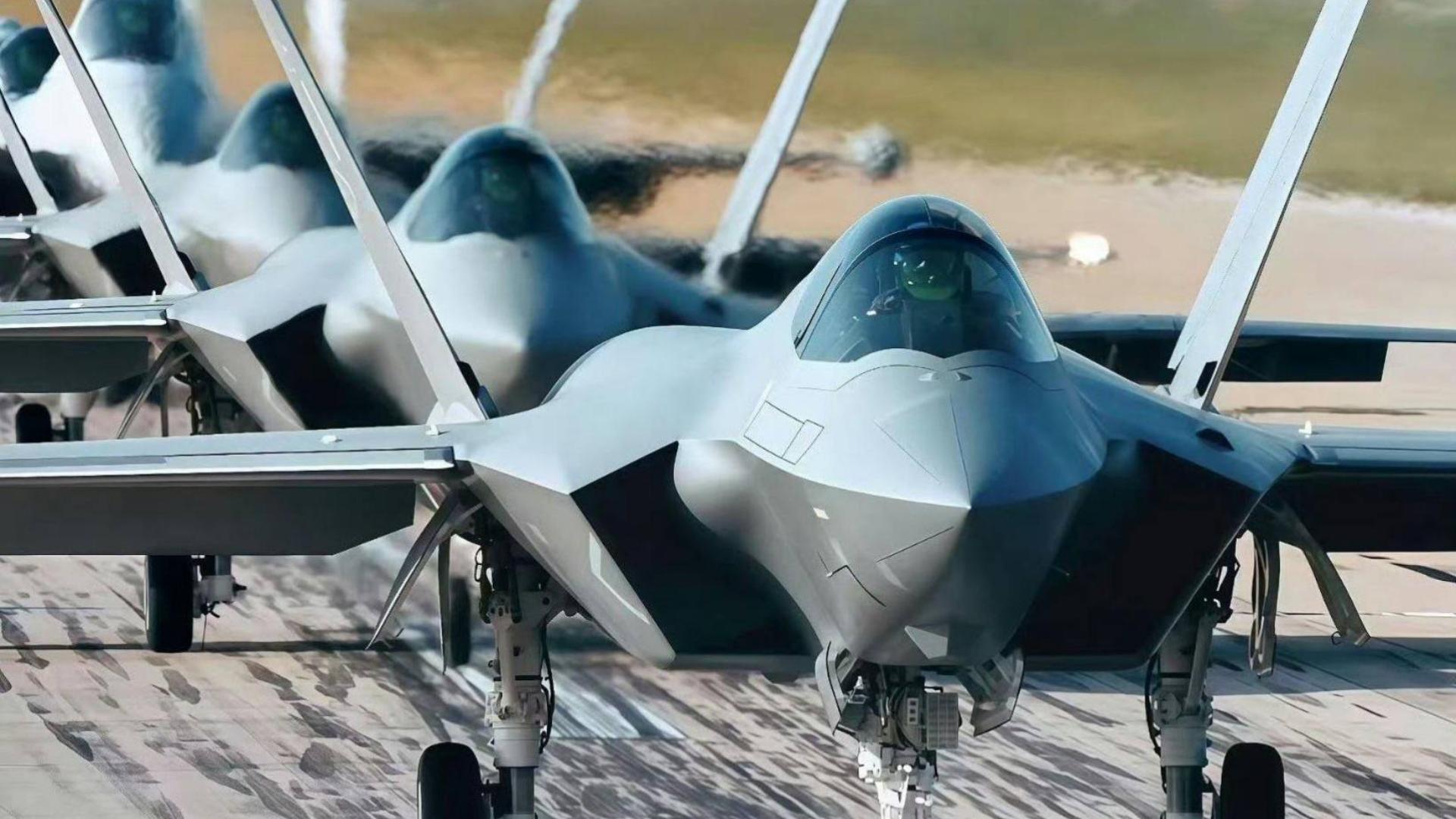
At the time Project AZM, the now-shelved NGFA program, was announced, the PAF claimed the program could be implemented in about 10 years. It was presenting these goals without prior R&D or design work at Pakistan Aeronautical Complex (PAC) – hence the reason the Aviation Design Institute (AvDI) was set up – and without studies or conceptual projects (via technology demonstrators) to validate its core ideas.
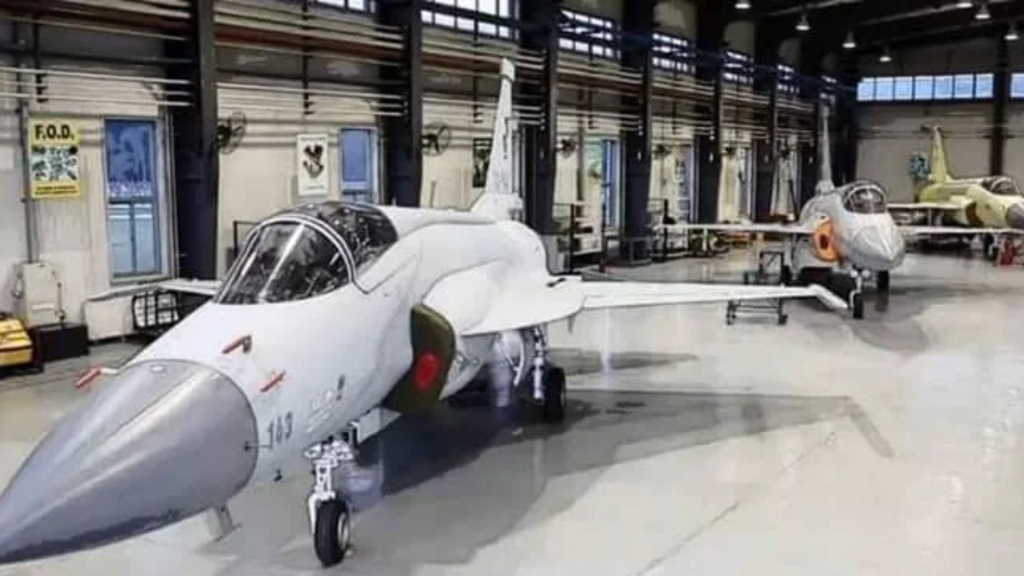
The standard argument is that PAC gained experience with the JF-17, both during its development and through co-production.
This argument does not stand to measured scrutiny.
First, the JF-17’s development was led and managed by the Chengdu Aircraft Corporation (CAC). All work, from initial design through prototypes across sub-variants, was completed by CAC.
In fact, even after PAC began production work, the subsequent development work – i.e., the dual-seat JF-17B and the Block-3 – was conducted entirely at CAC.
Second, while PAC does manufacture most of the JF-17’s airframe, it does so at the downstream level. In other words, all the necessary inputs – be it the alloys, the flight control system, or the turbofan engines – are sourced from abroad, mainly from China (which serves as the upstream manufacturer or the main conduit through which some inputs, like the Russian RD-93, are transferred).
When one examines the body of evidence, particularly from the standpoint of just mapping where and who “did the work,” it is evident that the institutional knowledge about the JF-17 rests largely with China. In the end, CAC improved its design and development capabilities with Pakistani funding.
End of excerpt. Subscribe to read the full article, detailing what Pakistan should have done differently – and still can. Continue reading with a Quwa Premium subscription, register today and get immediate access to all Quwa content.
Existing Quwa Plus/Pro members can log in below
Note: Logged in members may need to refresh the article page to see the article.