
France and India have secured a decade-long defence roadmap anchored by an estimated USD $40-50 billion in joint programs, effectively transforming the bilateral relationship from a conventional buyer-seller arrangement to one centered on co-development and shared production across multiple platforms.
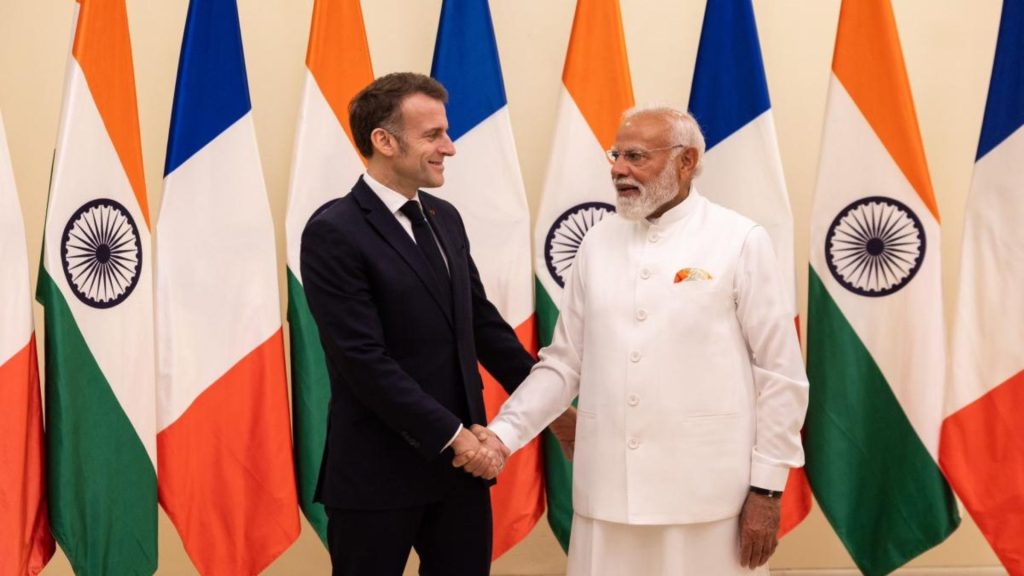
The agreements were formalized during French President Emmanuel Macron’s three-day visit to India from 17 to 19 February 2026, during which the two countries elevated their bilateral ties to a “Special Global Strategic Partnership” and exchanged 21 agreements spanning defence, critical minerals, renewable energy, and high technology (Élysée Palace; DD News).
Macron described the relationship as a “sovereign alliance” in which the two nations have “chosen each other on land, at sea, and in the sky” (The Indian Eye). The characterization carries weight. Taken together, the scale and scope of the programs agreed to in Mumbai mark a structural shift in how India procures and sustains its major defence platforms.
The Rafale Program
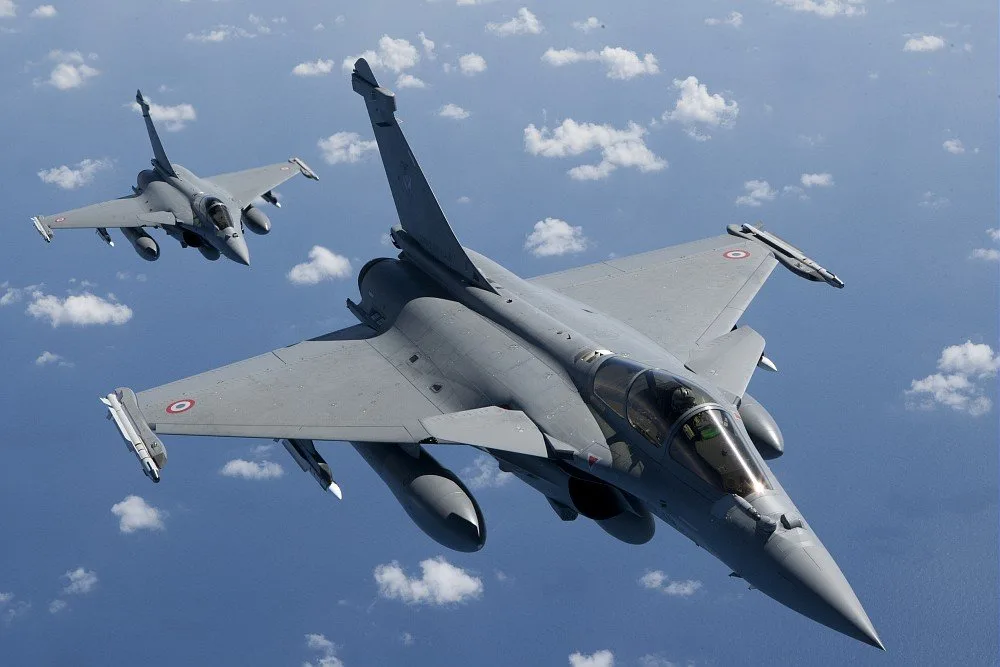
The Dassault Rafale forms the centrepiece of the renewed partnership. On 12 February 2026, India’s Defence Acquisition Council (DAC), chaired by Defence Minister Rajnath Singh, granted Acceptance of Necessity (AoN) for the procurement of 114 Rafale Multi-Role Fighter Aircraft (MRFA) for the Indian Air Force (IAF). The deal is set to become one of India’s largest-ever defence acquisitions (Defense News; The Aviationist).
The estimated value of the Rafale component is approximately ₹3.25 lakh crore (around USD $36-38 billion). Of the 114 aircraft, 18 will be delivered in fly-away condition from France, with the remaining 96 manufactured in India under the Make in India framework (Aerospace Global News).
This comes on top of the Indian Navy’s contract, approved in April 2025, for 26 Rafale-Marine (Rafale-M) jets for its INS Vikrant aircraft carrier. Together, the IAF and Indian Navy orders would bring India’s total Rafale fleet to approximately 176 aircraft, including the 36 F3R-standard jets already in service. This would make India one of the largest Rafale operators in the world.
The IAF’s pursuit of the MRFA has been a protracted issue. The program traces back to the original Medium Multi-Role Combat Aircraft (MMRCA) tender launched in 2007, which sought 126 fighters. Dassault’s Rafale was selected in 2012, but drawn-out negotiations over domestic production responsibilities and technology transfer led to the collapse of that deal in 2015. The subsequent scaled-down purchase of 36 Rafales, signed in 2016 under a government-to-government arrangement, was completed in December 2024.
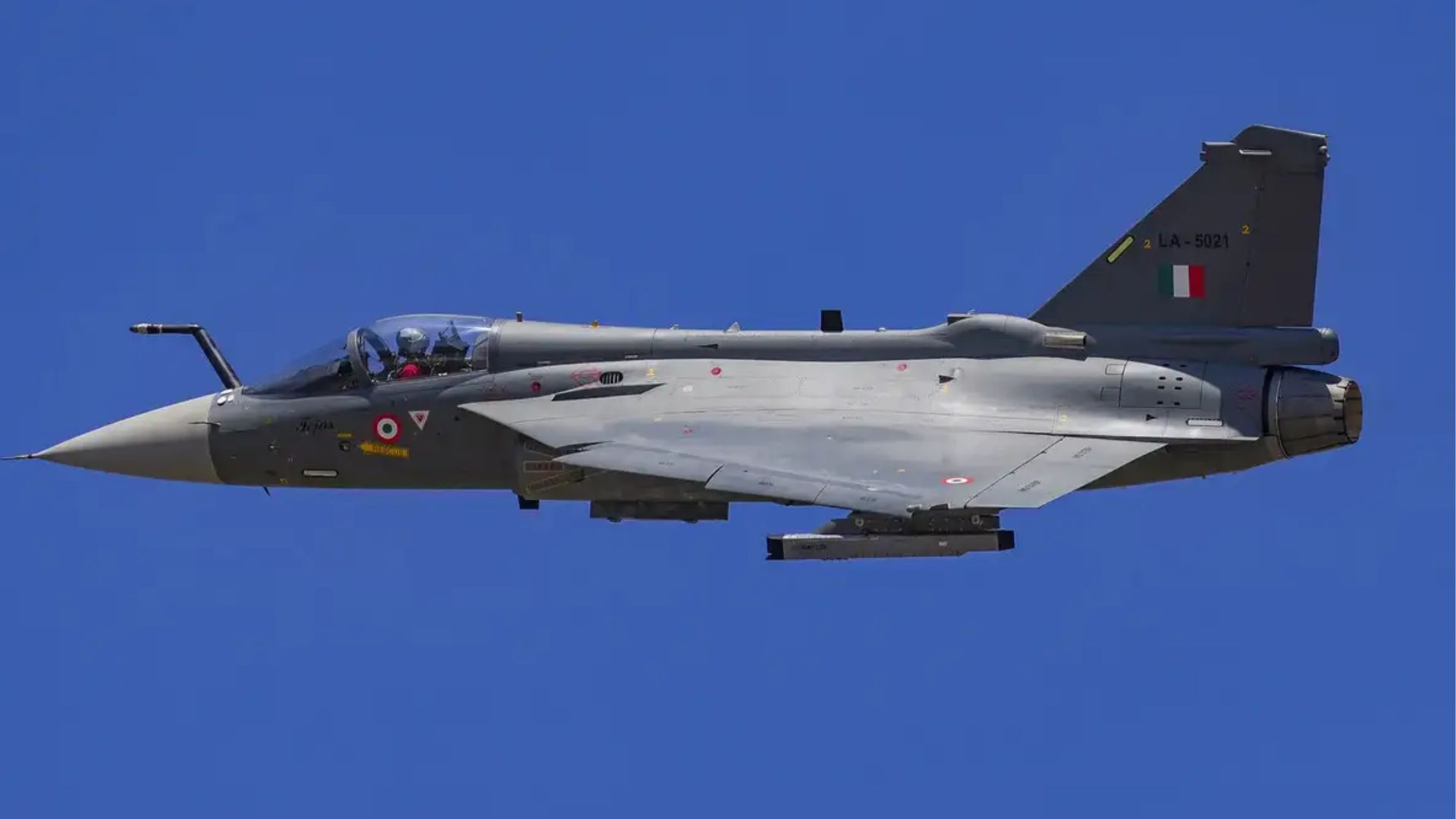
The urgency behind the 114-aircraft order is primarily operationally driven. The IAF’s fighter squadron strength now stands at 29, well below its sanctioned level of 42 squadrons. The retirement of the MiG-21 fleet has further eroded capacity, and delays in the HAL Tejas Mk1A program have compounded the shortfall (Defense News).
Macron acknowledged India’s aspiration to co-produce the Rafale domestically and handle a greater share of maintenance, calling it a “legitimate” aspiration aligned with “the direction of history” (The Indian Eye). Reports indicate that a final assembly line in Nagpur is planned, which is expected to function as a regional Maintenance, Repair and Overhaul (MRO) hub for Rafale aircraft. The fleet will comprise aircraft in the F4 and F5 standards, with the existing F3R jets also upgraded to F4 (The Defense News).
The renewed roadmap also accelerates the Safran engine joint venture for next-generation aircraft development. Safran has confirmed that it will set up an engine assembly line and source parts from Indian suppliers for the Rafale’s M88 engine (Shephard Media). Engine development is among the most complex and capital-intensive areas of defence aerospace, which makes this a valuable component of the partnership. Safran’s earlier engagement with India, notably its offer to invest over USD $1 billion in the Kaveri turbofan program as part of the original Rafale offset commitments, suggests an institutional willingness to share developmental know-how that extends beyond simple assembly.
Missile Manufacturing: HAMMER Production in India
Among the 21 agreements exchanged, a notable one establishes a joint venture between Bharat Electronics Limited (BEL) and Safran Electronics & Defence to manufacture HAMMER (Highly Agile Modular Munition Extended Range) air-to-surface missiles in India for the Rafale fleet (The Wire; Shephard Media).
The HAMMER is a precision-guided, stand-off range weapon that has seen combat use aboard French Rafales. The decision to embed its production within India is significant for two reasons.
First, it deepens India’s indigenous manufacturing capacity for precision munitions, an area where self-reliance carries obvious operational advantages. Second, it ties the missile production ecosystem directly to the Rafale platform, creating a long-term industrial interdependency between French and Indian defence firms. A combined IAF and Indian Navy fleet of 176 Rafales would consume substantial quantities of these weapons over time. The BEL-Safran JV is, in effect, the establishment of a shared production base to support that demand.
Submarine and Helicopter Assembly
The partnership also extends the Scorpène submarine pipeline under the P75 (Kalvari-class) program. India has built six Kalvari-class diesel-electric attack submarines at Mazagon Dock Shipbuilders Limited (MDL) in Mumbai with technology transfer from France’s Naval Group. The sixth boat was delivered in January 2025.
Three additional Scorpène submarines have been approved for construction at MDL, with indigenous content expected to rise to approximately 60%. This is a substantial increase from the 30-40% indigenous content of the preceding six boats (Quwa).
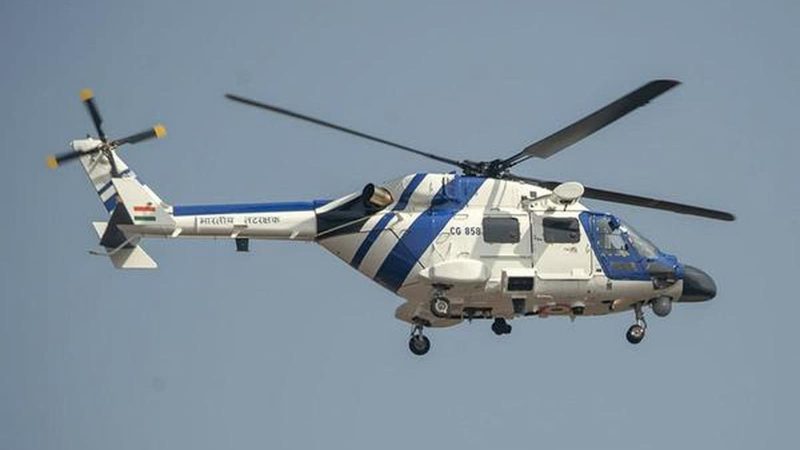
Separately, Tata Advanced Systems Limited (TASL) and Airbus inaugurated India’s first private-sector helicopter Final Assembly Line (FAL) for the Airbus H125 at Vemagal in Karnataka on 17 February 2026. The facility was virtually inaugurated by Prime Minister Modi and President Macron. The assembly line will initially produce 10 H125 helicopters per year, with the first “Made in India” H125 expected in early 2027 (Airbus; PIB).
The facility is also designed to produce the military variant, i.e., the H125M, which is optimized for high-altitude operations. This is a critical capability given the Indian military’s operational requirements along the Himalayas.
This is TASL and Airbus’ second major industrial collaboration in India, following the C295 military transport aircraft FAL. Defence Minister Rajnath Singh noted that investment in the H125 program is expected to exceed ₹10 billion (approximately USD $110 million), with direct and indirect employment generation anticipated alongside it (Army Technology).
Joint Advanced Technology Development Group and DRDO-DGA Cooperation
Beyond specific platform programs, France and India have established a Joint Advanced Technology Development Group to co-develop emerging and critical technologies in niche areas, including air, naval, and land systems. The stated objective is to retain a competitive military edge while mitigating supply chain vulnerabilities. This priority has taken on greater urgency in the wake of recent global disruptions to defence supply chains (DD News; Elets eGov).
The institutional foundation for this was laid in November 2025, when India’s Defence Research and Development Organisation (DRDO) and France’s Directorate General of Armaments (DGA) signed a Technical Arrangement at DRDO Bhawan in New Delhi on 20 November 2025.
The agreement, signed by DRDO Chairman Dr. Samir V. Kamat and DGA National Armaments Director Lt. Gen. Gael Diaz de Tuesta, provides a formal framework for joint research, training programs, testing activities, and information exchange across a range of advanced defence technologies. The scope covers aeronautical platforms, unmanned vehicles, advanced materials, cybersecurity, artificial intelligence, space, navigation, advanced propulsion, quantum technologies, and underwater systems (PIB; The Diplomat).
The DRDO-DGA pact is significant in its own right. Both organizations oversee their respective countries’ nuclear deterrent programs, and the scope of the cooperation agreement spans a wide range of dual-use technologies. For India, which has struggled to operationalize certain platforms independently, i.e., the MALE UAV TAPAS project, the partnership with France provides access to developmental expertise in areas where domestic programs have stalled. For France, India’s large economy and growing defence R&D ecosystem represent a substantial pool of capital for joint development projects.
The defence cooperation is further reinforced by reciprocal officer deployments across the Indian Army and French Land Forces, confirmed to take place in 2026 (The Wire).
Outlook
The agreements secured during Macron’s February 2026 visit represent a qualitative change in the India-France defence relationship. The scale of the Rafale program alone, potentially the largest fighter acquisition in the IAF’s history, anchors the bilateral partnership for at least the next decade. The addition of HAMMER missile production, Scorpène submarine extensions, the H125 helicopter assembly line, and the joint technology development group broadens the relationship across air, naval, and land domains. In doing so, it creates structural industrial linkages between the two countries’ defence sectors.
The key question going forward will be whether the domestic production commitments can be realized on schedule and at the indigenous content levels envisaged. This applies particularly to the 96 Rafales to be built in India and the HAMMER missile JV. India’s track record with large-scale defence manufacturing programs has been mixed, and the gap between intent and execution in the Make in India framework remains a persistent challenge. The DRDO-DGA cooperation on advanced technologies, meanwhile, will be measured by whether it produces tangible developmental outcomes or remains at the memorandum-of-understanding stage.
For Pakistan, the consolidation of the India-France partnership represents a significant evolution in the regional balance of air power. The prospect of India operating 176 Rafales across its air force and navy, backed by domestically produced precision munitions and a deepening engine technology base, is a considerable factor. The operational implications of a combined IAF fleet equipped with both F4 and F5-standard Rafales, integrated with HAMMER and potentially SCALP cruise missiles, will need to be factored into Pakistan’s own force planning and acquisition strategy in the years ahead.