India’s Ministry of Defence (MoD) signed contracts worth a total of Rs 5,083 crore (~$590 million) on 3 March 2026 for the acquisition of six Advanced Light Helicopter (ALH) Mk-III helicopters for the Indian Coast Guard and VL-Shtil surface-to-air missiles (SAM) for the Indian Navy.
The contracts were signed at South Block, New Delhi, in the presence of Defence Secretary Rajesh Kumar Singh. The two procurements address distinct capability gaps – rotary-wing maritime patrol for the Coast Guard and shipborne air defence for the Navy.
ALH Mk-III for the Indian Coast Guard
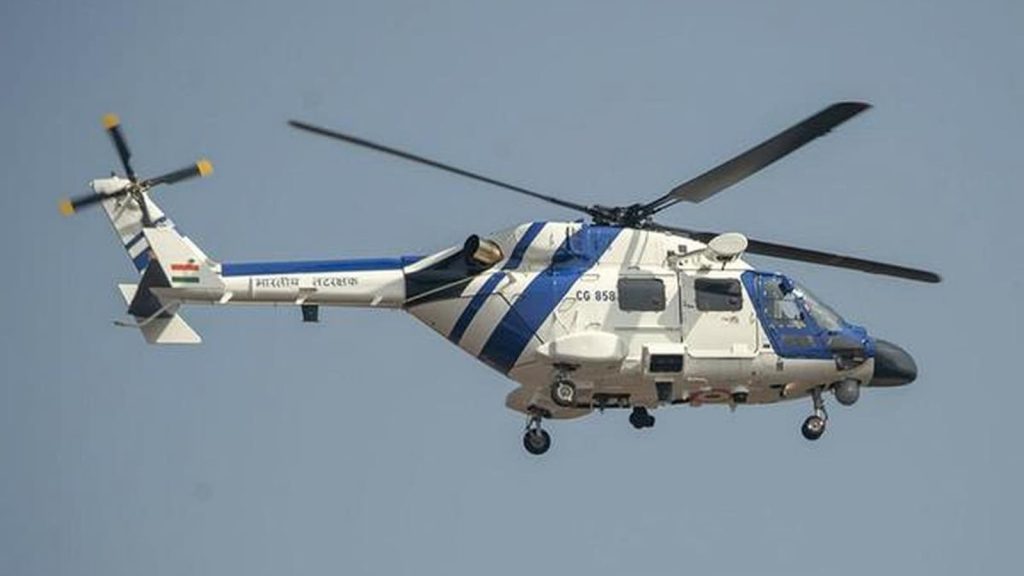
The Rs 2,901 crore contract was awarded to Hindustan Aeronautics Limited (HAL) for six ALH Mk-III helicopters in the maritime role (MR) configuration, along with operational role equipment, an engineering support package and performance-based logistics support.
The ALH Mk-III is the latest variant of HAL’s Dhruv helicopter family – a twin-engine, multi-role platform designed and manufactured in India. The contract was placed under the Buy (Indian-Indigenously Designed, Developed and Manufactured) category, aligning with India’s Atmanirbhar Bharat defence industrial policy.
According to the MoD, the ALH Mk-III incorporates systems superior to the platforms currently in service with the Coast Guard. The helicopters are capable of operating from both shore-based airfields and ship flight decks, supporting a wide range of maritime security missions including surveillance, search-and-rescue and anti-smuggling operations.
VL-Shtil Missiles for the Indian Navy
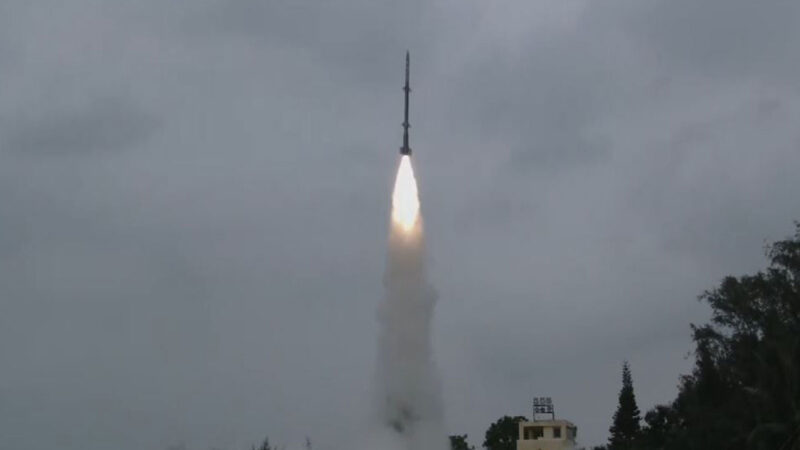
The second contract, valued at Rs 2,182 crore, was signed with Russia’s JSC Rosoboronexport for the supply of VL-Shtil surface-to-air missiles and associated missile holding frames. These vertical-launch SAMs are intended for deployment on frontline Indian Navy warships.
The VL-Shtil (also designated Shtil-1) is a medium-range SAM with a reported engagement envelope of 40–50 km. The system equips India’s Talwar-class (Project 1135.6) frigates – a family of six Russian-origin guided-missile frigates that form a significant component of the Indian Navy’s surface combatant fleet.
The MoD stated that the VL-Shtil acquisition will enhance the layered air defence architecture on Indian Navy platforms by providing rapid-reaction, all-weather engagement capability.
Notes & Comments
The dual procurement reflects a structural feature of India’s defence acquisition strategy – the parallel pursuit of indigenous development and continued reliance on Russian systems for legacy platforms.
The ALH Mk-III is a wholly Indian product, procured under the most restrictive indigenization category (IDDM). The VL-Shtil, by contrast, is a Russian import that sustains India’s dependence on Rosoboronexport for the maintenance and replenishment of its Talwar-class frigate fleet.
This duality is notable at a time when New Delhi has been actively seeking to reduce its exposure to Russian supply chains.
In this vein, it is worth noting that India’s newer surface combatants – the Kolkata-class (Project 15A) destroyers and Visakhapatnam-class (Project 15B) destroyers – use the jointly developed Barak-8 long-range SAM (LRSAM) rather than the VL-Shtil.
The Barak-8 is co-developed by India’s Defence Research and Development Organization (DRDO) and Israel’s IAI, giving India a degree of supply chain sovereignty that the VL-Shtil does not offer.
Thus, the VL-Shtil procurement appears to be a sustainment buy for existing platforms rather than a signal of strategic direction. One can see the Indian Navy’s long-term SAM trajectory moving firmly toward the Barak-8 and its extended-range variants.
The Rs 5,083 crore combined value represents a modest share of India’s defence budget – approximately Rs 6.22 lakh crore for FY2025-26 – but the contracts signal that New Delhi is sustaining its maritime modernization tempo even as the broader Indian Ocean security environment grows more contested.