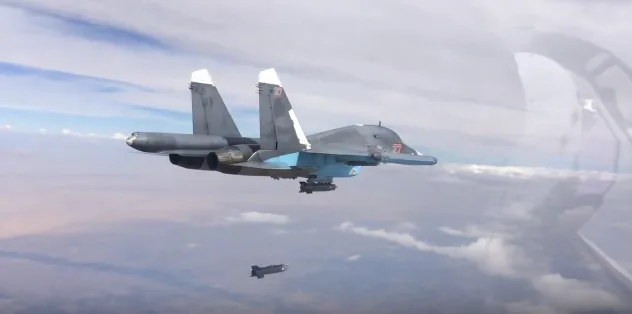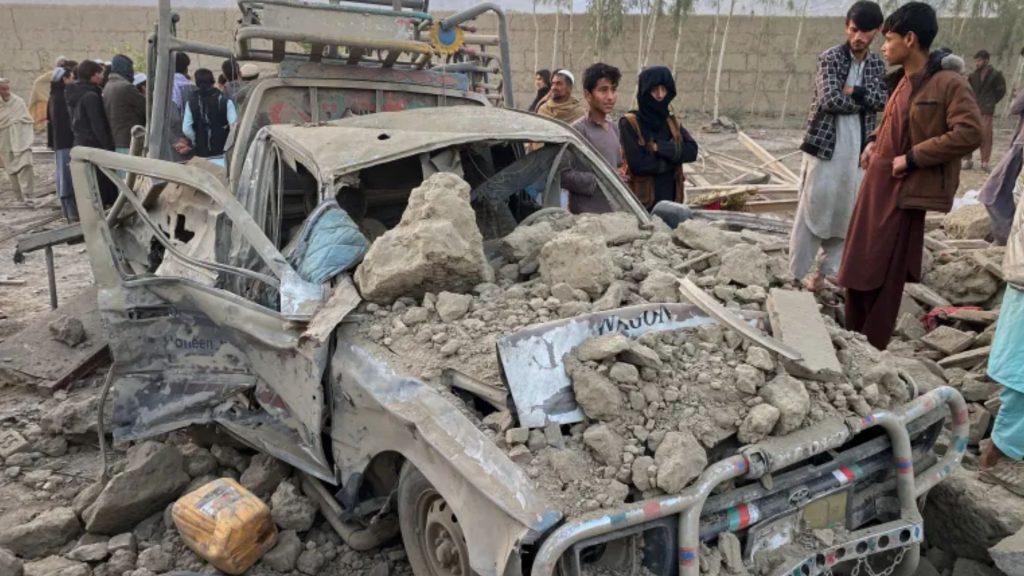
The Pakistan Air Force (PAF) struck targets across at least five Afghan provinces between 21 and 27 February, including the Afghan capital Kabul, the Taliban’s spiritual seat of Kandahar, and the southeastern province of Paktia. Pakistani officials described the strikes as intelligence-based operations against Tehreek-e-Taliban Pakistan (TTP) and Islamic State – Khorasan Province (IS-K) camps, claiming over 130 Afghan Taliban fighters killed in the latest round alone.
The Taliban responded on 26 February with what its spokesperson Zabihullah Mujahid called “large-scale offensive operations” against Pakistani military posts along the Durand Line. Kabul claimed the capture of between 13 and 19 Pakistani outposts and the deaths of up to 55 Pakistani soldiers, according to Taliban deputy spokesperson Hamdullah Fitrat. Pakistan’s Information Minister Attaullah Tarar acknowledged two soldiers killed and three wounded, while claiming 133 Afghan fighters dead and 27 Taliban posts destroyed.
The exchange marks the most severe direct military confrontation between Pakistan and the Taliban since the latter’s return to power in 2021.
A Conflict Without a Short Horizon
The immediate trigger for the February escalation is well-documented. The 6 February IS-K suicide bombing at the Khadija Tul Kubra mosque in Islamabad killed at least 32 worshippers and wounded 170, according to Pakistani police and the UN Security Council. A sustained surge in militancy – Armed Conflict Location and Event Data (ACLED) recorded 2,425 militant incidents across Pakistan in 2025, nearly four times the 658 incidents in 2022 – appears to have exhausted Islamabad’s tolerance for diplomatic solutions with Kabul.
However, the structural dynamics at play suggest this is not a crisis with a short resolution timeline. Afghanistan and Pakistan have been in some form of cross-border military tension since 1947, when Kabul was the sole country to vote against Pakistan’s admission to the United Nations. The Durand Line – drawn in 1893 by a British colonial diplomat and never recognized by any Afghan government – remains the foundational grievance.
In this vein, it is worth considering the pattern. As Quwa analyzed during the October 2025 clashes, the current confrontation is the latest iteration of a cycle stretching back decades. Pakistan armed the mujahideen against the Soviet Union in the 1980s, supported the Taliban’s first rise in the 1990s, and spent two decades navigating the American presence. Each phase lasted a decade or more. The current confrontation – driven by the TTP’s resurgence under Taliban-governed Afghanistan’s tacit protection – shows no structural characteristics of a short conflict. The Taliban views the TTP as Pakistan’s internal problem, and harboring these groups provides Kabul with leverage over Islamabad.
One can see in the October 2025 clashes a preview of this dynamic. A Qatar-Turkey mediated ceasefire lasted barely four months before collapsing. Saudi Arabia’s intervention secured the release of three captured Pakistani soldiers, but produced no durable agreement on the core TTP sanctuary issue. Each mediation round has yielded diminishing returns.
The Western Border as a Structural Defence Requirement
For Pakistan’s defence establishment, the February 2026 escalation could serve as a inflection point – one that hardens what has been a gradually shifting orientation towards the western border as a primary, enduring defence requirement rather than a secondary, episodic counterinsurgency problem.
Pakistan’s military posture has historically been structured almost entirely around the eastern front with India. Force structure, major platform procurement, nuclear deterrence architecture, and strategic depth concepts were all designed with India as the defining threat. The western border was managed through a combination of political manipulation, tribal intermediaries, and periodic military operations – none of which assumed a state-level adversary.
That assumption has now collapsed. The Taliban’s ability to mass forces against over a dozen Pakistani outposts simultaneously, as claimed on 26 February, suggests intelligence preparation and conventional military coordination. According to The Express Tribune, Afghan forces employed quadcopter drones against Pakistani border positions, though Pakistan claimed all hostile drones were intercepted. ACLED’s data shows the TTP itself has conducted at least 26 drone strikes within Khyber Pakhtunkhwa in 2025, a record level of militant unmanned aerial system (UAS) activity.
Don't Stop Here. Unlock the Rest of this Analysis Immediately
To read the rest of this deep dive -- including the honest assessments and comparative analyses that Quwa Plus members rely on -- you need access.