To the Pakistan Air Force (PAF), Operation Swift Retort had ‘worked.’ The PAF said it was able to carryout precision strikes against multiple targets across the Line of Control (LoC) while also dissuading a larger and better equipped force from escalating tensions any further. The PAF lauded the effectiveness of its Falcon 20-based electronic warfare (EW) and electronic countermeasures (ECM) aircraft – it specifically noted how the Falcon 20 apparently jammed communications between the Indian Air Force’s (IAF) assets.[1] The PAF also felt that Swift Retort validated its ability to deploy stand-off range weapons (SOW), and manage large-scale air operations. Indeed, for the PAF, Swift Retort was an unprecedented experience in that this operation was its first involving networked assets, long-range guided bombs (SOW) against pre-planned targets and, potentially, as many as 18 to 24 fighters supported by special mission aircraft.
But if Operation Swift Retort ‘worked,’ it did so because it was a large-scale air operation. However small in comparison to what the U.S. Air Force (USAF) could conduct, Swift Retort was arguably the largest and most complex air operation in South Asia’s air warfare history. Its unprecedented nature might have been the biggest reason why the IAF was, from the PAF’s perspective, thrown off sure footing. Notwithstanding the fact that the Government of Pakistan (GoP) sought to de-escalate tensions, the PAF had carved itself an advantageous position. Yes, it was temporary, and if it had occurred in the context of a full-scale war, the upper hand might have only been for a short period of time. But the PAF says it got that advantage.
Thus, rationally speaking, the PAF would want to replicate that advantage again in the future, should the situation in South Asia demand it. However, that is easier said than done considering how the PAF secured that advantage through a large-scale air operation. Thus, in a full-scale conflict, could the PAF muster the resources necessary to repeatedly carry out Swift Retort-like operations? Swift Retort required many key inputs, but in this article, the focus is the most noticeable one: a large number of fighter aircraft.
Simply, Swift Retort worked, in part, thanks to the disproportionate response to the IAF’s Balakot airstrike attempt. It is a break from poetic sensibilities (e.g., ‘the smaller force that won against the larger enemy’), but disproportionality works. To undertake such operations across more areas, and at a higher frequency, the PAF will require a larger fleet of modern combat aircraft. This article will argue that point as well as promote the case to focus on expanding the JF-17 development and acquisition program.
Swift Retort: Numbers Mattered
According to the PAF, its strike package consisted of six aircraft: two Mirage 5PA, each armed with one H-4, a glide-bomb with a rocket-assist/motor capable of a range of 120 km. The H-4 carries a 600 kg warhead, but it uses a manually operated terminal-seeker. Basically, the PAF also sent two Mirage IIIDAs, each with an operator to control the H-4 in its final stage, i.e., before impact against the target. The Mirage 5PAs launched their H-4s, and the H-4s independently flew towards the general location of their targets. Once in the vicinity of their targets, the Mirage IIIDAs took manual control of the H-4s to finish the strike.
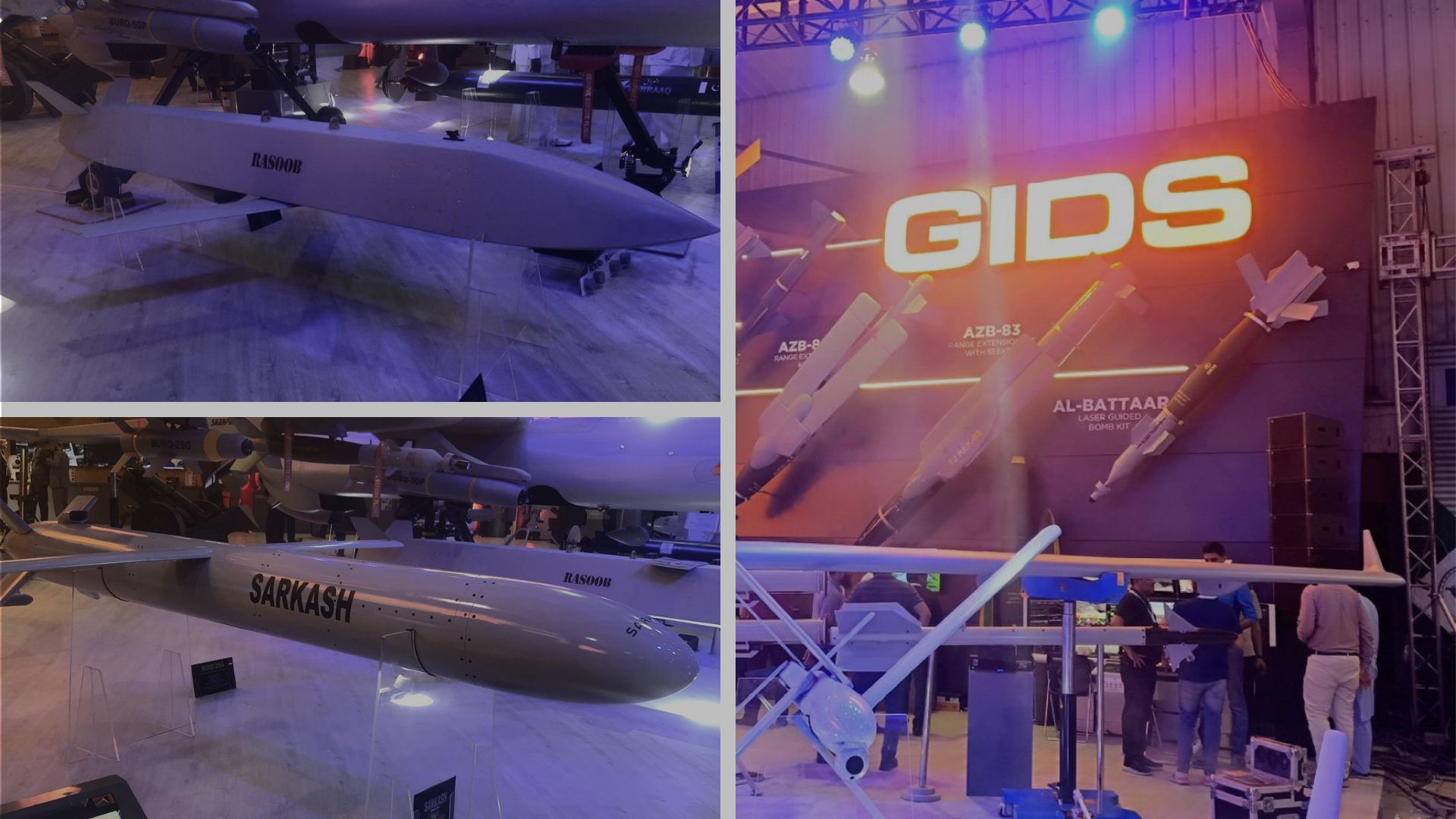
In addition, the PAF also sent two JF-17s, each armed with two 454 kg (1,000 lb) MK83-based precision-guided bombs (PGB). The PGB kit is called the ‘Indigenous Range Extension Kit’ (IREK). Pakistan produces the IREK locally, but it is similar to the US Joint Direct Attack Munition (JDAM); it adds a satellite-aided inertial navigation system (GPS/INS) to the GPB as well as stabilizers to help direct the bomb to its target.
Unlike the H-4, the IREK PGB is a ‘fire-and-forget’ weapon. The fighter launches it towards a pre-set target/location, and the PGB will fly towards that target while relying on a GPS feed. It is optimal against large fixed targets, such as bunkers, bridges, hangars, ammunition depots, etc. The IREK provides a range of up to 100 km, but if launched at a high enough altitude. In other words, the lower the altitude of launch, the lesser the range. Thus, with the H-4 and IREK, the PAF deployed a complex strike element.
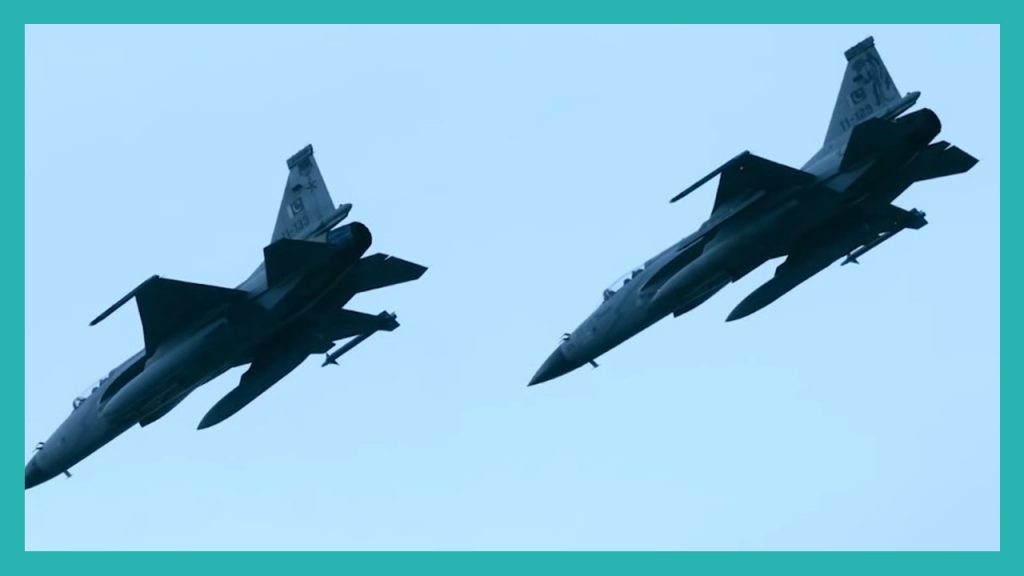
Finally, in addition to those six attack aircraft, the PAF deployed 12 to 18 F-16s and JF-17s to provide top-cover and ‘sweep’ air-to-air threats, such as the MiG-21bis, Su-30MKI and Mirage 2000H. The PAF used as many as 18 to 24 combat aircraft in Swift Retort, and that too with the support of one Falcon 20 EW/ECM jet and one Saab 2000-based Erieye airborne early warning and control (AEW&C) aircraft.[2]
For a defensively oriented force, this is no small feat in terms of resource use and employment, especially the latter seeing how (1) the PAF never employed such a force in real-world combat before and (2) any major flaw in that operation could have resulted in losses and further escalation, to say the least.
The PAF could be tempted into thinking that a one-off employment is fine, but in reality, it would be better for Pakistan to pattern its future air warfare on Swift Retort. Basically, if Swift Retort generated a tactical advantage against India, then it makes sense to improve it, and be able to deploy it more often. The latter is critical in the context of a full-scale conflict, and there is a legitimate reason to think along those lines.
Don't Stop Here. Unlock the Rest of this Analysis Immediately
To read the rest of this deep dive -- including the honest assessments and comparative analyses that Quwa Plus members rely on -- you need access.