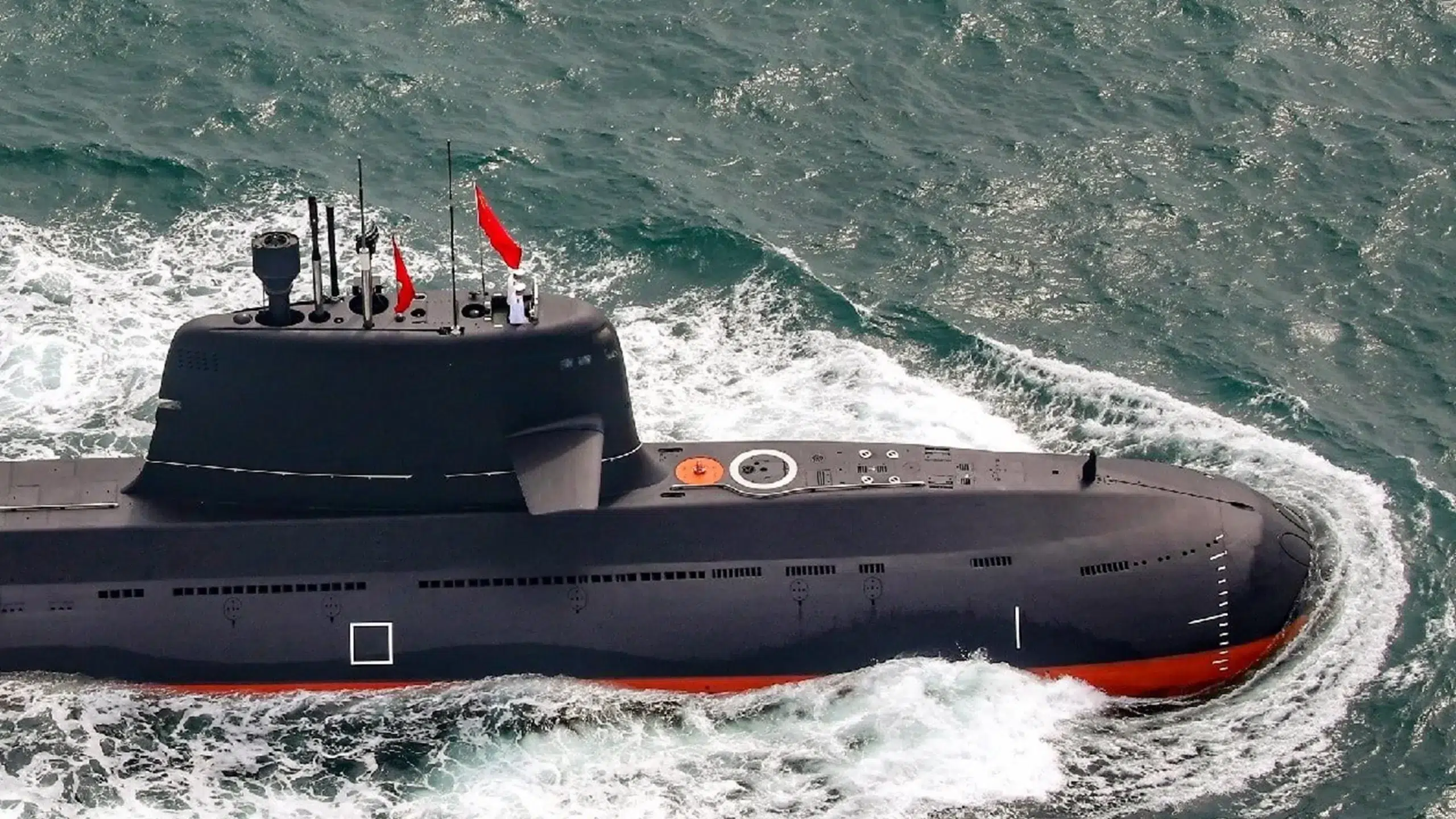
By 2028, the Pakistan Navy (PN) plans to operate three upgraded Khalid-class (Agosta 90B) and eight new Hangor-class (likely S26) air-independent propulsion (AIP) submarines. It is not only modernizing its fleet, but expanding its costlier AIP element by a factor of nearly 4X. The result will be a large sub-surface fleet capable of anti-ship warfare (AShW), anti-submarine warfare (ASW), and long-range land-attack missions.
In terms of sub-surface warfare, the PN’s forthcoming fleet will be a credible force. First, the submarines themselves will be equipped with contemporary subsystems and capabilities. The upgraded Agosta 90B, for example, will leverage soft-kill torpedo countermeasures, a new combat management system (CMS), an electronic support measures (ESM) suite with electronic intelligence (ELINT) capabilities, early warning capabilities through a radar warning receiver (RWR), and other features. Overall, these systems are about as advanced as Pakistan can acquire in the market. Second, the PN will benefit a quantitative element that was never available to it up to this point. Third, the PN is building a support element that will allow it to extract maximum utility from its submarines, such as its very-low-frequency (VLF) communications facility, which will allow it to communicate with its submerged submarines.
The PN’s submarines will not only be the bulk of its offensive capability – i.e., through the ability to launch land-attack cruise missiles (LACM), such as the Babur 3 – but its defensive element as well. Undoubtedly, the PN’s hope is to both deny India the ability to exert itself in Pakistan’s exclusive economic zone (EEZ), as well as undertake long-range strikes well away from Indian territory through stand-off range weapons (SOW). However, India is both aware of the PN’s goals, and, in turn, the Indian Navy (IN) is building perhaps one of the most extensive ASW capabilities in Asia, if not the world, to deter and erode Pakistan’s ‘Silent Service.’ The IN started this process through the induction of P-8A Poseidon long-range maritime patrol aircraft (LRMPA), but it is now adding newer P-8I Neptune variants as well as a large number of corvettes and, with time, a larger conventional submarine fleet to carry its own deterrence and offensive element.
Anti-Submarine Warfare is Not a Trivial Effort
Before delving into India’s ASW efforts, it is important to study the reality of ASW. Simply put, ASW is not an “easy” effort. In the Falklands War, for example, the Argentinean Navy showed that “a poorly manned, poorly maintained diesel submarine can have a tremendous effect on operations for a fleet commander.”[1] In other words, the presence of a submarine in a littoral environment is enough of a threat to force a large and adept navy to pause its campaign, e.g., imposing a maritime exclusion zone (MEZ). The reason for this is that a naval force commander will not put their assets at risk against, basically, an unknown variable.[2]
The Nature of Sound Propagation at Sea
Granted, the Falklands War occurred in a different time, and since then, one would think that technology and concepts would have caught up. However, the reality of how the sea works still poses an obstacle.
The primary means of detecting an object underwater is through sonar, typically using active pulses that would bounce off an object and return an echo, or passively listening for others’ active pulses and echoes. In ‘deep water’ environments, such as the Pacific Ocean, sound could propagate fairly easily because those areas were generally ‘quiet’ – i.e., did not involve much ship traffic or offshore activity – and fairly barren in terms of obstacles that could interfere with acoustic travel.[3]
Likewise, these operational environments were out in the open seas. Each side’s navy could flexibly deploy their respective LRMPAs, frigates or destroyers, and other assets to survey and monitor these areas.
Quwa Plus
Go Beyond the Headlines on Pakistan’s Defence and Security.
Quwa Plus gives you deeper reporting, briefings, and analysis on Pakistan’s defence programs, foreign policy, national security, and regional strategy. Follow the developments that matter to professionals, analysts, and serious readers tracking Pakistan’s security landscape.
Join ($29.99/Year) Already a subscriber?Sign in