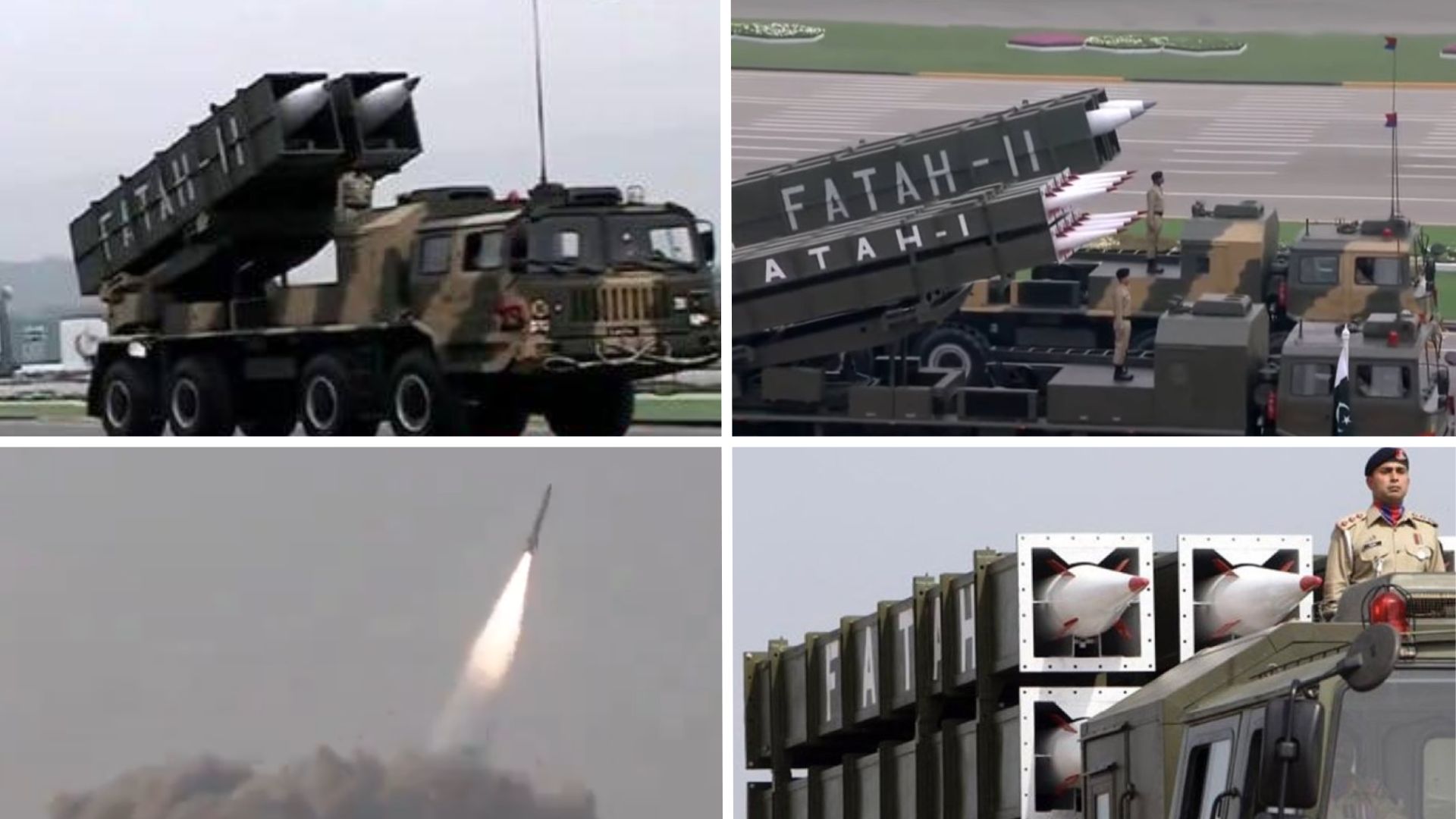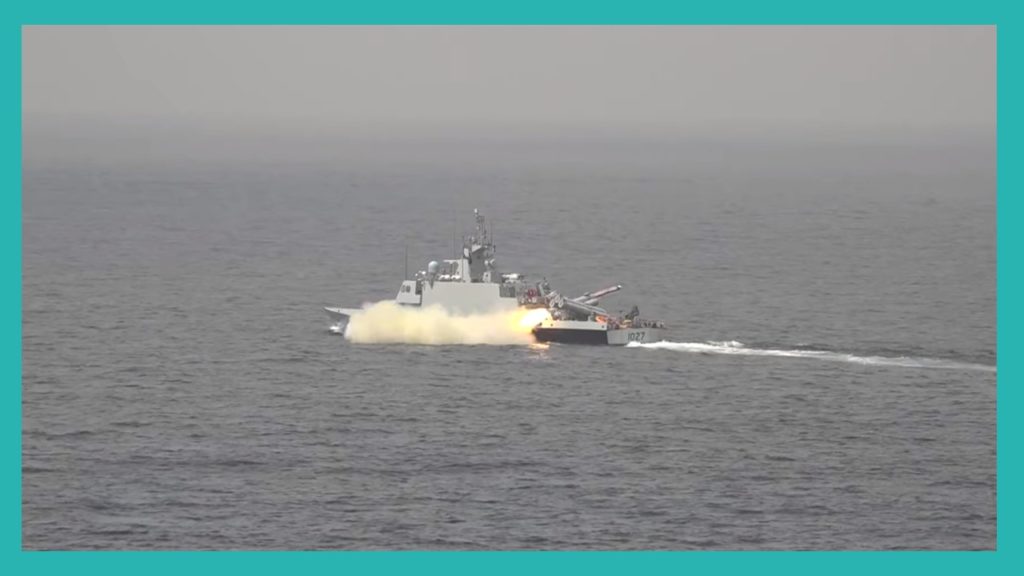
On 23 April 2019, the Pakistan Navy (PN) announced that it test-fired a cruise missile with dual-anti-ship and land-attack capabilities from one of its FAC-M (Fast Attack Craft – Missile) vessels, the PNS Himmat.
According to a statement from the PN’s Director General of Public Relations, the cruise missile “accurately hit its target on land.” In addition, the PN noted that the missile was domestically developed. However, it did not disclose the system’s range, payload, guidance type, or its designation.
However, in January 2018, the PN announced that it test-fired the ‘Harba’, which it did designate as being capable of both anti-ship and land-attack missions. Moreover, it was the PNS Himmat which had test-fired the Harba, i.e., the same ship that test-fired this recent cruise missile.
Thus, this recent cruise missile test was likely that of the Harba.
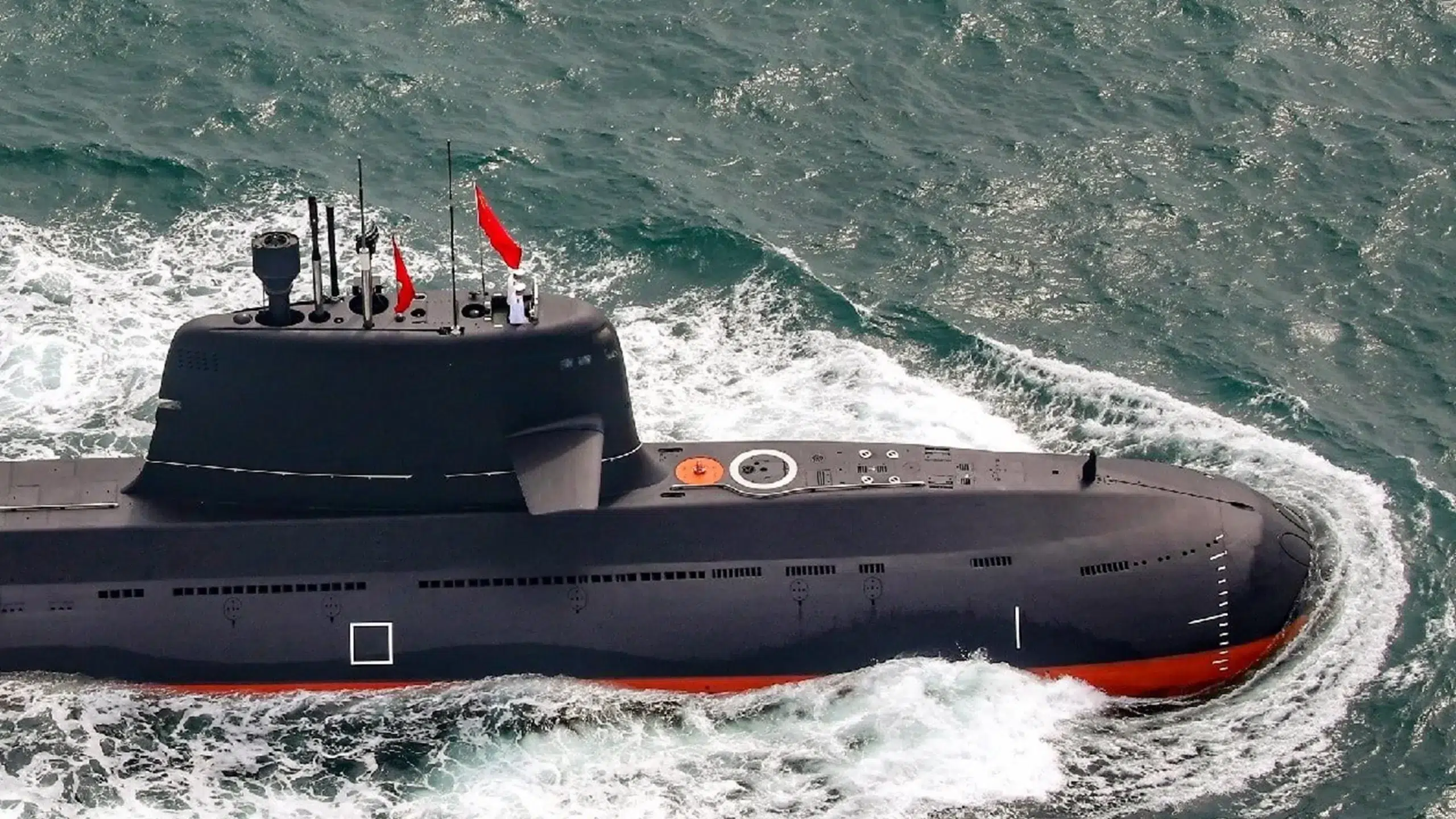
With it, the PN has cruise missiles for each of its core deployment domains: the Harba for surface-launch platforms; the Zarb for coastal defence; and the Babur 3 submarine-launched cruise missile (SLCM).
For the PN, the Harba – and by extension, the PN’s ability to deploy the missile from the FAC-M – signifies its push to not only acquire a long-range land-attack capability, but be able to deploy it from small, low-cost assets, such as the FAC-M as well.
In effect, it emulates what Russia had achieved by launching LACMs from its small surface warships from the Caspian Sea in 2015. The Azmat-class FAC(M) has a displacement of 560 tons as well as a length of 63 m and breadth of 8.8 m. It has a top speed of 30 knots and ferry range of 1,000 nautical miles (KSEW).
However, to operationally deploy this capability the PN requires a network-enabled warfare environment that equips the FAC-M – which has limited situational awareness – with off-board ISTAR (i.e., intelligence, surveillance, target acquisition, and reconnaissance) support.
Quwa outlined the PN’s efforts to build this ISTAR capability in an earlier analysis (click here). To be brief, the idea is that the PN is going to use its airborne and larger surface warships to provide the FAC-M all of the necessary situational awareness, targeting, and guidance support (note: this is a terse summary, you can find a fully detailed explanation of each aspect in the link above).
Each off-board sensor, which would include active electronically-scanned array (AESA) surface detection and targeting radars and over-the-horizon radars (OTHR), will be tied to the Naval Information Exchange System (NIXS), which the PN is acquiring from Turkey. The Pakistan Air Force’s (PAF) assets as well as the country’s forthcoming satellites may also factor into this system.
Don't Stop Here. Unlock the Rest of this Analysis Immediately
To read the rest of this deep dive -- including the honest assessments and comparative analyses that Quwa Plus members rely on -- you need access.