Quwa Premium

Why the JF-17 Block-III Matters to the Pakistan Air Force Plus

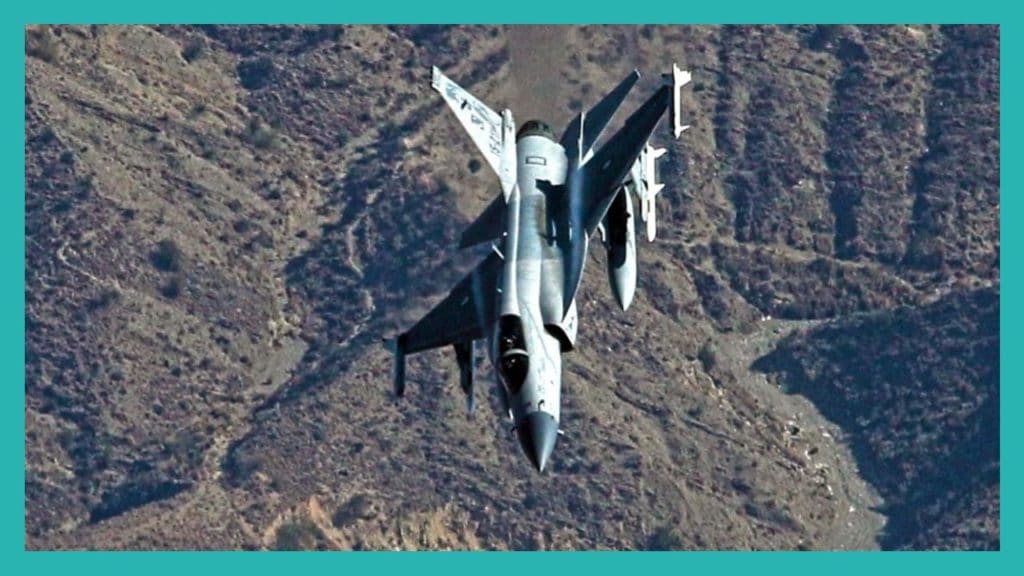
With the JF-17 Block-III’s design being ‘finalized’ following a two-and-a-half-year period, this article examines why the JF-17 Block-III matters to the Pakistan Air Force (PAF). It is not simply an issue of it being a more advanced version, but rather, becoming the vehicle through which the PAF is introducing new technology to its fighter fleet.

The outgoing Chief of Air Staff (CAS) of the Pakistan Air Force (PAF), Air Chief Marshal (ACM) Sohail Aman – succeeded by ACM Mujahid Anwar Khan – announced that the JF-17 Block-III design had been finalized following a period of “two-and-a-half-years”. Though a low-key statement, it represents a very important milestone, not just for the JF-17 program, the for the PAF’s as a whole as well.

Fundamentally, the reality of the Block-III not only advances the JF-17 by imbuing it with contemporary – and emerging – subsystems and capabilities, but it unquestionably establishes the JF-17 as the PAF’s sole (and foreseeable) means of bringing modern air warfare capabilities to its fighter fleet. This outcome can, to a great extent, be attributed to a lack of accessible fighter platforms from abroad. However, once the JF-17 Block-III materializes into a serviceable fighter, it could force an organizational shift in how cutting-edge solutions are sought in the future – i.e. favouring bespoke/custom solutions with China’s support.

The JF-17 Block-III is the first major iterative upgrade to the JF-17: it will introduce an active-electronically scanned array (AESA) radar, an integrated electronic warfare (EW) and electronic countermeasures (ECM) suite, updated avionics suite, three-axis/all-digital fly-by-wire (FBW) flight-control system, a single-panel multi-function display (MFD)-based cockpit and helmet-mounted display and sight (HMD/S) system.[1] As per the previous PAF CAS, the JF-17 Block-III is slated to enter production in 2019 or 2020.[2]

Speaking to Quwa, retired PAF officer and now historian and commentator Air Commodore Kaiser Tufail views the Block-III as a promising qualitative boost for the PAF fighter fleet:

“With AESA radar, the JF-17 should be able to resist enemy jamming [via its] many small transmit-receive modules (TRM), making it a much more survivable platform. The aircraft’s BVR capability is also expected to be greatly enhanced, especially in an environment increasingly beset with EW advances. Assuming the AESA radar works as expected, the JF-17 would have a more advanced radar than that of the F-16, thus becoming the PAF’s preferred platform in the air-to-air role.”

Indeed, the implication of the JF-17 assuming the leading qualitative position ahead of the F-16, especially as the ‘preferred’ air-to-air platform, would be significant. Frankly, a cursory look of the facts on paper in terms of what the Block-III will include compared to what the PAF’s F-16s have will aptly illustrate that the Block-III will be the qualitatively superior platform. Note: this is all in reference to the F-16s in PAF service, for which there is no tangible upgrade path – e.g. F-16V – due to end-user restrictions from the US.

Returning to the Block-III’s AESA radar. Generally speaking, the availability of multiple TRMs for tracking and scanning (wherein each can do so through a different frequency) enables the JF-17 to continue its air-to-air operations in dense EW/ECM environments. In practical terms, this is important of the PAF seeing the growth of EW/ECM-equipped assets in the Indian Air Force (IAF) and Indian Navy (IN). Should these manifest as threats over Pakistani airspace, the PAF will have to rely on its best – in terms of defensibility and capability – to counter them, and the Block-III would be the best equipped to do so (notwithstanding the inclusion of another platform, though increasingly unlikely to occur prior to Project Azm).

Practically, the PAF will continue using its F-16s and JF-17 Block-I and Block-IIs, but it is now difficult to see any defensive scenario where the Block-III would not be present. Currently, the PAF is expecting to acquire 50 Block-IIIs – i.e. completing the initial allotment of 150 aircraft. However, with the previous CAS stating the need to maintain a 400-strong fighter fleet, coupled with the reality of not having the pipeline include an alternate fighter (especially for specialized roles such as deep-strike), additional JF-17s of the Block-III and beyond variety could be prudent. In fact, Dr. Richard D. Fisher Jr., a prominent analyst of Chinese defence development and procurement, believed the PAF could figure for as many as 275 JF-17s.[3] Through its own self-published article (written by Alan Warnes), the PAF said it could procure 150-200 JF-17s.[4]

The PAF has yet to disclose its specific selections for the Block-III. However, Tufail noted that the design-freeze establishes that the PAF has chosen what it intends to configure into the Block-III. Of these, Tufail believes that the HMD/S and high off-boresight (HOBS) air-to-air missile (AAM) are also on the roadmap:

“One can also deduce from the CAS’ speech that the HMD/S system, an important feature of the Block-III, has been short-listed. Such a system would expand the employment options for Within Visual Range (WVR) scenarios and minimise the need for hard aircraft maneuvering, as the HOBS AAM will do the needful much more efficiently.”

Quwa Plus

Don't Stop Here. Unlock the Rest of this Analysis Immediately

To read the rest of this deep dive -- including the honest assessments and comparative analyses that Quwa Plus members rely on -- you need access.

Join Today

USD $29.99/Year