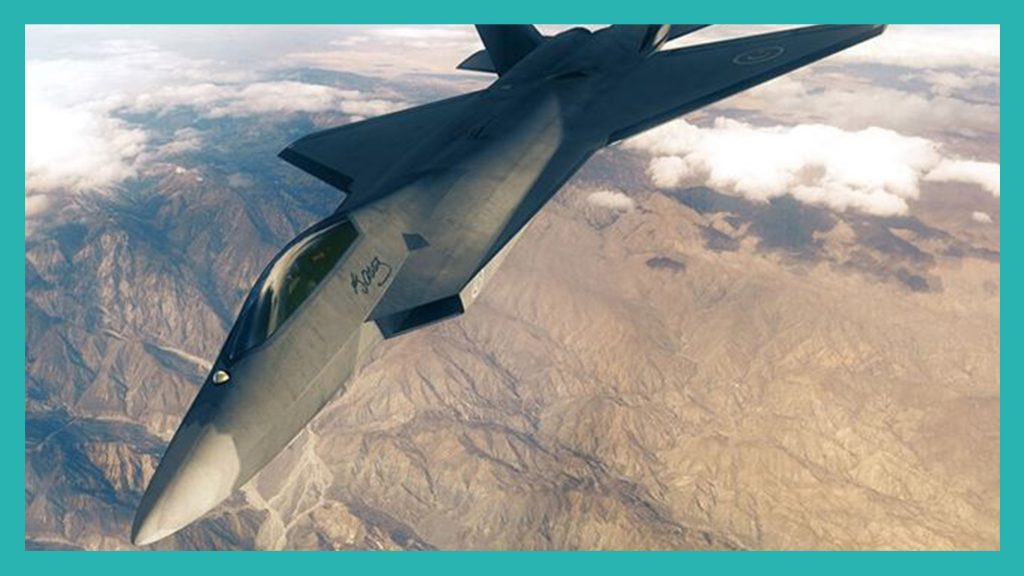
The centerpiece of Turkey’s aerospace development efforts is undoubtedly the Milli Muharip Uçak (MMU) – or National Combat Aircraft (i.e., the TFX). Spearheaded by Turkish Aerospace Industries (TAI), Turkey’s current plans are focused on rolling out a prototype in 2023 and, potentially, a test-flight in 2025.[1]
These dates reflect Turkey’s decision to use an off-the-shelf powerplant – i.e., the General Electric (GE) F110 – to power the prototype TFX/MMU and, potentially, its first production variants.[2] However, Turkey also plans to fly a variant of the MMU with indigenously developed engines by 2029.[3]
TR Motor is managing the indigenous engine development program. TR Motor is a jointly-owned public and private corporation with investment from TAI (i.e., a state-owned entity), BMC (i.e., a private sector giant), and SSTEK (a state-owned entity owned by the Presidency of Defence Industries or SSB).
According to Osman Dur, the general manager of TR Motor, said that 80 engineers were working (as of 2020) on the engine.[4] However, this is likely the start of TR Motor’s human resource investment. According to TAI’s general manager, Temel Kotil, the various involved in the MMU will need 3,000 personnel for the program. This would be in addition to the 3,000 TAI alone is hiring to carryout airframe development.[5]
The airframe and engine are basically the flagships of the MMU program, but Turkey is taking indigenous inputs seriously enough to even consider less conspicuous subsystems. For example, TR Motor will design and develop the auxiliary power unit (APU) and air turbine start system (ATSS) of the MMU.[6]
Quwa Plus
Go Beyond the Headlines on Pakistan’s Defence and Security.
Quwa Plus gives you deeper reporting, briefings, and analysis on Pakistan’s defence programs, foreign policy, national security, and regional strategy. Follow the developments that matter to professionals, analysts, and serious readers tracking Pakistan’s security landscape.
Join ($29.99/Year) Already a subscriber?Sign in