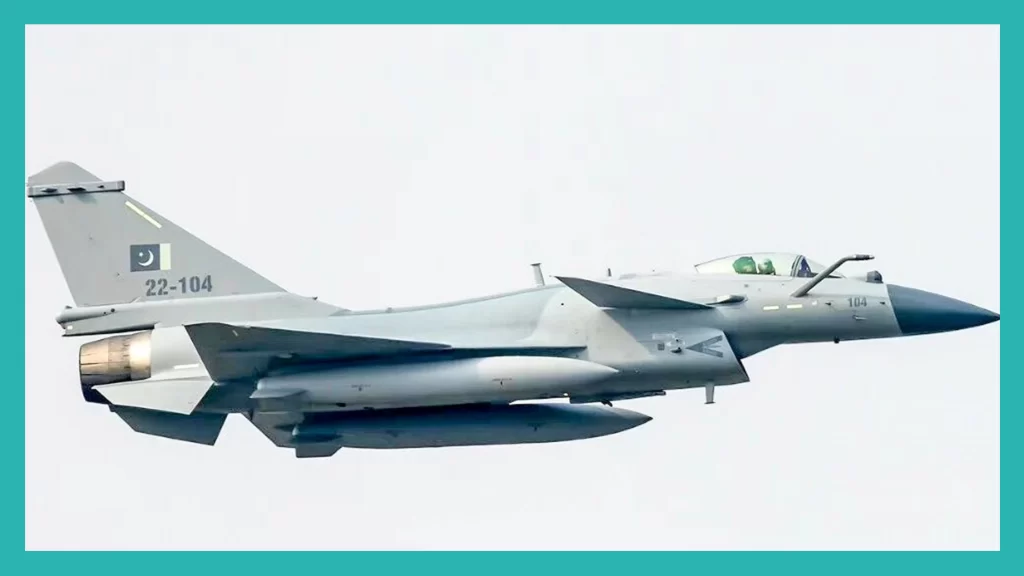
In February 2019, the Pakistan Air Force (PAF) and Indian Air Force (IAF) clashed in a brief, two-day and two-event skirmish involving both air-to-air and air-to-surface exchanges. In the midst of all the narratives, claims, and counter-claims, the clash resulted in the definite loss of one IAF MiG-21bis.
However, since the clash, both Pakistan and India both carried out a series of major modernization steps – some a result of plans predating 2019, or in response to it. Hence, the air warfare climate of South Asia is, arguably, one of the most complex and highest-stakes environments in the world.
Background
On 26 February 2019, the IAF had sent six Mirage 2000Hs armed with Rafael SPICE 2000 stand-off range (SOW) weapons. The IAF’s Mirage 2000Hs were reportedly escorted by Su-30MKIs and further supported by a pair of ERJ-145-based airborne early warning and control (AEW&C) aircraft.
The IAF apparently initiated its attack at stand-off range (i.e., from within Indian airspace) against targets in Balakot in Pakistan. The PAF claims that it sent F-16s and JF-17s to respond to the incoming IAF fighters.
The next day, in the early hours of 27 February, the PAF send its retaliatory package comprising of two JF-17s, four Mirage III/5s, and a large assortment of multirole fighters (F-16 and JF-17) in the escort as well as patrol roles. This force was further supported by the PAF’s Saab 2000-based Erieye AEW&C and Falcon 20-based electronic attack (EA) and electronic countermeasure (ECM) aircraft.
Quwa Plus
Go Beyond the Headlines on Pakistan’s Defence and Security.
Quwa Plus gives you deeper reporting, briefings, and analysis on Pakistan’s defence programs, foreign policy, national security, and regional strategy. Follow the developments that matter to professionals, analysts, and serious readers tracking Pakistan’s security landscape.
Join ($29.99/Year) Already a subscriber?Sign in