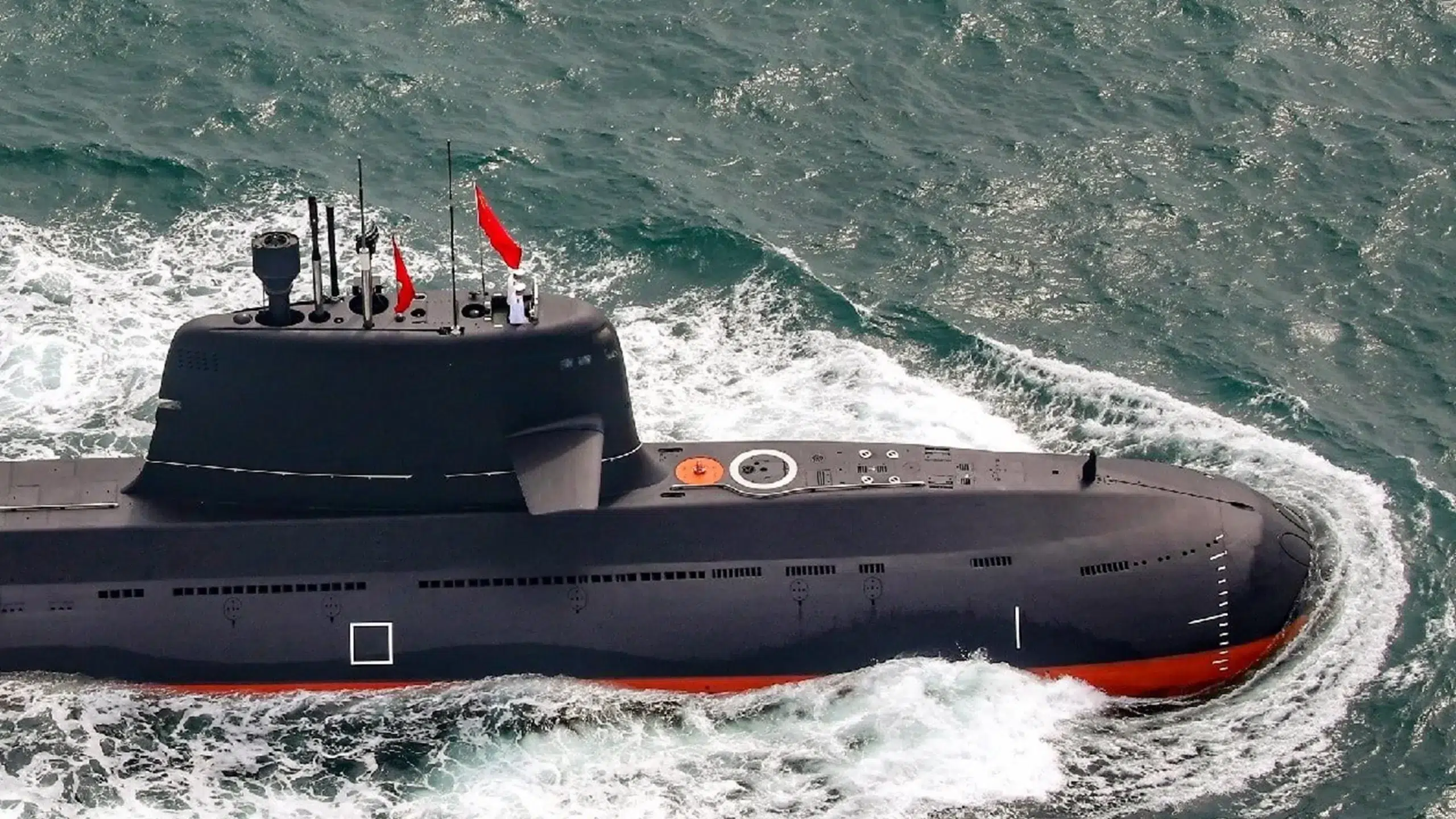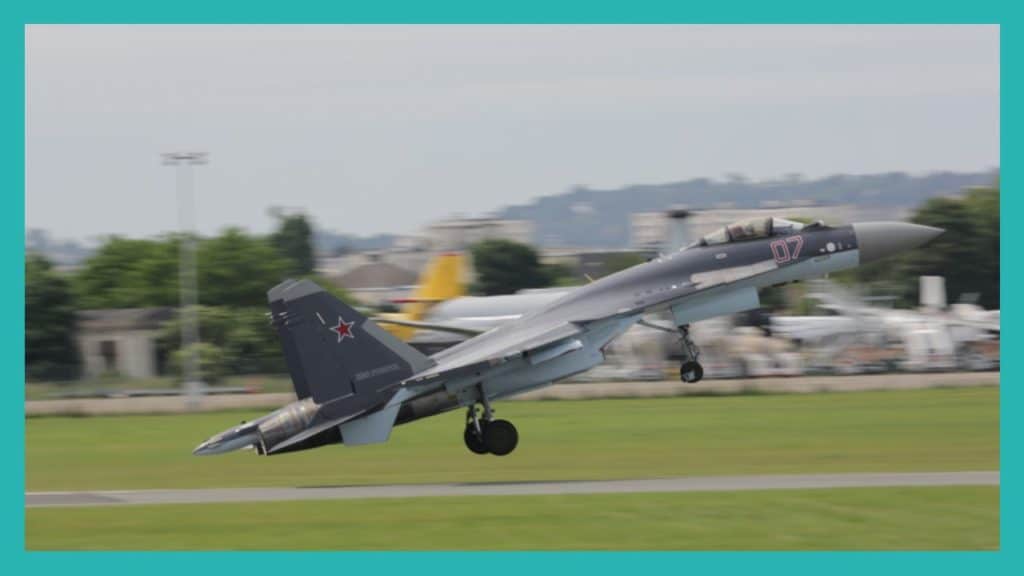
On 31 July 2018, the Pakistan Navy and the Russian Navy signed a memorandum-of-understanding (MoU) aiming to enhance “bilateral naval collaboration.”[1] On its heels, discussion has emerged between Russian foreign policy analysts and observers regarding the current state of Russian-Pakistani defence ties and, if it is tenable, the potential scope for growth between the two countries. Konstantin Makienko, the Deputy Director of the Russian Center for Analysis of Strategies and Technologies, outlined that Moscow should “promote [the] Su-35 as actively as possible to Pakistan” in response to India’s growing pursuit of weapons from the United States, Western Europe and Israel (in lieu of Russia).[2]
It must be stated that Makienko’s statement is an opinion of his think-tank, not a foreign policy shift from the Kremlin. The common observation of bilateral defence relations between Russia and Pakistan is that it is more limited in scope compared to Moscow’s other bilateral ties. Rather, Russia’s has focused its work with Pakistan to counterinsurgency (COIN) and counterterrorism (CT) cooperation.[3]
Simply, Russia’s goal is to maintain its position in India while carving a relatively small, but lucrative market in Pakistan (not just for defence goods, but for energy and other products and services). Thus far, the only big-ticket item of note sold by Russia to Pakistan has been the Mi-35M (i.e. four helicopters), which have been delivered to the Pakistan Army Aviation Corps (PAA).[4] Pakistan is reportedly interested in procuring up to 20 Mi-35M.[5] Otherwise, the balance of Russia’s offerings to Pakistan have been centered on various COIN and CT goods, such as assault rifles and armoured vehicles.[6]
Interestingly, there is a report by a co-founder of one of the original equipment manufacturers (OEM) that had competed in the Pakistan Army’s new standard-issue assault rifle program claiming that Pakistan had ordered 140,000 Kalashnikov AK-103 assault rifles from Russia.[7] In June 2016, the Russian News Agency TASS reported (citing an unnamed Pakistani official) that Pakistan would procure “a significant number of AK-103 assault rifles.”[8] If correct, this would align with the competing (and currently applied) view of ties.
Ivan Konovalov – i.e. the Director of the Center of Strategic Studies – advised that Moscow continue its targeted approach with Pakistan so as to both continue its (albeit lesser) presence in India as well as build a tenable niche market in Pakistan (for transport helicopters and other areas that would not affect the regional balance in South Asia.[9] On the surface, there is no point in risking the markedly larger – and more frequent – defence contracts in India for comparatively marginal gains in Pakistan.
However, could India’s withdrawal from the Fifth Generation Fighter Aircraft (FGFA) program – which was poised to drive development spending of at least $8 billion US alone – have altered the situation to make deeper Russian-Pakistani defence relations tenable? Ultimately, Makienko’s concern stems from the loss of India as a key long-term partner for the FGFA/Su-57 and, in addition, its growing departure from Russia in its short-and-medium-term needs. Unless the Kremlin relaxes its policy to Islamabad, it even risks losing the Pakistani market to “Chinese, South Korean and even Turkish aircraft (or big-ticket items in general).”[10]
In fact, Makienko even referenced the fact that Pakistan ordered $2.5 billion US in arms from Turkey – i.e. the 30 T129 ATAK attack helicopters and four MILGEM Ada corvettes – that Russian suppliers might have been able to compete for had Moscow approved of (and supported) them.[11] Makienko asserted that “…in the interests of the Indian partner, we (Russia) often renounced lucrative contracts in Pakistan.”[12] Instead, Makienko advised that Russia actively approach Pakistan, especially in terms of combat aircraft, in order to secure a long-term revenue source in lieu of the Indian market.[13]
India’s Defence Purchases from Russia are Still Lucrative
Be it sustaining its large Sukhoi Su-30MKI fleet, co-producing Kamov Ka-226 utility helicopters or moving ahead on the purchase of Almaz-Antey S-400 Triumf long-range air defence systems, New Delhi’s defence purchases from Russia are still more extensive and lucrative than what Pakistan could, even at its optimal level of expenditure with the Russians (where it can secure exactly what it would prefer), generate.
However, the S-400 program had caught a snag when the US had sought to restrict its allies from such purchases from Russia through legislation, i.e. ‘Countering America’s Adversaries Through Sanctions Act’ (CAATSA). CAATSA seeks to prevent US allies such as India, Indonesia, Vietnam and others from procuring Russian arms, Iranian oil and other goods that could adversely affect US geo-strategic interests.[14]
Granted, the US introduced a waiver to enable India, Indonesia and Vietnam procure Russian arms under CAATSA, albeit with certification (of undertaking specific measures) from the White House.[15] The waiver is expected to enable India to finalize its S-400 purchase, but there is a caveat that could affect long-term exchanges between Russia and India. In his statement regarding CAATSA and the waiver, US Secretary of State Jim Mattis stated, “[The waiver] allows nations to build a closer security relationship with the US as they continue to transition from reliance on Russian military equipment.”[16]
Don't Stop Here. Unlock the Rest of this Analysis Immediately
To read the rest of this deep dive -- including the honest assessments and comparative analyses that Quwa Plus members rely on -- you need access.