
In early April 2022, the Pakistan Army’s (PA) Chief of Army Staff (COAS), General Qamar Javed Bajwa, said that Western supply restrictions have pushed Pakistan to lean on China for new defence hardware. Gen. Bajwa issued the statement at the 2022 Islamabad Security Dialogue.
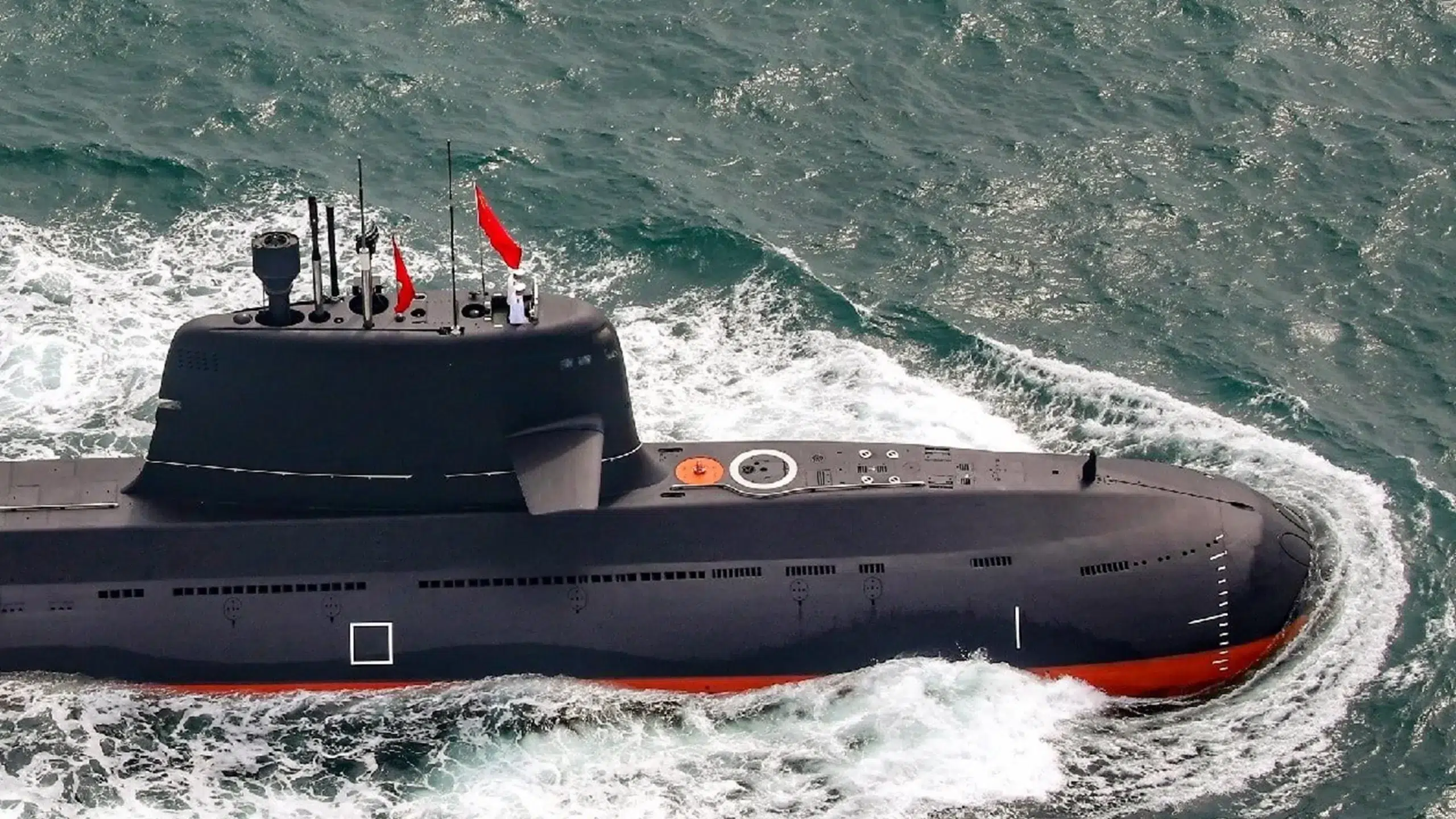
Specifically, Gen. Bajwa spoke to how Pakistan’s defence imports from the West fell through. For example, in 2018, Pakistan had signed a $1.5 billion US contract with Turkish Aerospace Industries (TAI) for 30 T129 ATAK attack helicopters. However, TAI was unable to secure an export permit from the United States for the T129’s LHTEC CTS800 turboshaft engines. Likewise, the Pakistan Navy (PN) had sought German diesel engines for the Hangor (II)-class submarines it is buying from China. However, Berlin ultimately refused to release the export permits to transfer the engines for those submarines.
The reasons for the supply-side failures vary. In the case of the T129 engines, the primary issue seemed to have been the chill in bilateral ties between the U.S. and Pakistan. However, with the German engines for the Hangor (II)-class submarines, it is unclear why Berlin withheld the permits. It might have been due to Indian pressure or, potentially, Germany being wary about transferring a key subsystem for a Chinese weapon system. Gen. Bajwa also highlighted that the pressure to win Indian defence contracts also led to France to stop supporting the PN’s Agosta 90B air-independent propulsion (AIP)-equipped submarines.
Ultimately, regardless of the causes driving Western suppliers to shut their shops to Pakistan, the Pakistani military is losing options. As a result, as Gen. Bajwa noted, Pakistan is moving closer to China, particularly in the realm of sourcing high-tech weapon systems.
While Gen. Bajwa’s statements about the difficulty of sourcing weapons from the West are true, one must not discount China’s technology base. Today, China is an economic superpower capable of sourcing every critical input for its marque weapon systems, including multirole fighter aircraft, surface warships, drones, and even submarines. Moreover, Chinese products leverage contemporary technologies. As an example, the J-10CE is equipped with an active electronically scanned array (AESA) radar and long-range air-to-air missile (LRAAM) capable of reaching at least 145 km (i.e., PL-15E).
Basically, Pakistan now has an alternative source for procuring modern, functionally adept defence items in China. Not only that, but the Chinese armaments generally cost less to procure than their counterparts from the West. If the Chinese weapons meet the Pakistani military’s requirements, then Pakistan will likely procure them in favour of non-Chinese alternatives, be it Western or otherwise. In fact, the PA’s wheeled self-propelled howitzer (SPH) program is indicative of this fact. The PA had evaluated numerous options, including Chinese, South African, Serbian and others. But ultimately, the Chinese SH-15 won out.
Quwa Plus
Go Beyond the Headlines on Pakistan’s Defence and Security.
Quwa Plus gives you deeper reporting, briefings, and analysis on Pakistan’s defence programs, foreign policy, national security, and regional strategy. Follow the developments that matter to professionals, analysts, and serious readers tracking Pakistan’s security landscape.