
Nigeria Receives First T129 Attack Helicopters from Turkey
Turkish Aerospace Industries (TAI) delivered the first two of six T129 ATAK attack helicopters to the Nigerian Air Force (NAF). The remaining four aircraft are slated to delivery by the end of the first half of next year. Nigeria formally ordered the six ATAKs last year at the 2022 Farnborough Air Show.
Africa has emerged as one of Turkey’s key markets for selling its defence solutions, with Nigeria climbing to the top through the procurement of major platforms, like the ATAK. In addition, Nigeria also ordered a pair of 76 m offshore patrol vessels (OPV) from Turkey’s Dearsan Shipyard. The first OPV was launched on October 26. Nigeria also contracted Dearsan Shipyard to modernize its MEKO 360 frigate.
The NAF also acquired an undisclosed number (at least six) of Bayraktar TB2 combat drones from Baykar Technologies, adding to the company’s growing cadre of drone customers.
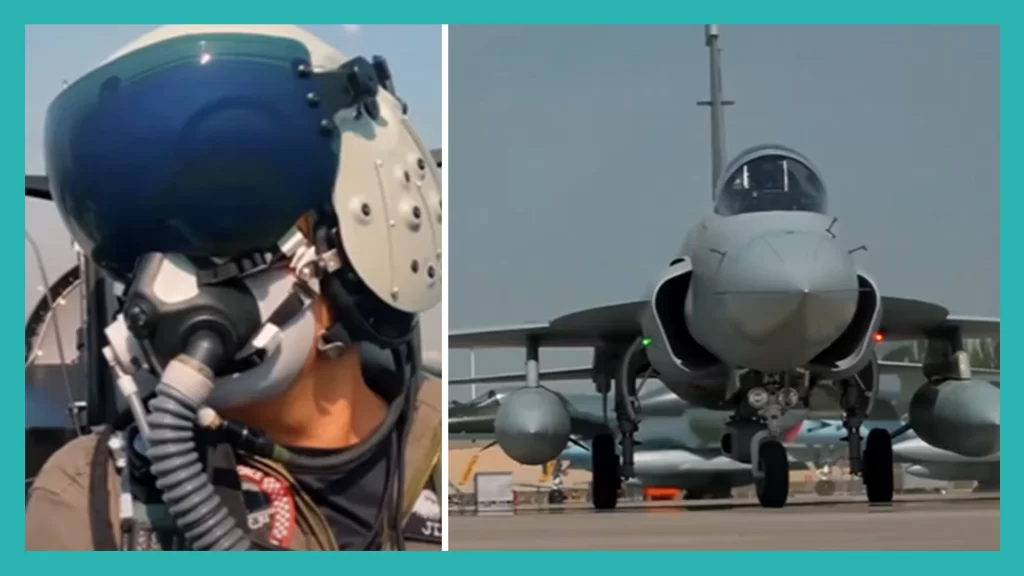
However, not only do these acquisitions speak to the growing presence of the Turkish defence industry, but it also reflects Nigeria’s growing focus on advancing its counter-insurgency (COIN) capabilities. In this sense, the NAF also inducted 12 Embraer A-29 Super Tucano light attack aircraft and three AVIC/PAC JF-17 Thunder multirole fighters. The U.S. also greenlit the sale of 12 Bell Textron AH-1Z Viper attack helicopters.
Combined with the T129 and Bayraktar TB2, the NAF has a multi-layered close air support (CAS) and strike capability. The T129 and A-29s, for example, can provide CAS coverage for ground forces, reconnaissance, and anti-infantry as well as precision-strikes against fixed targets. When heavier munitions are required, the NAF can leverage the JF-17s with laser-guided bombs (LGB) and precision-guided bombs (PGB). Finally, the Bayraktar TB2 can support long-endurance intelligence, surveillance, and reconnaissance (ISR), time-sensitive targeted strikes, and CAS operations.
Collectively, these procurements give Nigeria one of the more complex and capable COIN capabilities in Sub-Saharan Africa. However, the JF-17 and T129 are also scalable in that through additional units, Nigeria can also build its conventional defence capabilities. The JF-17, for example, can leverage long-range air-to-air missiles and stand-off weapons, including air-launched cruise missiles (ALCM). The T129 is also an adept anti-tank/armour solution and can be configured with electronic countermeasures (ECM) systems, such as radar jammers, enabling it to operate in contested environments.
Saudi Arabia Reportedly Interested in Dassault Rafale Fighters from France
According to the French newspaper La Tribune, the government of Saudi Arabia requested a quote from Dassault regarding a potential purchase of 54 Rafale fighter aircraft. La Tribune verified the information from France’s Minister of the Armed Forces, Sébastien Lecornu.
The request does not necessarily signify that negotiations are underway or will take place. That said, a few geo-political dynamics could make this potential deal relatively tenable. The first – and, arguably, the most impactful – factor is Riyadh’s difficulty in gaining Berlin’s approval for a follow-on Eurofighter Typhoon deal to add to the 72 aircraft currently in service with the Royal Saudi Air Force (RSAF). Technically speaking, it would make more sense for the RSAF to acquire additional Typhoons as it can leverage its existing support infrastructure. Procuring the Rafale would necessitate a net-new infrastructure base in terms of training, maintenance, and, potentially, air-to-air munitions. Cynically speaking, one can see Riyadh’s interest in the Rafale as a ploy to pressure the U.K. to move Germany towards approving a Typhoon deal, especially when both countries could benefit from the production output in terms of jobs and other economic activity.
On the other hand, a Rafale deal would be a major boon for France and Dassault in particular, effectively turning many of the Gulf Cooperative Council (GCC) states into its customers. In fact, each one of the GCC states flying the Rafale would be a major user: Qatar has 36 units, the United Arab Emirates (UAE) ordered 80 Rafale F4s, and a potential Saudi deal would result in 54 aircraft. Qatar has an option to acquire 24-36 additional Rafales as well. These contracts would extend the Rafale production line’s work further into the future and, potentially, drive more French government interest in developing a future Rafale variant.
Quwa Plus
Go Beyond the Headlines on Pakistan’s Defence and Security.
Quwa Plus gives you deeper reporting, briefings, and analysis on Pakistan’s defence programs, foreign policy, national security, and regional strategy. Follow the developments that matter to professionals, analysts, and serious readers tracking Pakistan’s security landscape.
Join ($29.99/Year) Already a subscriber?Sign in