Quwa Premium

Lessons from Ukraine: Securing the Munitions Supply Chain Plus

Pakistan is gearing its defence industry to produce more sophisticated munitions, a likely move to secure more of its ammunition supply channel.

Though Kyiv’s repeated requests for advanced weaponry – like new main battle tanks (MBT) or F-16 multi-role combat aircraft – populate news headlines, its call for ammunition is just as important, if not more so for the day-to-day maneuvers of its main operations, like the ongoing counter-offensive.

Remarkably, Ukraine’s need for an enduring supply of ammunition to replenish its inventories is proving a challenge for the West. NATO Secretary General Jens Stoltenberg stated, “The current rate of Ukraine’s ammunition expenditure is many times higher than our current rate of production.”

Basically, the current production output for ammunition in the West is “under strain.” Though surprising, it is not unexpected in that the Russia-Ukraine War has been the longest full-scale conventional conflict between two states in the modern age, certainly since the Second World War. Be it in the West or the East, it is unlikely any major power would have anticipated wartime production requirements reaching the level Kyiv is seeing today. In a post-WW2 age, this conflict has been exceptional on many counts, be it in terms of its scale, its length, its complexity, and the fact that it is occurring in Europe.

However, one can argue that the Russia-Ukraine War has also forced defence planners in other regions of the world to rethink their assumptions about a modern conventional or state-versus-state conflict. This is as true for Pakistan as it is for most other countries with large militaries and even larger adversaries.

Pakistan might have gotten a sense of some of these trends as early as 2019 when it responded to India’s incursion across the Line of Control (LoC) in Kashmir. Under Operation Swift Retort, for example, Pakistan’s air force sent 18 to 24 of its fighter aircraft plus an assortment of specialized assets. This was a significant investment for one operation which, had cooler minds not prevailed on both sides of the border, may have spiralled into a greater crisis. The risk of India engaging in another cross-border strike exists and, in turn, Pakistan’s imperative to respond will also exist. But now, Pakistani defence planners have to account for a scenario of an evolved full-scale conventional war, one centered on a heavy dependence on sophisticated guided munitions, advanced air and surface-based platforms, electronic warfare, and other dynamics.

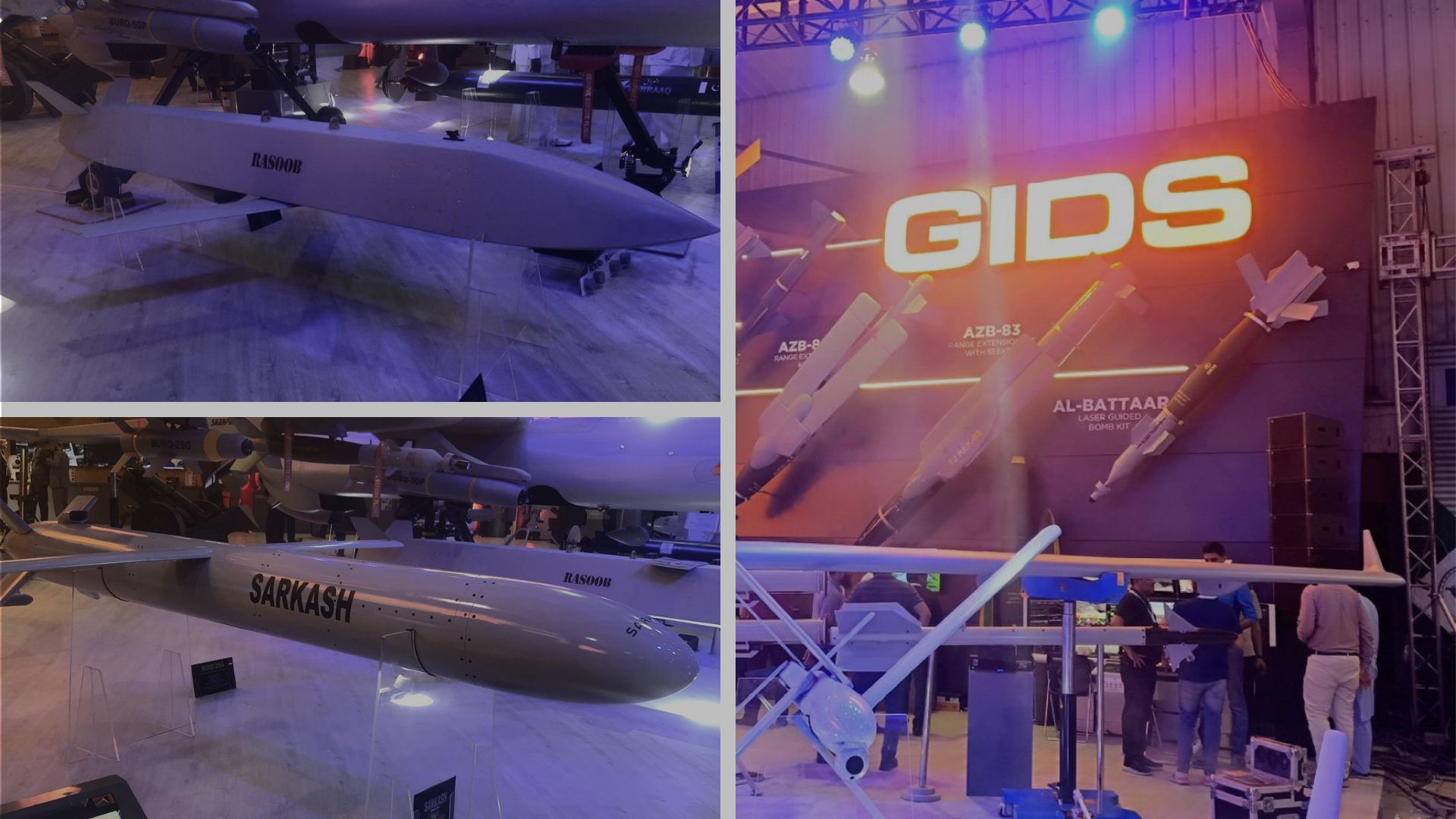
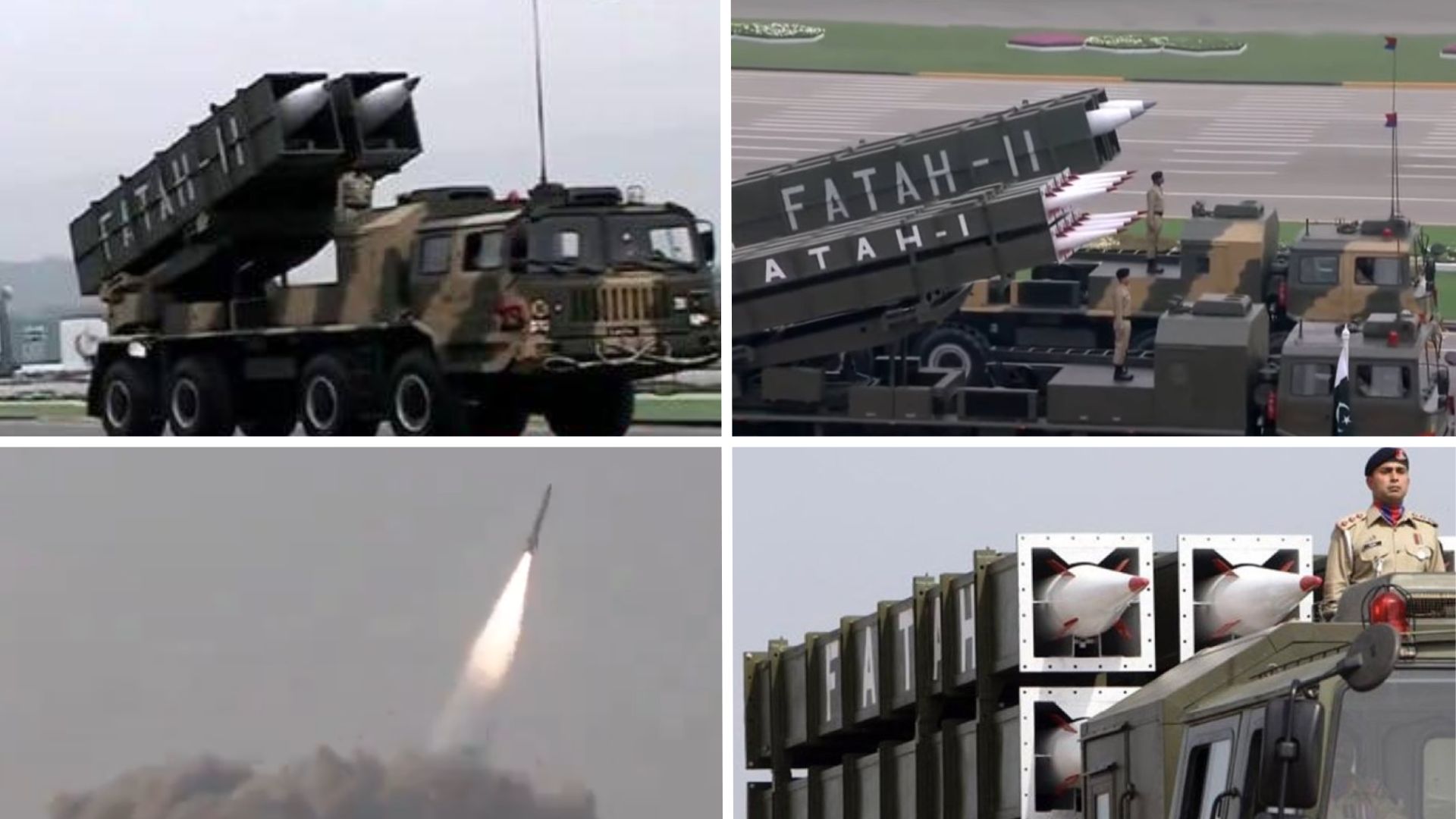
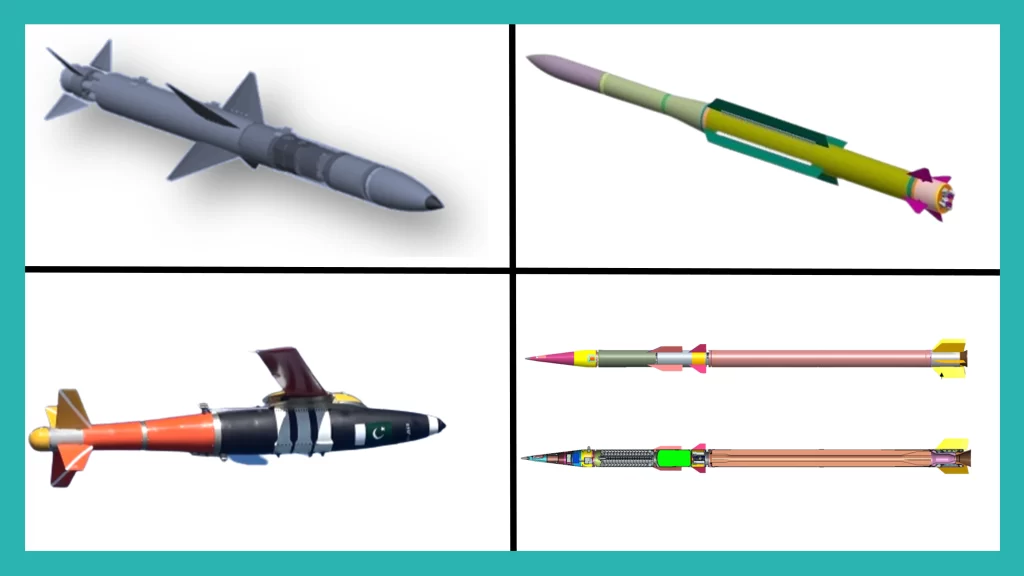
Swift Retort and the Russia-Ukraine War have likely alerted Pakistani planners to the need for maintaining a large inventory of advanced munitions, such as (among others): Beyond-visual-range air-to-air missiles (BVRAAM), within-visual-range air-to-air missiles (WVRAAM), ground-launched cruise missiles (GLCM), air-launched cruise missiles (ALCM), guided rockets, guided artillery shells, precision-guided bomb (PGB) kits, anti-ship cruising missiles (ASCM), and surface-to-air missiles (SAM).

For Pakistan, one of the new lessons is that even a single major operation would likely require the use of a significant number of guided munitions, like PGBs, ALCMs, and other stand-off range weapons (SOW). In one sense, this may sound surprising as the point of guided munitions is to maximize the impact of a ‘few’ weapons by leveraging accuracy. By increasing the accuracy and range of a munition, they would generate a higher chance of striking their target, thereby reducing the need for a larger number of munitions. This can be a realistic perspective, but there is a caveat: While one could achieve their goals with fewer guided munitions compared to unguided bombs, they may still require many guided munitions.

In 2022, a U.S. official stated that Russia had “blown through” its guided munition stores. While Russia has evidently replenished its inventory, one can make a key observation from the early days of the war. It was not uncommon for militaries to keep relatively small stocks of guided munitions. Before the Russia-Ukraine War, the bulk of air operations around the world had been against insurgents or non-state actors, and the militaries involved did not need deep guided munition stores.

This was likely the same for Pakistan – until Swift Retort. If the Pakistan Air Force (PAF) wanted to build the capacity to undertake operations of that scale in frequent succession and, possibly, simultaneously across different operational theaters, it would need a large number of platforms and a deep inventory of guided munitions. For a cash-strapped country like Pakistan, both sides of the equation (i.e., platforms and guided munitions) must be relatively low-cost and scalable. From a platform standpoint, the PAF is inducting the J-10CE and JF-17 Block-3; and for its guided munitions strategy, it has the AZB.

The AZB is series of ‘range extension kits’ for MK-80-series general purpose bombs (GPB). Like the Boeing Joint Direct Attack Munition, the AZB converts unguided GPBs into precision-guided bombs (PGB). Hence, the point of this approach is to reduce the cost and time of adding guided munitions. The PAF would likely maintain a large inventory of GPBs; so, the warhead element already exists, it just needs a scalable solution to make those GPBs accurate and longer-ranged.

Quwa Plus

Don't Stop Here. Unlock the Rest of this Analysis Immediately

To read the rest of this deep dive -- including the honest assessments and comparative analyses that Quwa Plus members rely on -- you need access.

Join Today

USD $29.99/Year