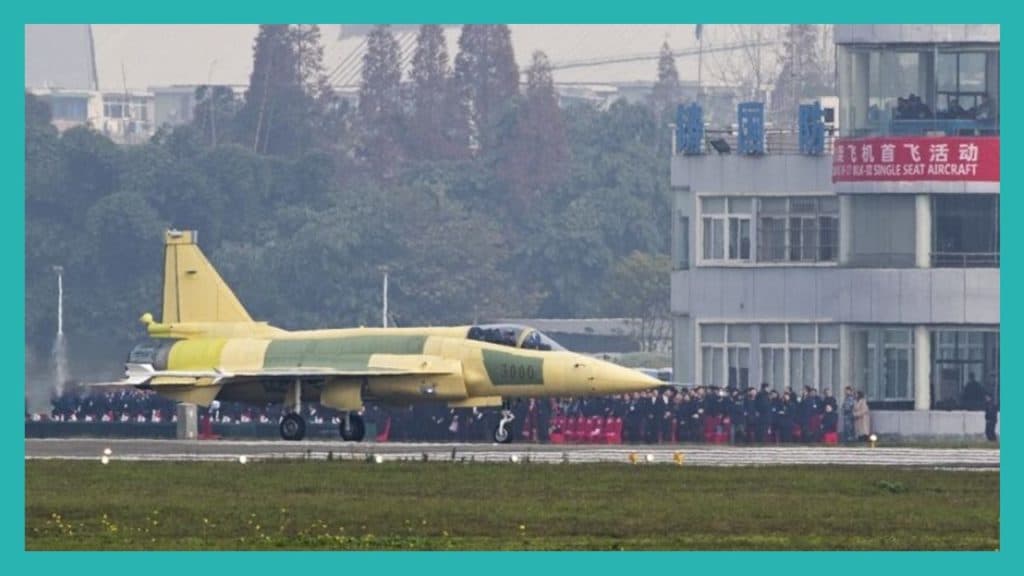
On 15 December 2019, the first known prototype of the JF-17 Block-III performed its maiden test flight in Chengdu at Chengdu Aircraft Industry Group’s (CAIG) facilities.[1]
The JF-17 Block-III is the first major upgrade of the JF-17 Thunder, a lightweight multi-role fighter that is co-produced by CAIG and Pakistan Aeronautical Complex (PAC). The JF-17 is one of the mainstay combat aircraft of the Pakistan Air Force (PAF), which now operates roughly 120 fighters across multiple variants.
As previously noted, the Block-III retains the airframe design of the preceding Block-I and Block-II, though with visible modifications. The most apparent of these changes include an unknown addition to the base of the vertical stabilizer, repositioned sensors on the vertical stabilizers, and sensors to the main inlets.
Though it includes a new head-up display (HUD), it is unclear how many of the new intended subsystems are already in this Block-III prototype, but it is not yet equipped with a radar. It seems testing will be done in phases, with subsystem and weapon integration coming towards the end (and potentially in Pakistan).
Currently, the PAF intends to procure 50 Block-IIIs, the first two of which are due in 2020. Deliveries of all aircraft are due by 2024. In effect, the JF-17 Block-III will be the first (and potentially only) so-called 4+ or 4.5-generation multi-role fighter addition through the 2020s, making this test flight a key milestone.
Quwa Plus
Go Beyond the Headlines on Pakistan’s Defence and Security.
Quwa Plus gives you deeper reporting, briefings, and analysis on Pakistan’s defence programs, foreign policy, national security, and regional strategy. Follow the developments that matter to professionals, analysts, and serious readers tracking Pakistan’s security landscape.
Join ($29.99/Year) Already a subscriber?Sign in