On 13 November 2019, the Indian Army initiated a large-scale combat exercise on the western end of the Thar Desert in Rajasthan. Designated “Sindhu Sudarshan,” the large-scale wargame comprises of 40,000-plus troops alongside tanks, artillery and helicopters.[1]
According to an Indian Armed Forces officer (via The Times of India), the drill “aims to validate the battle readiness, operational effectiveness and deep strike offensive capabilities of the ‘Sudarshan Chakra’ (21) Corps in an integrated air-land battle scenario.”[2]
In other words, a key aspect of the exercise is to test the effectiveness of India’s ‘integrated battle groups’ (IBGs), which are meant to rapidly thrust into enemy territory through a composite force of infantry, tanks, artillery, and fixed as well as rotary aircraft, among other military assets.
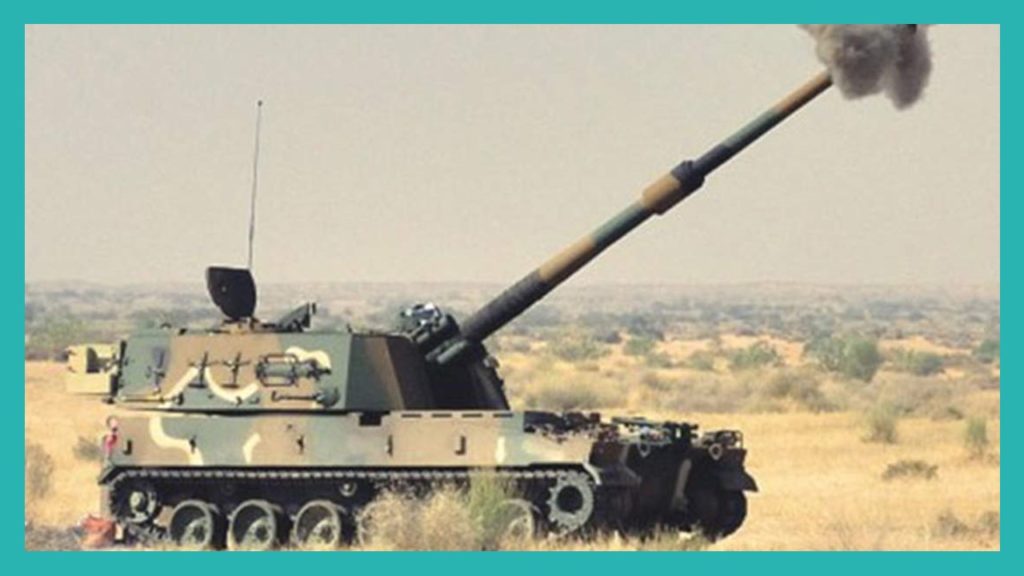
This exercise is also serving as the first deployment or use of the Indian Army’s newly inducted Hindustan Aeronautics Limited (HAL) Rudra lightweight utility helicopters and the Vajra 155 mm/52-calibre tracked self-propelled howitzer (SPH), the latter being based on the Hanwha Land Systems K9 Thunder SPH.[3]
India’s Emerging Integrated Battle Groups
Though deployed, the IBG concept is still a work in progress. Currently, Indian officials believe it will take around four to five years to fully convert selected units into IBGs (The Economic Times).[4]
In general, IBGs will be around the size of – or smaller – than divisions, but integrate units from existing regiments. Reportedly, each IBG will be made up of six battalions, and in turn, report directly to a Corps.
Besides deploying a diverse composition of systems in one element, the IBGs will also be specialized. Be it the terrain of their operational environment, the specific threats India expects in a particular area, or the operational goals of the group, India will deploy multiple types of IBGs against its neighbouring foes.
Speaking to The Economic Times, an Indian official stated:
“If I know that my threat across the border is mechanised, then my IBG has to be equipped accordingly. If I know that when I cross the border during battle and will encounter ditches, then I will need breathing apparatus for my equipment. In another sector, if the threat is from armoured formations such as tanks, so I will need armour. We will also have to look at whether the IBG will need artillery and where can it be deployed.”[5]
Thus, a basic aim of the IBGs is to enable the Indian Army to deploy a specially suited force to each region or sector as to maximize potential success and minimize, if not eliminate, drawbacks and constraints.
Don't Stop Here. Unlock the Rest of this Analysis Immediately
To read the rest of this deep dive -- including the honest assessments and comparative analyses that Quwa Plus members rely on -- you need access.