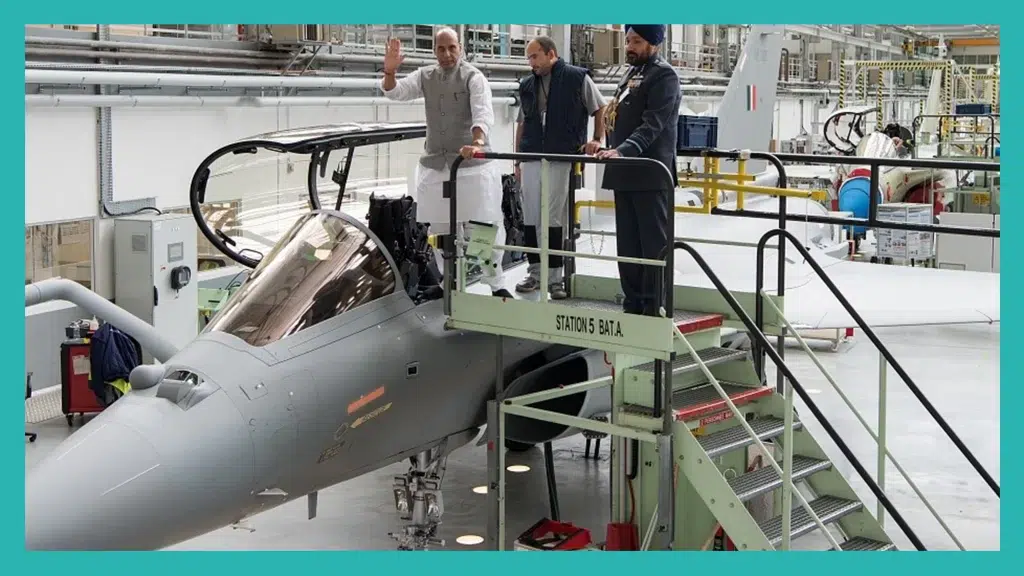
On 11 July 2023, the Indian Ministry of Defence’s (MoD) Defence Acquisition Council (DAC) gave the greenlight to start negotiations for 26 Dassault Rafale multi-role fighters for the Indian Navy (IN). The decision, according to Dassault Aviation, was made after keenly fought international competition, with Boeing’s F/A-18E/F Super Hornet being the other main contender.
The decision, on the surface, appears pragmatic. The Indian Air Force (IAF) already operates a fleet of 36 Rafale fighters. This allows the IN to capitalize on existing and upcoming infrastructure investments – such as the forthcoming Safran maintenance, repair, and overhaul (MRO) facility for the M88 turbofan engine – to control lifecycle costs and smoothen induction. Furthermore, the move presents an opportunity for India to build upon existing offset agreements from the IAF’s first Rafale contract, which are poised to help drive India’s aerospace, defence, and other technology sectors.
However, this does not imply that Boeing – or the U.S. at large – had less to offer. In fact, Boeing maintains a substantial presence in India with numerous offsets tied to previous and ongoing procurement projects. Notably, India is now the supplier of the Boeing AH-64 Apache’s fuselage, with the Tata Boeing Aerospace Limited facility booked with orders extending past 2030.
Moreover, General Electric (GE) is also exploring the prospect of co-producing its F414 turbofan engine in India. Though aimed at India’s homegrown fighter programs – such as the Tejas, ORCA/TEBDF, and AMCA – consideration must have been paid to the idea of sweetening a potential Super Hornet deal to the IN.
Overall, it is unlikely that Boeing or the United States balked at offering valuable offset and/or collaborative benefits to India. Rather, the IN – and potentially the IAF as well – might simply be uncomfortable with the prospect of adding an advanced American combat aircraft to their respective fleets.
Quwa Plus
Go Beyond the Headlines on Pakistan’s Defence and Security.
Quwa Plus gives you deeper reporting, briefings, and analysis on Pakistan’s defence programs, foreign policy, national security, and regional strategy. Follow the developments that matter to professionals, analysts, and serious readers tracking Pakistan’s security landscape.
Join ($29.99/Year) Already a subscriber?Sign in