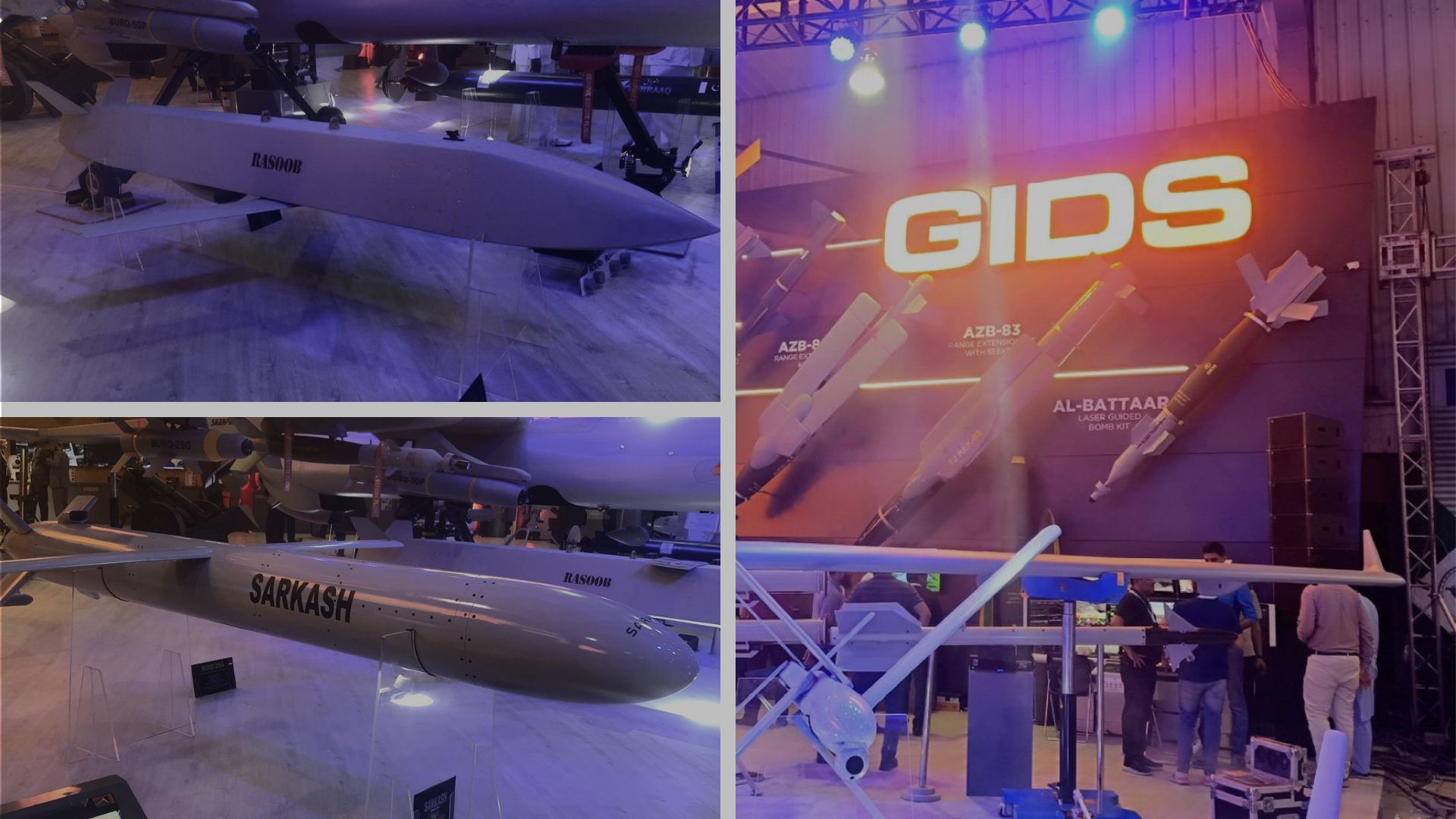

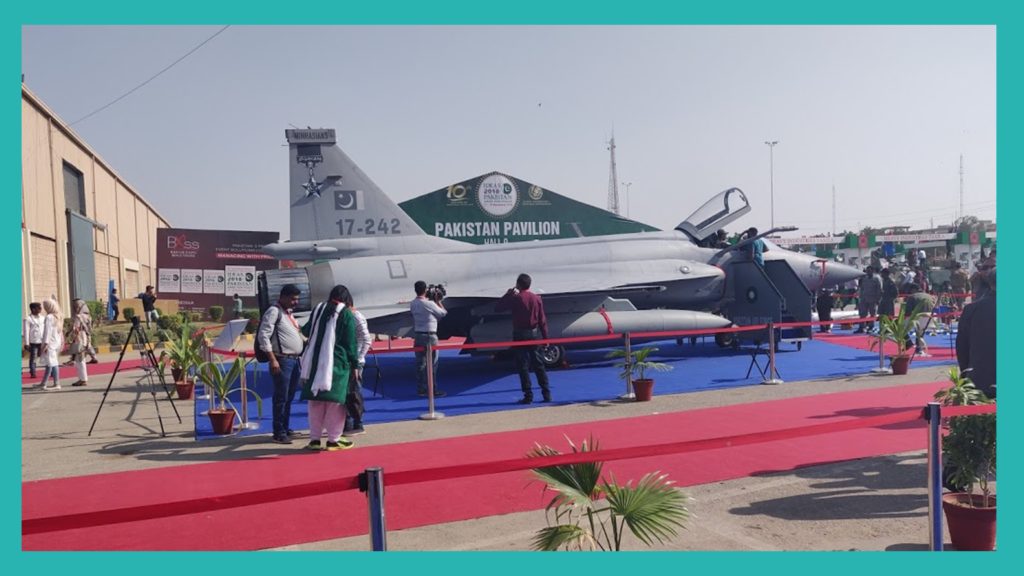
During the 2018 International Defence Exhibition and Seminar (IDEAS), the Pakistan Air Force (PAF) opted to showcase that it was ‘staying the course’ with a predefined, long-term modernization roadmap.
The core of this roadmap was set by Air Headquarters (AHQ) more than a decade ago, i.e., complete the procurement of 150 JF-17 Thunder multi-role fighter aircraft, enable and enhance interoperability among each of the PAF’s combat and surveillance assets, and address the margins where possible.
It is in the ‘margins’ where activity is, perhaps, the most dynamic. For the PAF, the ‘margins’ are programs that are important, but not essential to maintaining a deterrence posture vis-à-vis India. Major examples of this are the PAF’s search-and-rescue (SAR) helicopters and lead-in-fighter-trainer (LIFT) needs.
In terms of SAR, the PAF announced (via an event daily) that it concluded the procurement of 14 AW139 SAR helicopters. The Leonardo AW139 has replaced the PAF’s legacy Alouette IIIs in the SAR role.
The PAF also announced that it was evaluating lead-in fighter-trainer (LIFT) platforms, namely the Aviation Industry Corporation of China (AVIC) L-15 and Leonardo M-346. The PAF is reportedly serious about a new LIFT, and if procured, it could supplant the FT-7P/PG in the ‘Shooter Squadron’ unit.
Speaking to Asian Military Review, the PAF Chief of Air Staff (CAS), Air Chief Marshal (ACM) Mujahid Anwar Khan stated that the PAF is still constrained by its limited resources.While the CAS made the statement in the context of thoroughly evaluating LIFT options and, in turn, implying that a PAF order speaks to the quality and cost-effectiveness of a platform (which vendors can convey to other markets).
However, the resource comment also suggests that if more pressing priorities emerge, the luxury of a LIFT will not be pursued (at least as a direct, off-the-shelf import). Besides LIFT, one can argue that new air-to-air refueling (AAR) tankers, next-generation medium-lift transport aircraft, and dedicated special mission aircraft for electronic warfare (EW) and electronic intelligence (ELINT) could compete here as well.
Seeing how the PAF was once against a LIFT platform, a change in priorities, budgeting, or options (e.g.,if a dual-boom and hose-and-drogue AAR tanker became available) could see the LIFT program shelved.
In terms of the ‘core’, the PAF is focused on the JF-17. To its credit, the availability of three credible active electronically-scanned array (AESA) radar options justifies this focus.The baseline model – the LKF601E– will double the JF-17’s air-to-air targeting range against 5m2 RCS (radar cross-section) targets to 170 km, and it can be applied to the PAF’s existing Block-II and, potentially, Block-I aircraft.
If taken in context of the fact that the PAF could not only get 50 Block-IIIs, but expand its Block-III fleet via retrofitting older aircraft and additional procurement (which would be the PAF’s most affordable path for new fighter aircraft), this is a significant capability gain for air-to-air and air-to-surface applications.
Don't Stop Here. Unlock the Rest of this Analysis Immediately
To read the rest of this deep dive -- including the honest assessments and comparative analyses that Quwa Plus members rely on -- you need access.