
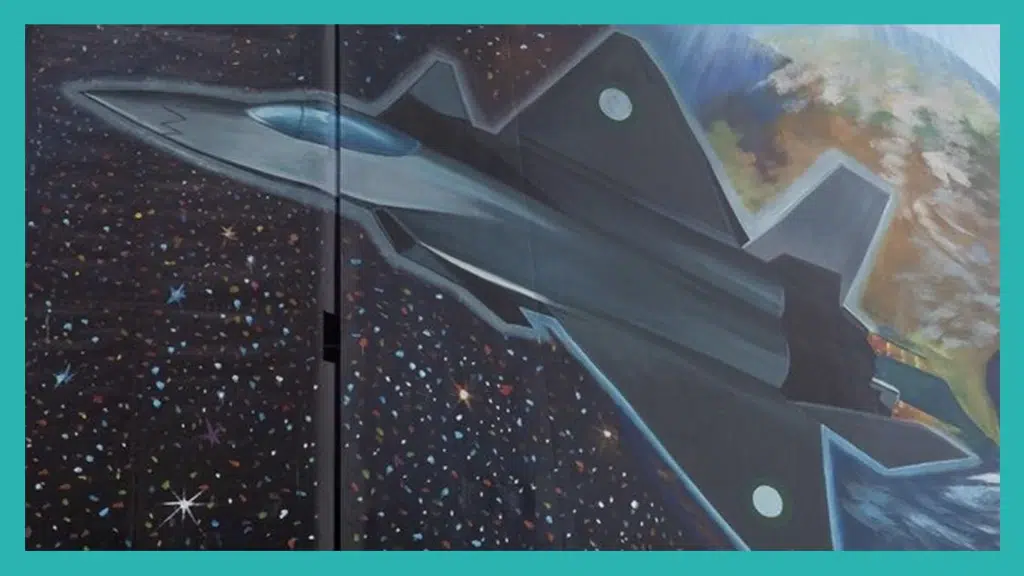
The Pakistan Air Force (PAF) had voiced its interest in one day acquiring a next-generation fighter aircraft (NGFA) as early as 2016. However, contrary to analyst expectations (of collaborating in a foreign project), the PAF undertook a domestic fighter program, which it dubbed “Project Azm.”
Overall, Project Azm was beleaguered with ‘red flags’ from its inception. For starters, Pakistan lacked (and still lacks) the core industries necessary to source critical inputs, such as engines, aerostructures, avionics and others. Granted, Pakistan could have taken the alternative route of sourcing the inputs from abroad while carrying out the design work internally. However, Pakistan lacked the in-house experience to carry out fighter design, development, testing, and integration work as well.
Quwa discussed these various deficiencies over the past several years and, in turn, provided outlooks on how Pakistan Aeronautical Complex (PAC) could resolve these issues.
- Realigning Project Azm: Balancing Ambition and Pragmatism
- Analysis: Preliminary Design Work of Project Azm
- Why PAC Needs In-House Development of Flight Control Systems
Though PAC gained some experience in manufacturing fighters via the JF-17 program, it never developed the expertise and capacity necessary to develop an NGFA. Basically, once one looks into PAC’s capabilities in detail, they will notice the lack of original projects relating to advanced composite materials, complex flight control systems, producing aircraft-grade steel, wind-tunnel testing, and so on.
One could have gained considerably more confidence in Project Azm had PAC shown a history of original projects in key inputs of an NGFA in the lead up to the flagship project. In contrast, Hindustan Aeronautics Limited (HAL) did develop experience in all of those areas through the Tejas. Granted, it took longer than anticipated for the Indian Air Force (IAF) to accept the Tejas, but that was a cost India paid to generate a great wealth of knowledge and capacity across flight control systems, composites, and electronics.
Thus, HAL’s NGFA programs – i.e., the Twin-Engine Deck Based Fighter (TEDBF) and Advanced Medium Combat Aircraft (AMCA) – sit on a firm aerospace R&D grounding that, simply put, is not present at PAC.
Logically speaking, the most appropriate next step for PAC should have been to gradually build upon the experience of manufacturing aircraft. Basically, at one level, this should have involved a step-by-step plan to building in-house expertise across key technology areas, like flight control systems and composites. But this programming should not be done for a NGFA; rather, PAC should have pursued simpler projects.
In fairness to PAC, it seems that it had tried this approach through its in-house drone program. However, this drone project evidently did not succeed considering how the PAF opted to import Turkish aircraft in its place. Quwa argues that the failure was not due to any inherent technical deficiency, but rather, it was a result of deeper structural and organizational problems.
Simply put, Pakistan’s defence R&D is not led by the country’s R&D experts. A longstanding culture of just parachuting in senior military officers – along with rigid military practices – weakened the R&D potential of entities like PAC. Likewise, a lack of connectivity with academic research is also a problem.
Quwa Plus
Go Beyond the Headlines on Pakistan’s Defence and Security.
Quwa Plus gives you deeper reporting, briefings, and analysis on Pakistan’s defence programs, foreign policy, national security, and regional strategy. Follow the developments that matter to professionals, analysts, and serious readers tracking Pakistan’s security landscape.
Join ($29.99/Year) Already a subscriber?Sign in