
In its 2018 Military Equipment Export Report, Germany’s Federal Ministry for Economic Affairs and Energy disclosed that the German government approved €174.4 million ($194.35 million US) worth of armament licenses to Pakistan. This was over a 5X increase to the €32.4 million in arms approved to Pakistan in 2017.[1]
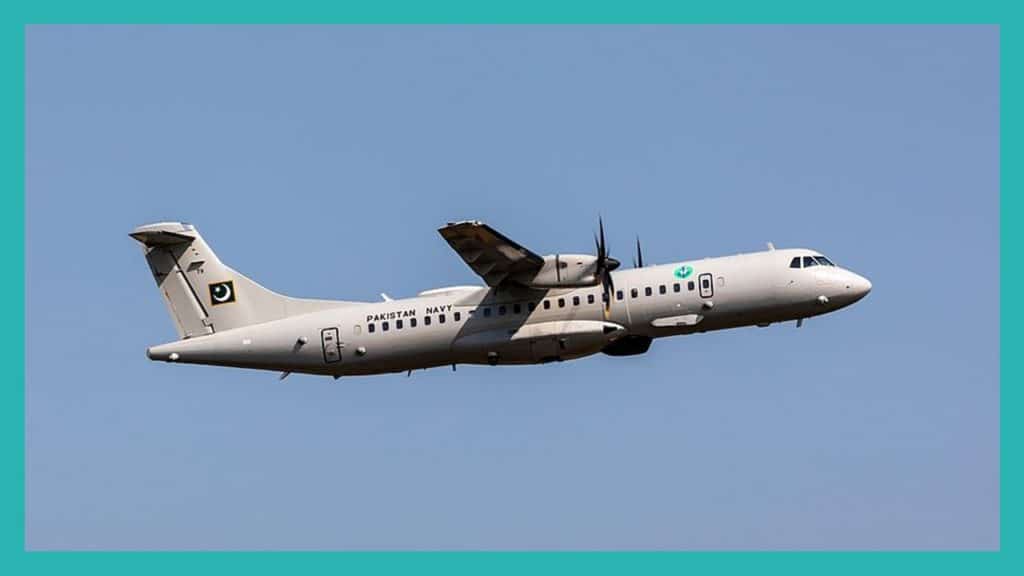
The 2018 report states that 35.1% of licenses comprised of “maritime patrol and torpedo aircraft, launch equipment for unmanned aircraft and parts for combat aircraft, aircraft, helicopters, unmanned aircraft, [and] ground support equipment.” This likely refers to the conversion of two Pakistan Navy (PN) ATR-72s into anti-submarine warfare (ASW)-capable maritime patrol aircraft (MPA) as well as the sale of an undisclosed number of LUNA NG unmanned aerial vehicles (UAV) to the PN.
The PN officially inducted both the ATR-72 MPA (officially designated as the RAS-72 Sea Eagle) and LUNA NG in January 2020. The Sea Eagle MPA conversion project was contracted to Rheinland Air Services (RAS) in 2016, while the original equipment manufacturer (OEM) of the LUNA NG is EMT Penzberg.
RAS delivered the first of two RAS-72s to the PN in early 2018, and the second aircraft in early 2019. RAS said that the PN still has an option to convert two additional aircraft.[2] Currently, the PN has a third, clean-configured ATR-72 which it uses for “cargo/para-drop” operations. Though it can be armed with a pair of lightweight ASW torpedoes, the RAS-72 also offers long-range air and surface surveillance and targeting, as well as electronic intelligence (ELINT) capabilities. It is not restricted to ASW operations, but serves as an early warning and, potentially, target classification and missile guidance asset for small ships.
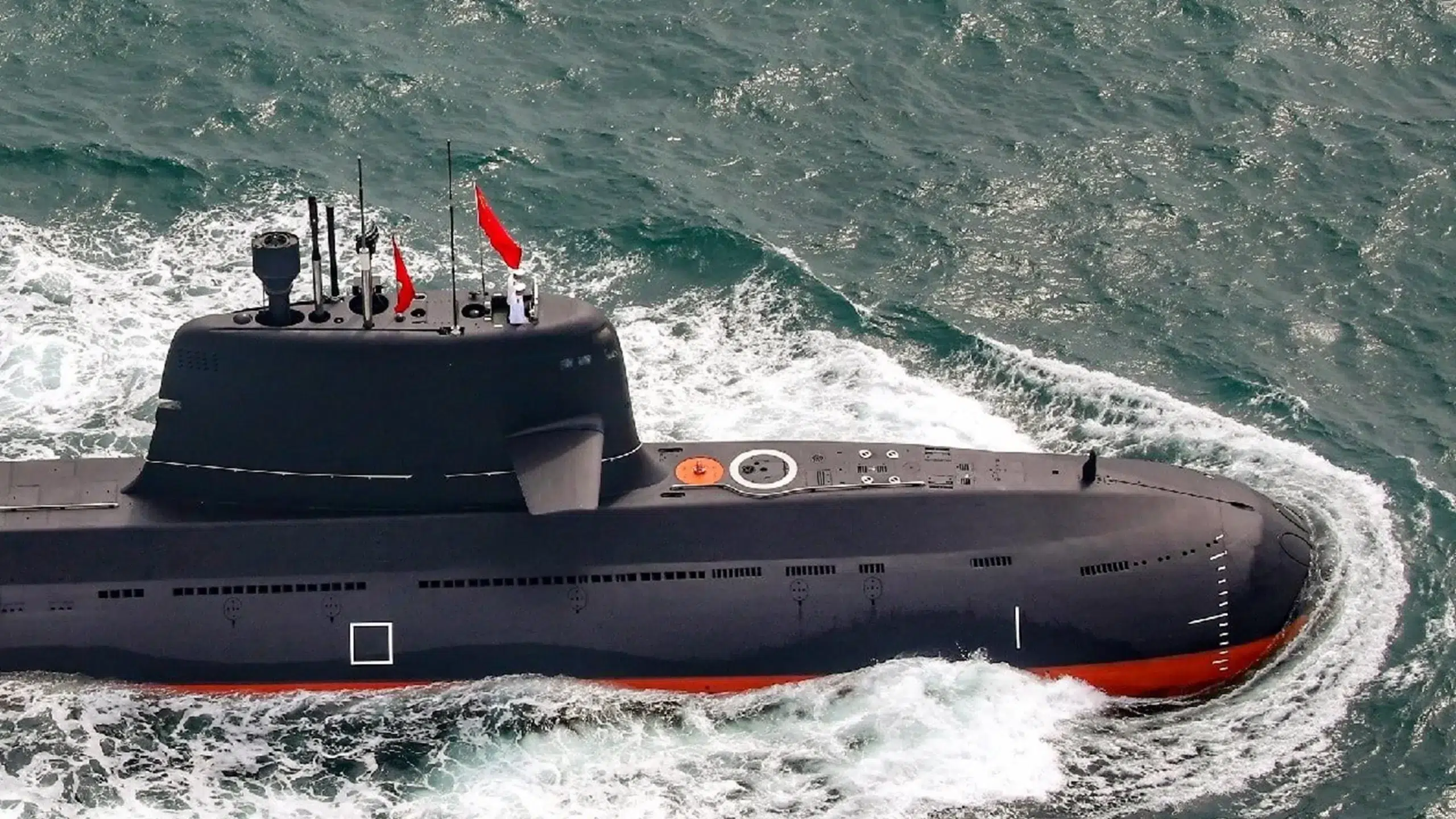
Next, the report outlines that 18.4% of licenses comprised of “underwater detection equipment and parts for submarines, tugs, [and] underwater detection equipment.” These systems are likely part of the PN’s ongoing Agosta 90B mid-life update (MLU) program, which the Turkish contractor STM is managing at the Karachi Shipyards & Engineering Works (KSEW). The MLU draws new subsystems from multiple countries, including South Africa and the UK. Germany’s input likely centers on the transfer of the Atlas-Elektronik’s sonar suite. Quwa was told by an industry source that the PN is using the ISUS-100’s sonar in combination with Havelsan’s human-machine interface (HMI) and combat management system (CMS)
The first of these upgraded ships (PNS/M Hamza) is due for testing in 2020, with harbor acceptance tests (HAT) scheduled in Q1, and sea acceptance tests (SAT) thereafter.[3] Currently, two Agosta 90Bs are on contract for upgrades, but STM is planning to sign the deal for the third submarine by the middle of 2020.[4]
The final 27.3% of the licenses Germany approved comprised of radar and communications equipment:
“Communications equipment, guidance equipment and parts for communications equipment, radar reconnaissance systems, self-defense systems, measuring equipment, testing equipment, travelling wave tubes, positioning equipment, guidance equipment, [and] electricity supplies.”
Prior to 2018, these systems would have likely centered on spare parts and support for the Pakistan Air Force’s (PAF) Siemens Mobile Pulse-Doppler Radars (MPDR) and Rohde & Schwarz radios. But in 2018 it is unlikely that those two areas were the only drivers of the sales growth that year.
Most of the systems listed in the report point to inputs for radars, indicating either a major overhaul (the largest yet) of the aging MPDR, or potentially, new-build radars. The latter is possible, especially since the PAF disclosed that it allocated $130 million US against its 2017-2018 service budget for 10 low-level radars.[5] If these are new radars, then the likely supplier is Hensoldt, which had marketed its TRS-series to the PAF as successors to the PAF’s aging MPDR, which it acquired in the 1980s. It is worth noting that earlier Ministry of Defence Production (MoDP) reports also outlined the development of very high-frequency (VHF) radars.[6] Thus, these inputs could also point towards that program as well.
Don't Stop Here. Unlock the Rest of this Analysis Immediately
To read the rest of this deep dive -- including the honest assessments and comparative analyses that Quwa Plus members rely on -- you need access.