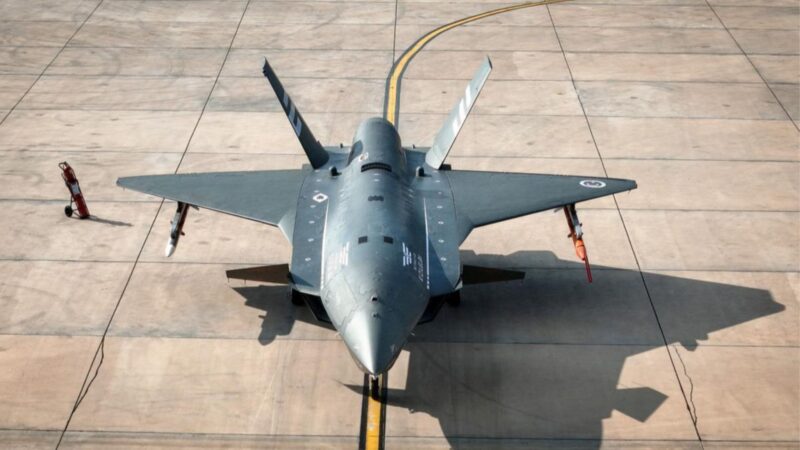

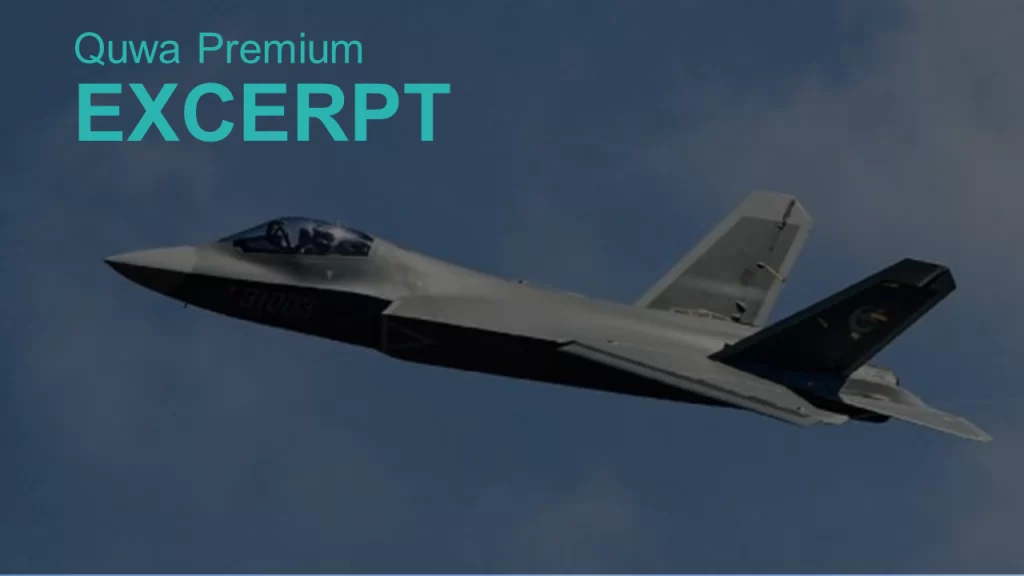
On 03 January 2024, the Pakistan Air Force’s (PAF) Chief of Air Staff (CAS), Air Chief Marshal Zaheer Ahmed Baber Sidhu, announced that the PAF will be acquiring the J-31/FC-31 stealth fighter.
In an official press release, the PAF stated, “The foundation for acquiring the J-31 stealth fighter aircraft has already been laid, which is all set to become part of the PAF’s fleet in the near future.”
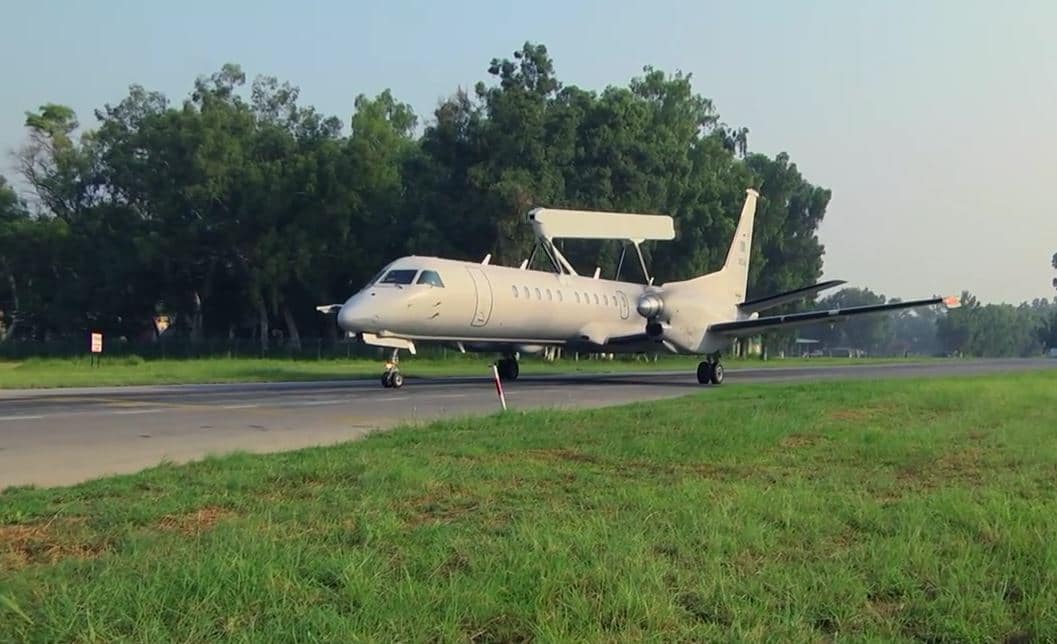
The CAS announced the PAF’s plans to procure the Chinese next-generation fighter aircraft (NGFA) during a recent ceremony celebrating the inducting of several systems in the PAF fleet, such as the J-10CE Dragon multirole fighter, ex-Belgian C-130H Hercules airlifters, and other auxiliary aircraft.
Currently, the PAF has not revealed its timeline or other specific procurement details. However, the PAF’s announcement marks its first official direction for an NGFA since Project AZM, an in-house program aimed at developing an original NGFA for the PAF.
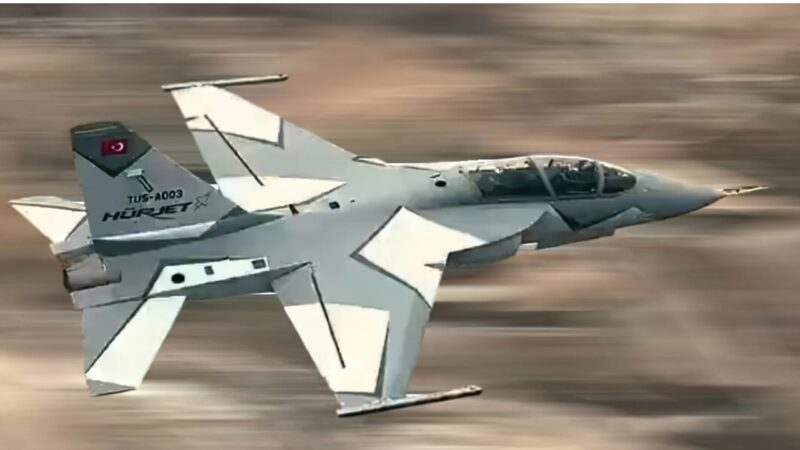
Project AZM’s in-house NGFA program has likely been shelved, thus prompting the PAF leadership to look towards preexisting overseas programs for solutions. In August 2023, the Turkish government indicated that Pakistan was engaging it to join the TF-X KAAN program. It is unclear how the PAF’s announcement to induct the J-31 will impact its apparent interest in the Turkish KAAN.
Background: Shenyang J-31
Developed by Shenyang Aircraft Corporation (SAC), the J-31 is a twin-engine stealth fighter originally built and promoted for export. Following the demonstrator’s maiden test flight in 2012, the J-31 underwent numerous design changes, resulting in a new prototype flying in 2016. This new version was also equipped with indigenous WS-13 turbofans, replacing the Klimov RD-93s in the first prototype.
Quwa Plus
Go Beyond the Headlines on Pakistan’s Defence and Security.
Quwa Plus gives you deeper reporting, briefings, and analysis on Pakistan’s defence programs, foreign policy, national security, and regional strategy. Follow the developments that matter to professionals, analysts, and serious readers tracking Pakistan’s security landscape.