

Youtube
X-twitter
Linkedin
Spotify
Rss
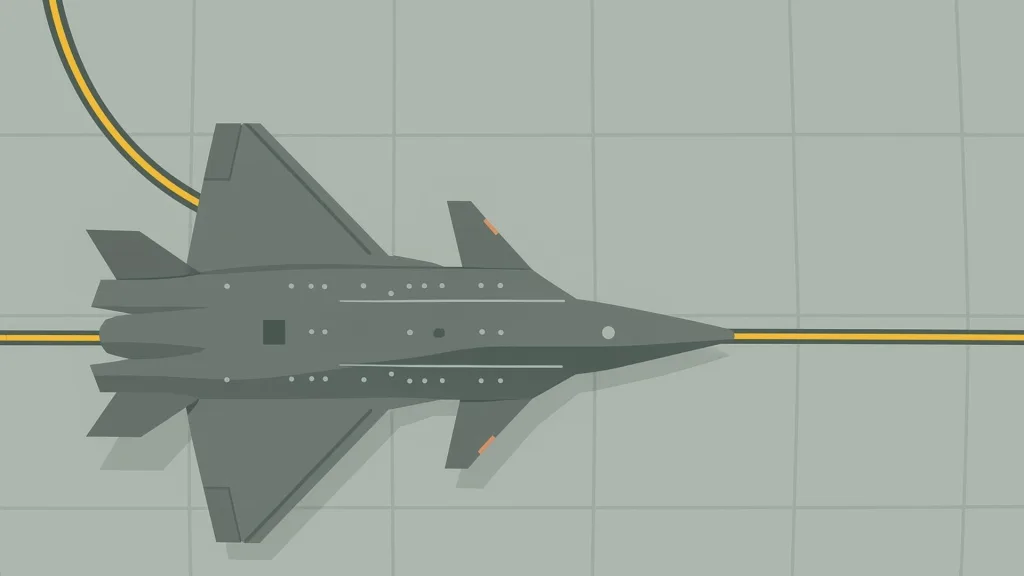
In the race to develop a next-generation Unmanned Combat Air Vehicle (UCAV), the focus is often on the stealthy airframe. But the platform’s true effectiveness – and its greatest vulnerability – lies in a component that is frequently overlooked: its tactical data-link.
A failure here renders a multi-billion dollar stealth drone a brightly lit target on enemy screens. For the Pakistan Air Force (PAF), developing this system means solving a fundamental conflict at the heart of modern air warfare.
Get access to this article and all other Quwa content today.
Click Here
What a ‘Deep Strike Data-Link’ Looks Like
A deep penetration strike and Intelligence, Surveillance, and Reconnaissance (ISR) mission, envisioned to replace legacy platforms in roles like deep attack or Suppression of Enemy Air Defenses (SEAD), prioritizes extreme low observability above all else.
The goal is survivability: to get in, accomplish the mission, and get out without being detected or harmed.
For this profile, the data-link must be robust, jam-resistant, and, most importantly, possess a low probability of intercept and detect (LPI/LPD) waveform for beyond-line-of-sight command and control.
This necessitates a system that uses relatively low power, where latency is a secondary concern to minimizing the electronic signature. The highly processed, low-power signals required for these stealthy operations inherently come at the cost of higher latency and lower data rates.
The core objective of this LPI/LPD data-link is to ensure its signal remains below the noise floor of an adversary’s intercept receivers, making it functionally invisible.
Achieving this “functional stealth” is a multi-layered challenge.
Don't Stop Here. Unlock the Rest of this Analysis Immediately
To read the rest of this deep dive -- including the honest assessments and comparative analyses that Quwa Plus members rely on -- you need access.