Over the span of 10 days in February 2026, Türkiye and Saudi Arabia signed a series of high-level defence-industrial agreements covering a fifth-generation fighter programme, a utility helicopter, and unmanned naval platforms.
Taken together, these deals point toward something that could be larger than a bilateral procurement cycle but, instead, an early shape of a ‘Central’ bloc of defence-industrial output forming between the traditional Western and Eastern anchors of global arms production.
The Erdoğan–MBS Summit and Its Defence Dividend
President Erdoğan visited Riyadh on February 3, meeting Crown Prince Mohammed bin Salman. Defence cooperation featured prominently in the bilateral outcomes.
Speaking to reporters on his return flight, Erdoğan described the agreements as “major” and signalled that joint KAAN investment could proceed “at any moment” (Anadolu Agency).
Five days later, World Defense Show (WDS) 2026 opened in Riyadh. By the time the show closed on February 12, over 60 defence deals worth approximately SAR 33 billion (USD $8.8 billion) were signed, including 220 agreements (i.e., 93 government-to-government and 127 company-to-company) and 73 memoranda of understanding (MoUs).
In terms of Saudi-Turkish ties specifically, it is worth noting that in 2023 Ankara and Riyadh signed a ~$3 billion Bayraktar Akıncı UCAV deal, described by Baykar CEO Haluk Bayraktar as “the biggest defence and aviation export contract in the history of the Turkish Republic.”
Industrial contacts deepened through 2024 and 2025, including Saudi Arabian Military Industries (SAMI) technology-transfer agreements with three Turkish defence firms for land systems localization in 2025.
KAAN: The Flagship Program
Turkish Aerospace (TA) General Manager Mehmet Demiroğlu told the media at WDS 2026 that KAAN partnership talks with Saudi Arabia have reached “the final stages of the decision-making process.” He said TA hopes to reach a milestone in 2026.
Demiroğlu laid out two models. A direct purchase could involve around 20 aircraft – i.e., a “small squadron.” A co-production arrangement, with a final assembly line in Saudi Arabia, would require a minimum of 50 units to be economically viable.
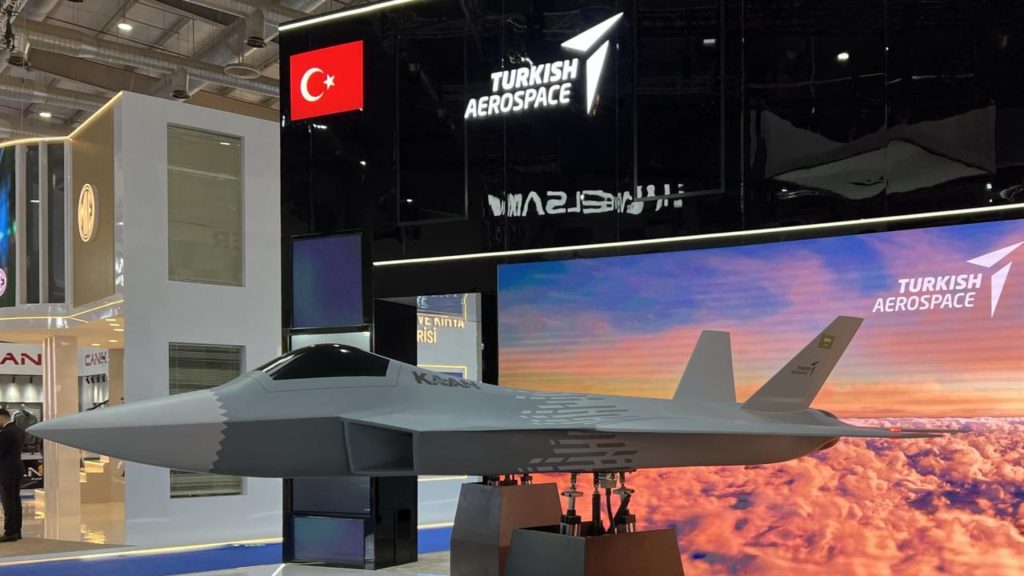
Earlier reporting has indicated Saudi interest in up to 100 aircraft, with consistent emphasis on technology transfer, joint production, and local industrial participation – goals aligned with Vision 2030. TA displayed a KAAN model with a Saudi flag on the tail at WDS 2026 to further signify the potential landmark deal.
Don't Stop Here. Unlock the Rest of this Analysis Immediately
To read the rest of this deep dive -- including the honest assessments and comparative analyses that Quwa Plus members rely on -- you need access.