
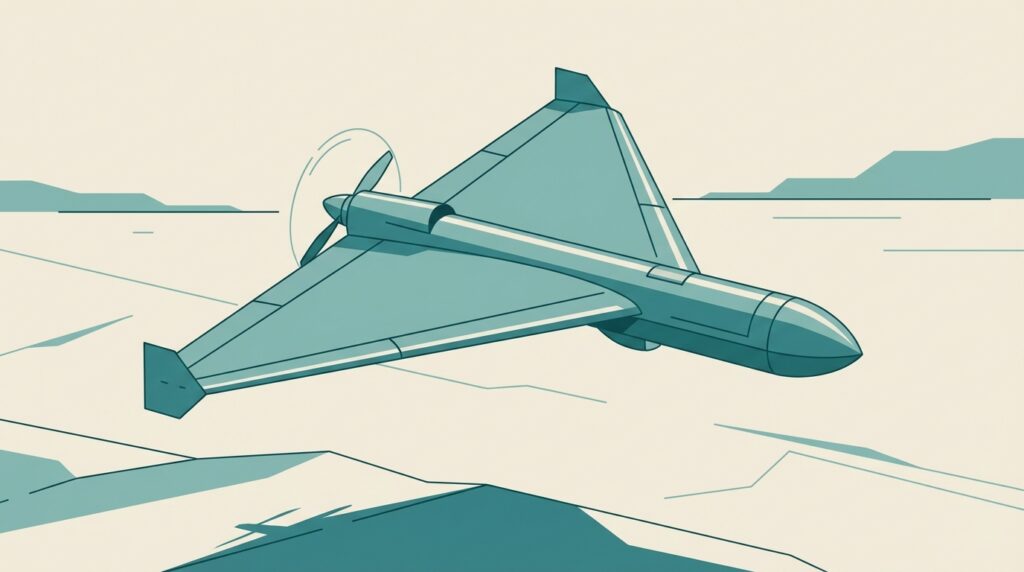
A Russian Kometa-B satellite navigation module has been recovered from the Iranian drone that struck RAF Akrotiri in Cyprus on 1 March, providing physical evidence that Moscow is transferring battlefield-tested drone components to Tehran for use against US and allied targets in the Middle East.
The same Kometa-B anti-jamming module was first identified by Ukrainian air defences in December 2025, inside drones intercepted over Ukraine. Three months later, it appeared in the wreckage of a Shahed-type one-way attack (OWA) drone in Cyprus. British military intelligence sent the recovered components to a UK laboratory for further examination.
Ukrainian President Volodymyr Zelensky stated on 17 March that “we have clear evidence that Iranian Shaheds used in the region contain Russian components.” The Kometa-B discovery substantiates that claim with a forensic trail linking a specific Russian subsystem to a specific strike on a Western military installation.
The WSJ Report: Intelligence Sharing and Tactical Guidance
The Wall Street Journal reported on 17 March that Russia has been providing Iran with satellite imagery from the Russian Aerospace Forces (VKS), tactical guidance on Shahed drone employment – including wave sizes and optimal strike altitudes – and data on the locations of US facilities in the Middle East and those of Washington’s regional allies.
Sources cited by the WSJ, including a senior European intelligence officer, confirmed that Moscow has supplied Iran with modified Shahed components featuring improved communication, navigation, and targeting capabilities. These modifications were developed through Russia’s own use of the drones in Ukraine, where Moscow has deployed approximately 57,000 Shahed-type systems since 2022.
Russia’s ambassador to London subsequently stated that Russia was “not neutral” and held a “supportive” position toward Iran. The White House played down the significance of the cooperation, with a spokesperson claiming that Russian support is “not affecting our operational success.”
The Bidirectional Pipeline
The Russia-Iran drone relationship was, until recently, framed as a one-directional transaction: Iran sold Shahed blueprints and finished drones to Russia starting in 2022, and Moscow paid in cash and advanced military hardware. That framing is now out of date.
Russia localized Shahed production at its Alabuga facility in Tatarstan, which now produces several thousand drones per month. Through sustained combat use against Ukrainian air defences – electronic warfare (EW) jamming, interceptor drones, mobile fire groups, and conventional short-range air defence (SHORAD) systems – Russia iterated on the Shahed’s navigation accuracy, EW resistance, and targeting reliability. Those adaptations are now flowing back to Iran.
The pipeline is no longer transactional. It is a feedback loop. Iran provides the baseline platform. Russia stress-tests it against some of the most sophisticated and adaptive air defences in the world. The resulting improvements are shared back with Tehran, which deploys them against US and Gulf targets operating under a different – and in some cases, less mature – counter-drone posture.
Iranian Foreign Minister Abbas Araghchi publicly confirmed military cooperation with Russia and China in a March 2026 interview: “We had close cooperation, which continues to this day, and this also includes military assistance.” In January 2025, the two countries signed a strategic partnership agreement formalizing defence cooperation.
Don't Stop Here. Unlock the Rest of this Analysis Immediately
To read the rest of this deep dive -- including the honest assessments and comparative analyses that Quwa Plus members rely on -- you need access.