
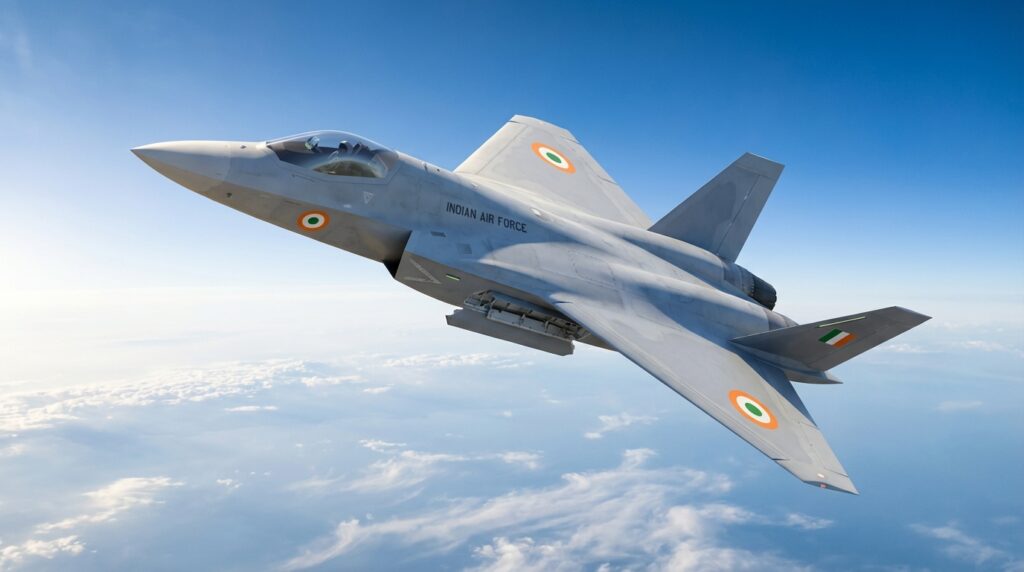
In April 2018, days after India formally withdrew from the Su-57 Fifth Generation Fighter Aircraft (FGFA) program with Russia, Quwa published an analysis that identified the then-newly announced Franco-German Future Combat Air System (FCAS) as India’s most likely next-generation fighter pathway. At the time, the FCAS had existed for less than a week – Dassault and Airbus had announced their joint development agreement on 25 April 2018 – and the prevailing assumption was that India would pivot toward an American solution. Quwa argued otherwise, and laid out a specific case for why FCAS would absorb India:
Remarkably, the FCAS is well-positioned to takeover the FGFA. First, the FCAS intends to substantially improve upon the capabilities of the Typhoon and Rafale, thus justifying the expense of the program over existing solutions. Second, Dassault can leverage India’s potential scale to entice German approval, thus ensuring that a decline in orders in Europe do not make the FCAS unviable from a procurement standpoint. Third, Dassault can offer India the FCAS as a carrot to secure the current bid for 110 new multi-role fighters with the Rafale. Fourth, Dassault can even extend the FCAS to the Indian Navy – again, incentivizing India to procure additional Rafales while also guaranteeing scale for the naval FCAS variant. Fifth, leverage New Delhi’s fiscal strength to guard the program from potential fiscal lapses in Europe. Sixth, access to India’s scale and industry could make the FCAS more competitive in terms of cost, thus opening access to third-party markets in the Middle East and East Asia.
Eight years later, that forecast has come to pass almost perfectly – though in a form no one anticipated. FCAS is collapsing under the weight of Franco-German industrial disputes, and India’s Defence Ministry has told Parliament that the Indian Air Force intends to join one of Europe’s sixth-generation fighter consortia “right away.” All six dynamics Quwa identified in 2018 have since materialised or intensified. The question is no longer whether India will pursue a European sixth-generation partnership, but what shape that partnership will take – and whether France, having lost Germany, will accept the depth of co-development India demands. This article lays out how Quwa sees the situation evolving.
Access Pakistan's Defence Market Intelligence
Get full access to Pakistan's defence procurement history, inductions, future planning, and risk assessments. Leverage the market intelligence to support business development, policy planning, and diplomatic engagement.