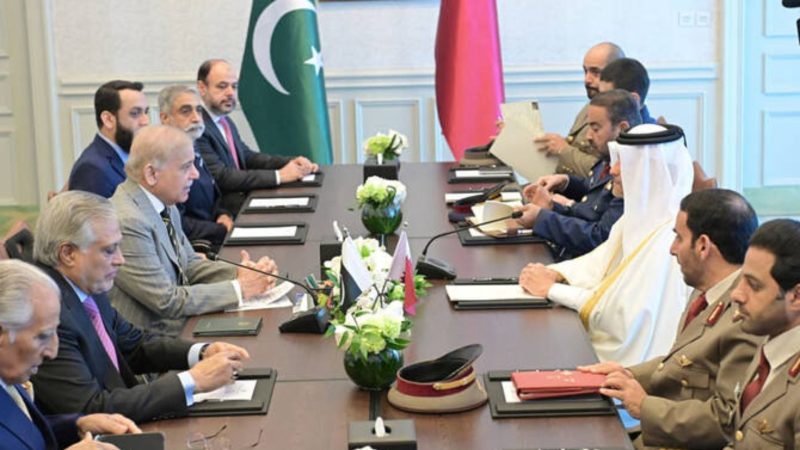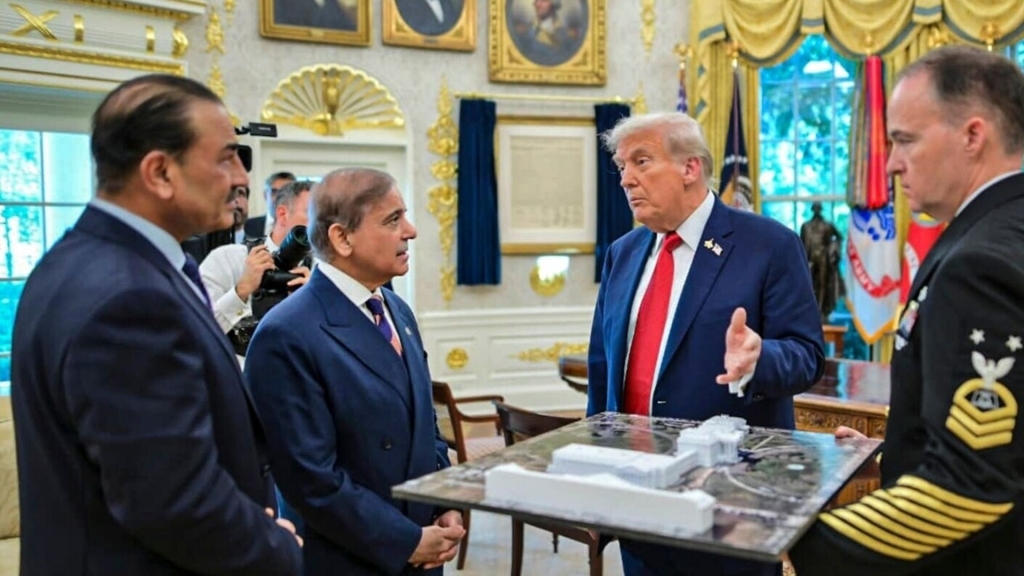
The 2025 U.S. National Security Strategy (NSS) under the second Trump administration does not focus on Pakistan as a priority area of foreign policy interest, but many of the primary policy objectives of the NSS could give observers an idea of where Pakistan is heading in terms of its political and security imperatives broadly and, specifically, its ties with the US.
The key hint rests in the following excerpt of the NSS:
“The days of the United States propping up the entire world like Atlas are over. We count among our many allies and partners dozens of wealthy, sophisticated nations that must assume primary responsibility for their regions and contribute far more to our collective defense…Continuing President Trump’s approach of asking allies to assume primary responsibility for their regions, the United States will organize a burden-sharing network, with our government as convener and supporter. This approach ensures that burdens are shared and that all such efforts benefits from broader legitimacy. The model will be targeted partnerships that use economic tools to align incentives, share burdens with like-minded allies, and insist on reforms that anchor long-term stability…The United States will stand ready to help—potentially through more favorable treatment on commercial matters, technology sharing, and defense procurement—those countries that willingly take more responsibility for security in their neighborhoods and align their export controls with ours.”
The excerpt most obviously alludes to the decades-long tradition of many of the world’s powers, especially Canada and Western Europe, leveraging a peace dividend on the back of longstanding U.S. security leadership. The Trump administration is winding that dependency back and, in turn, has tasked its NATO partners to not only reach the minimum defence spending target of 2% of GDP, but now look towards reaching 5% of GDP (via 3.5% on core spending like building and maintaining capability, and then another 1.5% to elevate issue-specific capacity like countering the Russian threat). Western Europe’s leading powers are being left with not only managing their regional security interests, but doing so in a manner that still aligns with fundamental U.S. interests, like maintaining regional stability.
The same logic extends beyond NATO. Besides offloading security responsibility to wealthy European allies, it is constructing a global architecture where regional powers anchor their own neighborhoods. For Pakistan, this means a specific role within that architecture, one that American policymakers have historically preferred but never articulated quite so explicitly.
Get access to this article and all other Quwa content today.
Click Here
Related Reads
- How a US Mistake Handed Pakistan’s Multi-Billion-Dollar Arms Market to China
- Deterrence at Scale: Inside China’s 2025 Military Logic
- Inside Pakistan’s Low-Key $406 M Imaging Satellite Purchase from China
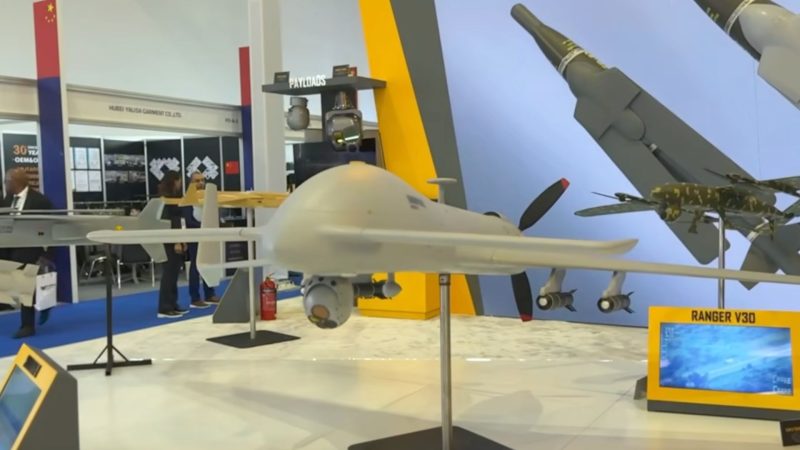
The J-10Cs, PL-15s, and HQ-9s that performed well against Indian Rafales and MiG-29s are Chinese systems. Pakistan’s military hardware is now almost entirely Chinese-origin, a stark shift from decades past when American equipment formed the backbone of Pakistani capability.
This creates an awkward dynamic for American policymakers. The NSS offers incentives for regional security burden-sharing, but Pakistan has already found an alternative patron for the military capacity that burden-sharing requires. Washington can provide political support and economic carrots, but the conventional deterrence piece – the prerequisite for Pakistan to confidently “look west” – is being supplied by the very country the NSS identifies as America’s primary threat.
An Old Ask Delivered in Clearer Language
The idea of regionally-led security ownership is not new for Pakistan – in fact, “looking west” was Washington’s original ask since the two countries formed ties. U.S. military aid to Pakistan was always conditioned on dealing with threats from the West: first, the Soviets through the CENTO alliance in the 1950s, then the mujahideen support against the Soviet occupation in the 1980s, and later the counterterrorism partnership against Al-Qaeda and the Taliban after 2001. The F-16s Pakistan received were never meant for use against India; the Coalition Support Funds were explicitly tied to western-border operations.
The 2025 NSS formalizes this preference in clear policy language. The U.S. wants Pakistan to be a strong regional player, but with a focus on issues that do not directly or indirectly conflict with American interests, which now means, above all, not complicating the China containment strategy.
Don't Stop Here. Unlock the Rest of this Analysis Immediately
To read the rest of this deep dive -- including the honest assessments and comparative analyses that Quwa Plus members rely on -- you need access.