
Currently, Pakistan is actively developing new medium-altitude long-endurance (MALE) unmanned aerial vehicles (UAV) across two state-owned entities (SOE), the National Engineering and Scientific Commission (NESCOM) and Pakistan Aeronautical Complex (PAC).
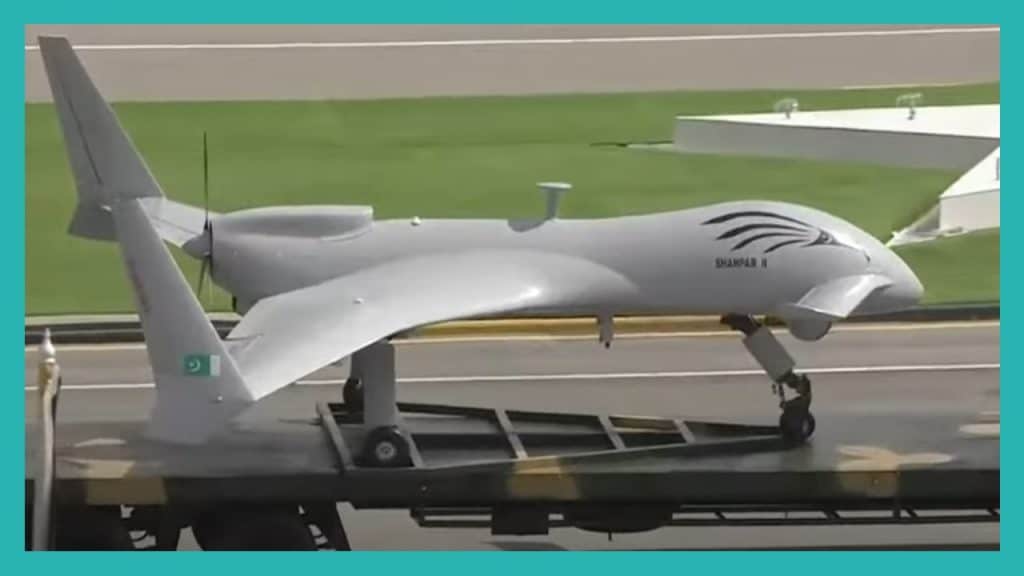
The NESCOM design is the Shahpar-II, which Pakistan’s Strategic Plans Division (SPD) revealed on March 23 during the annually-held Pakistan Day parade. The Shahpar-II is an evolution of the Shahpar, which is the first UAV that was locally designed, developed and manufactured in Pakistan. The Shahpar-II was likely under development since at least 2017, potentially earlier.
The Shahpar-II builds on the same general design template of its predecessor, but it is a larger aircraft and exhibits a number of noticeable changes. The most noticeable of these changes is the addition of an area in the fuselage for a satellite-communications (SATCOM) terminal.
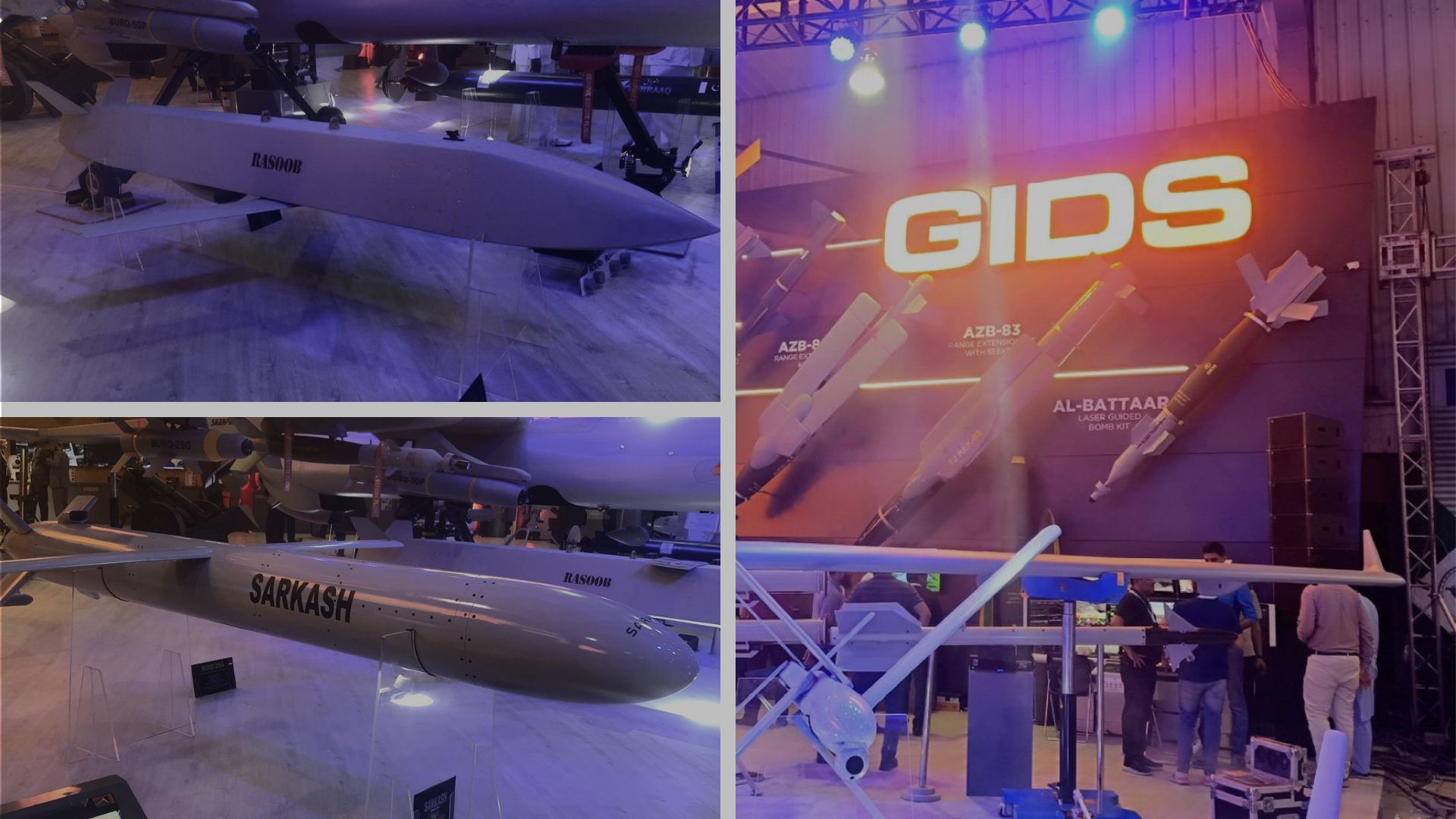
According to Global Industrial Defense Solutions (GIDS), which is marketing the Shahpar-II, the MALE UAV has a flight ceiling of 20,000 ft, endurance of over 14 hours, and data-link range of 300 km. Since GIDS is looking to export the Shahpar-II, these are likely baseline specifications. For example, Pakistan could use SATCOM to achieve a longer, beyond-line-of-sight (BLoS) data-link range.
That said, based on these specifications, the Shahpar-II seems to be similar in size and capability to the Turkish Bayrkatar TB2. Currently, it seems that Pakistan is slating the Shahpar-II as mainly an intelligence, surveillance, reconnaissance, and target acquisition (ISTAR) asset. However, it is certainly large enough to carry small air-to-surface munitions, should Pakistan opt for it.
Quwa Plus
Go Beyond the Headlines on Pakistan’s Defence and Security.
Quwa Plus gives you deeper reporting, briefings, and analysis on Pakistan’s defence programs, foreign policy, national security, and regional strategy. Follow the developments that matter to professionals, analysts, and serious readers tracking Pakistan’s security landscape.
Join ($29.99/Year) Already a subscriber?Sign in