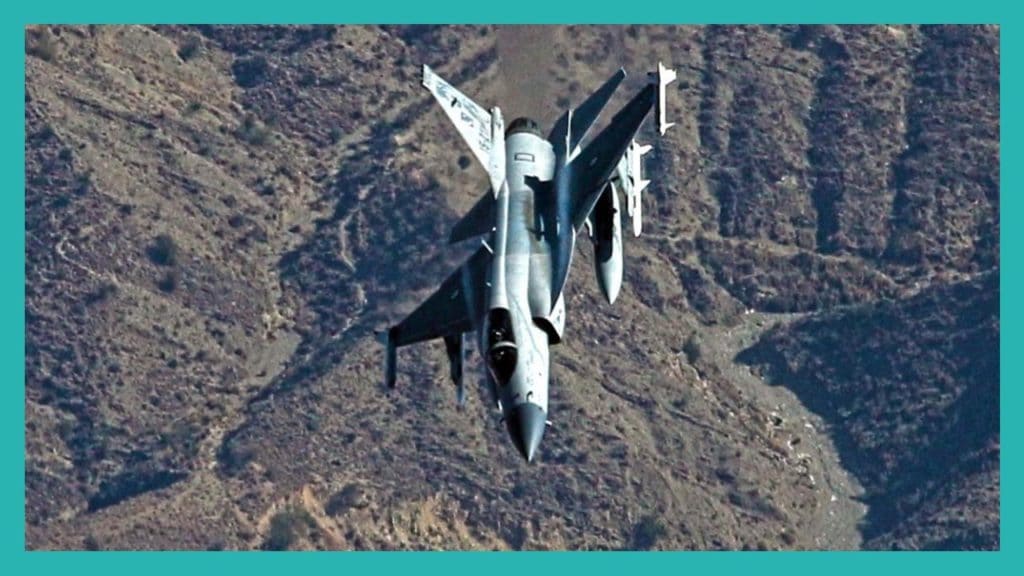
On 27 February 2019, the Pakistan Air Force (PAF) conducted Operation Swift Retort as a retaliatory strike against the Indian Air Force’s (IAF) operations at Balakot in Khyber Pakthunkhwa.
The PAF’s operation comprised of a composite strike force consisting of F-16A/B Block-15 Mid-Life Update (MLU) and/or Air Defence Fighters (ADF), JF-17s, Mirage III/5s, and, potentially, Saab 2000 Erieye airborne early warning and control (AEW&C) and Falcon DA-20 electronic warfare (EW) aircraft.
Swift Retort had shown that the F-16s and Mirages are critical elements of the PAF’s offensive capability, and that the PAF would use them together. However, another aspect to Swift Retort is that it was also the PAF’s first use of multiple assets in conflict, its first network-enabled large-force engagement (LFE).
However, as pleased as the PAF might have been with the results of the brief air skirmish, it must contend with the reality that India is hastily working towards closing the advantages Pakistan enjoyed.
India’s efforts center on the acquisition of the Dassault Rafale fighter and Almaz-Antey S-400 air defence system, both of which are poised to increase the risk of attrition to Pakistan in future operations.
Furthermore, the production of the Hindustan Aeronautics Limited (HAL) Tejas, procurement of a new multi-role fighter, and ongoing induction of capable surface-to-air missiles (SAM) will make entering India by air high-risk to an exceptional degree. This new reality would challenge the PAF with waves of modern multi-role aircraft plus layers of sophisticated medium and long-range SAMs, both in high concentrations.
In short, the PAF would be wise to not look at improving upon Swift Retort from exclusively the reality of that specific operation, but rather, as a luxury it might not enjoy in the future.
The Post-Swift Retort Environment
In one sense, Swift Retort should not have come as a surprise. The assets for an LFE of that scale were all present in the PAF’s inventory. Moreover, the ability to execute had been developed through exercises – such as Red Flag and Anatolian Eagle — as well as a contemporary internal culture of learning.
The worrying read of this situation would be that India will invest in eroding that capability through major acquisitions, not least the Rafale and S-400. However, an optimistic view could be that it would require a massive fiscal expenditure to credibly thwart another Swift Retort.
Quwa Plus
Go Beyond the Headlines on Pakistan’s Defence and Security.
Quwa Plus gives you deeper reporting, briefings, and analysis on Pakistan’s defence programs, foreign policy, national security, and regional strategy. Follow the developments that matter to professionals, analysts, and serious readers tracking Pakistan’s security landscape.
Join ($29.99/Year) Already a subscriber?Sign in