For the Pakistan Air Force (PAF), a critical aspect of Swift Retort — the PAF’s retaliatory incursion against India for its stand-off range attacks across of the Line-of-Control (LoC) — was its ability to demonstrate a reasonable attack capability against predetermined targets in enemy territory.
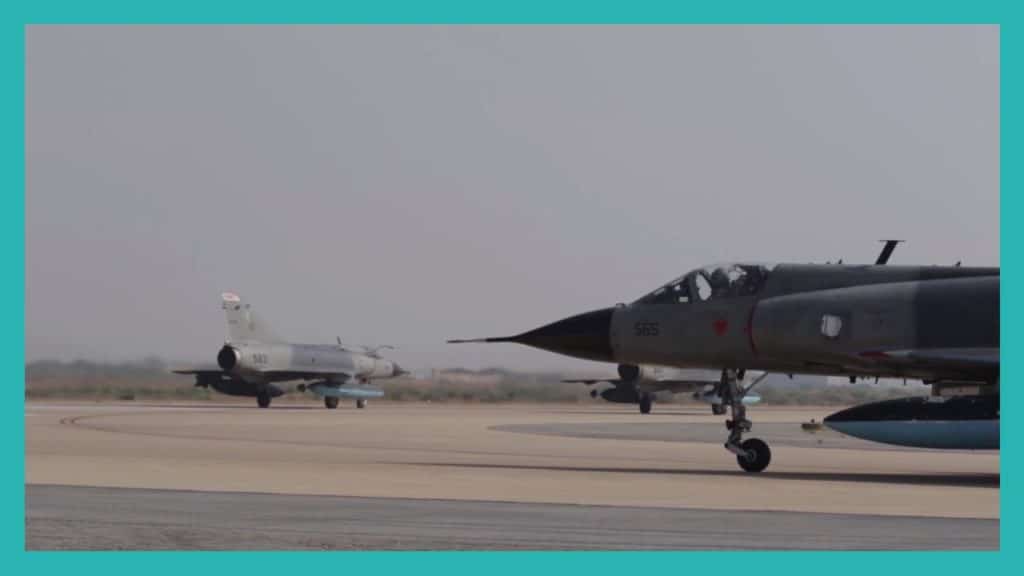
Granted, the PAF’s F-16s had demonstrated their value as potential offensive counter-air (OCA) assets by locking onto enemy aircraft from across the LoC, but the Mirages had played a quieter, yet equally as vital role in hitting targets at long-range through stand-off range weapons (SOW), such as the H4.
In an earlier Quwa Premium article (from December 2017), it was noted that within the PAF fleet, the F-16s and Mirages are practically complementary. The PAF’s F-16s are not equipped with SOWs, but they evidently possess credible long-range air-to-air capabilities. On the other hand, the Mirages are no longer the PAF’s primary air defence fighter, yet they carry the bulk of its long-range attack duties.
Thus, the two platforms are inevitably poised to function together in a real war scenario, they would need to in order for the PAF to maintain a credible offensive capability. Fortunately, this is not a small force by any means; combined, the F-16s and Mirages could amount to 150-200 aircraft, which is sizable.
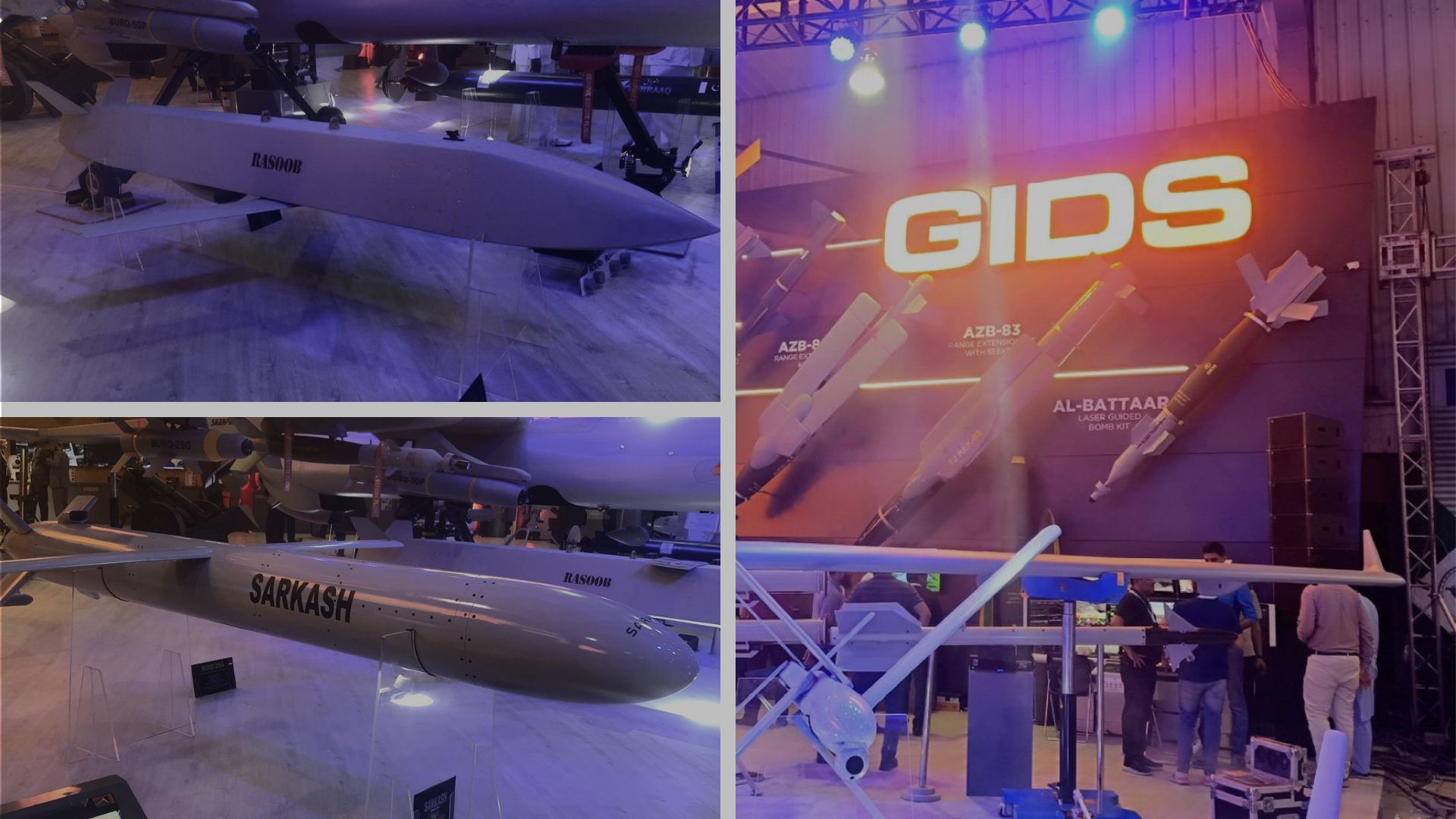
Likewise, the Mirages are equipped with contemporary SOW capabilities through the H2/H4-series of heavyweight glide weapons, the low-cost Range Extension Kit (REK) precision-guided bomb (PGB) kit, and Ra’ad/Ra’ad 2 air-launched cruise missile (ALCM), which offer 350 km and 550 km in range, respectively.
Quwa Plus
Go Beyond the Headlines on Pakistan’s Defence and Security.
Quwa Plus gives you deeper reporting, briefings, and analysis on Pakistan’s defence programs, foreign policy, national security, and regional strategy. Follow the developments that matter to professionals, analysts, and serious readers tracking Pakistan’s security landscape.
Join ($29.99/Year) Already a subscriber?Sign in