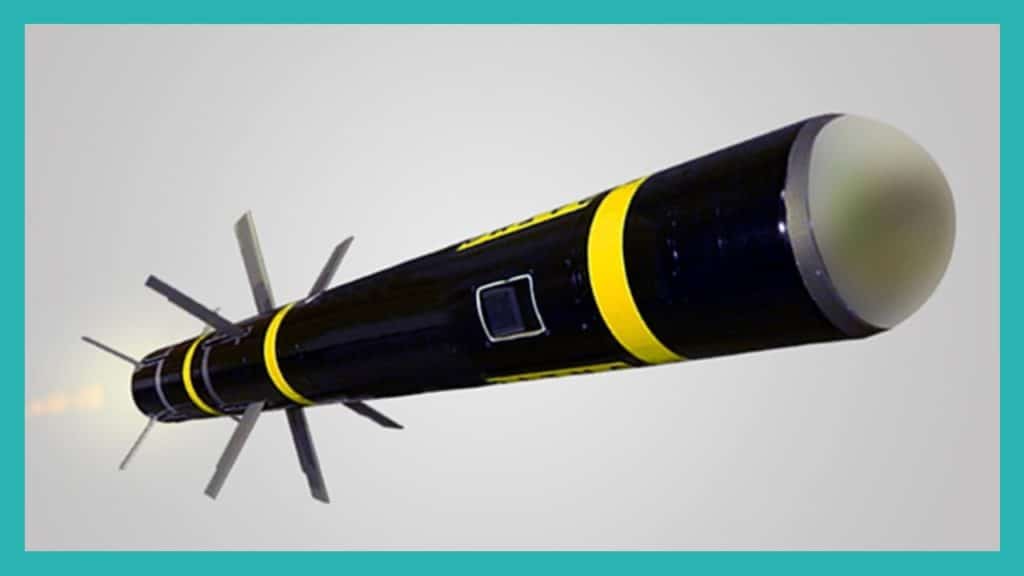
Based on its purchase for 52 Kornet-E units in 2017-2018, it appears that the Pakistan Army is moving to modernize its anti-tank guided missile (ATGM) inventory.
The current mainstays of the Army’s anti-tank missile stocks are the Bakhtar-Shikan (based on the Chinese HJ-8) and BGM-71 TOW. Both of these are optically tracked, wire-guided anti-tank missiles that can launch from land (via infantry and vehicles) and air (using the AH-1F/S Cobra attack helicopter).
However, for the future, the Army is evidently moving towards wireless ATGMs that use semi-active laser homing (SALH) and, potentially, other types of seekers for greater deployment flexibility.
In addition, the ATGMs the Army evaluated – or is in the process of evaluating – generally offer more range than the TOW or Bakhtar-Shikan, potentially by a factor of more than 2X.
Besides an extensive induction run, it will be worth seeing if Pakistan standardizes on a specific ATGM so that it could domestically manufacture it through the long-term (and supplant its older ATGM stocks). Or as an alternative, pursue an ATGM project of its own in parallel to the imports.
Infantry
In 2014-2015, the Pakistan Army ordered 1,413 Alcotán-100 100 mm anti-tank rockets with 158 VOSEL (M2) firing control unit for $24.76 million US from the Spanish company Instalaza. In 2017-2018, the Army ordered an additional 369 VOSEL (M2s) in 2017-2018 for $9.04 million US.
Quwa Plus
Go Beyond the Headlines on Pakistan’s Defence and Security.
Quwa Plus gives you deeper reporting, briefings, and analysis on Pakistan’s defence programs, foreign policy, national security, and regional strategy. Follow the developments that matter to professionals, analysts, and serious readers tracking Pakistan’s security landscape.