
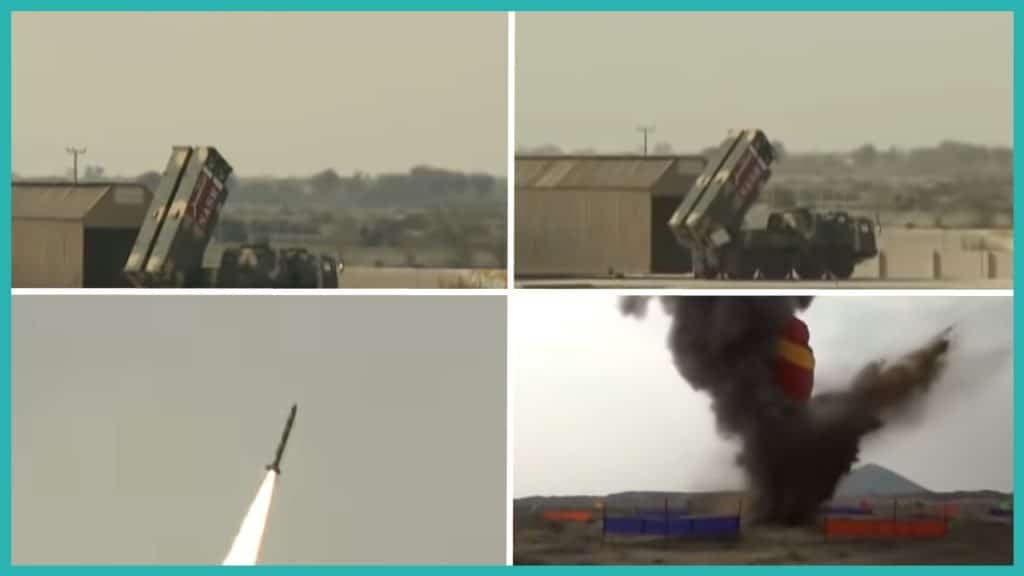
On January 31, 2019, Pakistan’s Inter Services Public Relations (ISPR) announced that the Pakistan Army Strategic Forces Command successfully test-fired its Nasr short-range ballistic missile (SRBM) system.
The tests comprised of a quad-salvo test on January 24th and single-shot tests on January 28th and 31st.
According to the ISPR, the latter tests were for “testing the extreme inflight maneuverability, including the end flight maneuverability,” and that the Nasr could cut-through “any currently available BMD (ballistic missile defence) system in our neighborhood or any other system under procurement / development.”
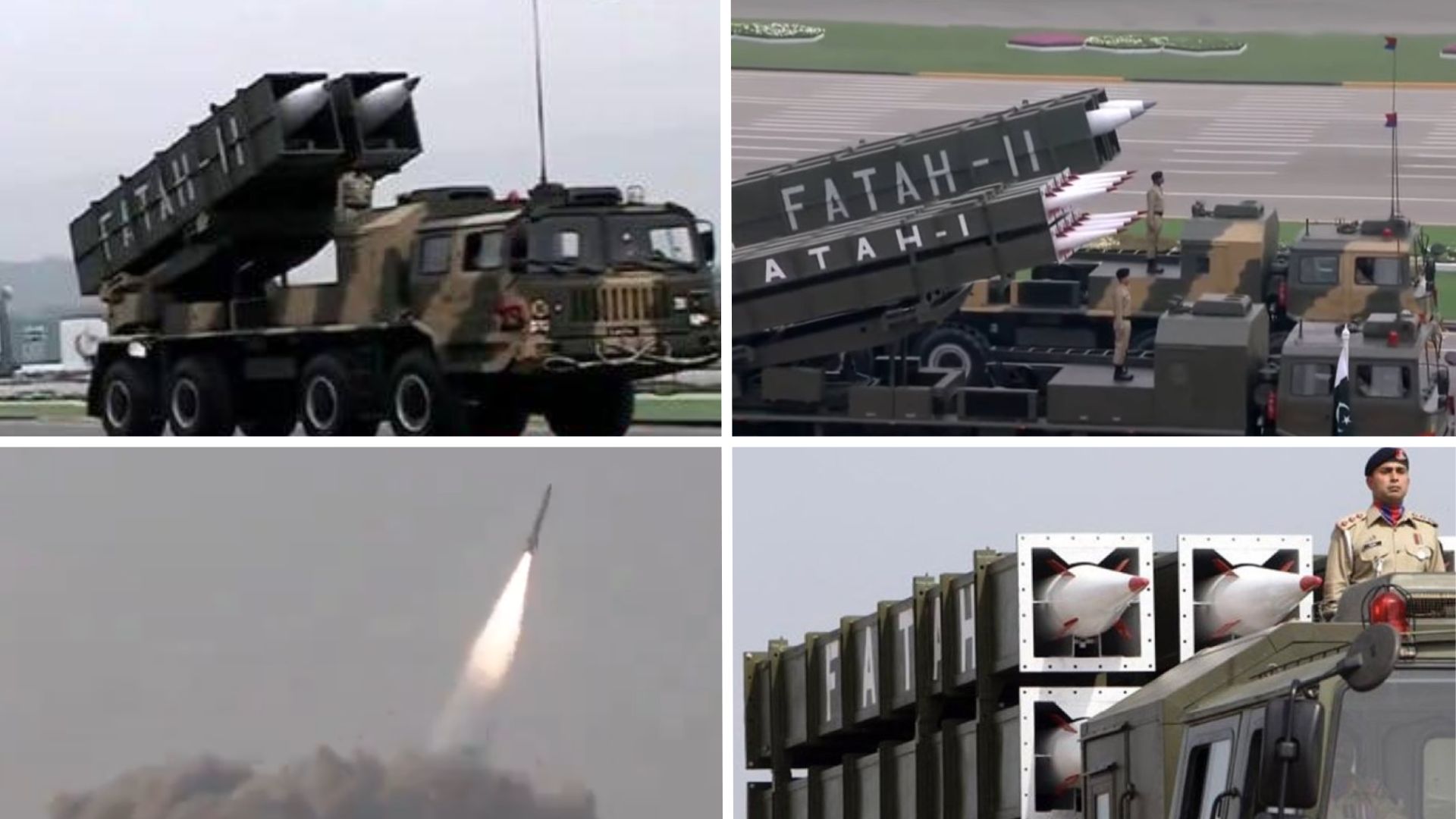
The Hatf-XI Nasr (“Victory”) SRBM has been in service since at least 2013. It complements Pakistan’s now burgeoning inventory of miniature nuclear warhead-capable munitions, most of which (in terms of types) are land-attack cruise missiles (LACM), which were most recently tested in March 2018.
Besides enabling Pakistan to deploy nuclear warheads on a tactical munitions platform, the Nasr also plays the role of directly countering invasive mass-formations. To fulfil that role, the Nasr is a “quick response” system that can also leverage “shoot-and-scoot attributes” (ISPR).
To Pakistan, the Nasr is a means to mitigate India’s strong – and growing – conventional advantage over Pakistan’s own conventional capabilities. In fact, the ISPR’s statement from its most recent tests, notably the point about penetrating BMD, points to this intent.
However, is it enough to compensate for the lack of conventional capability?
In isolation of Pakistan’s ties with other countries, potentially, though that is not guaranteed.
As a Deterrence Rocket, the Nasr isn’t Enough Alone
The Nasr is a short-range system (range: 70 km), and with its effectiveness contingent on being within range of not just the intruding battle group, but its core (i.e., where the majority of a battle group’s assets are in place), it could require a measure of conventional support itself.
Quwa Plus
Go Beyond the Headlines on Pakistan’s Defence and Security.
Quwa Plus gives you deeper reporting, briefings, and analysis on Pakistan’s defence programs, foreign policy, national security, and regional strategy. Follow the developments that matter to professionals, analysts, and serious readers tracking Pakistan’s security landscape.
Join ($29.99/Year) Already a subscriber?Sign in