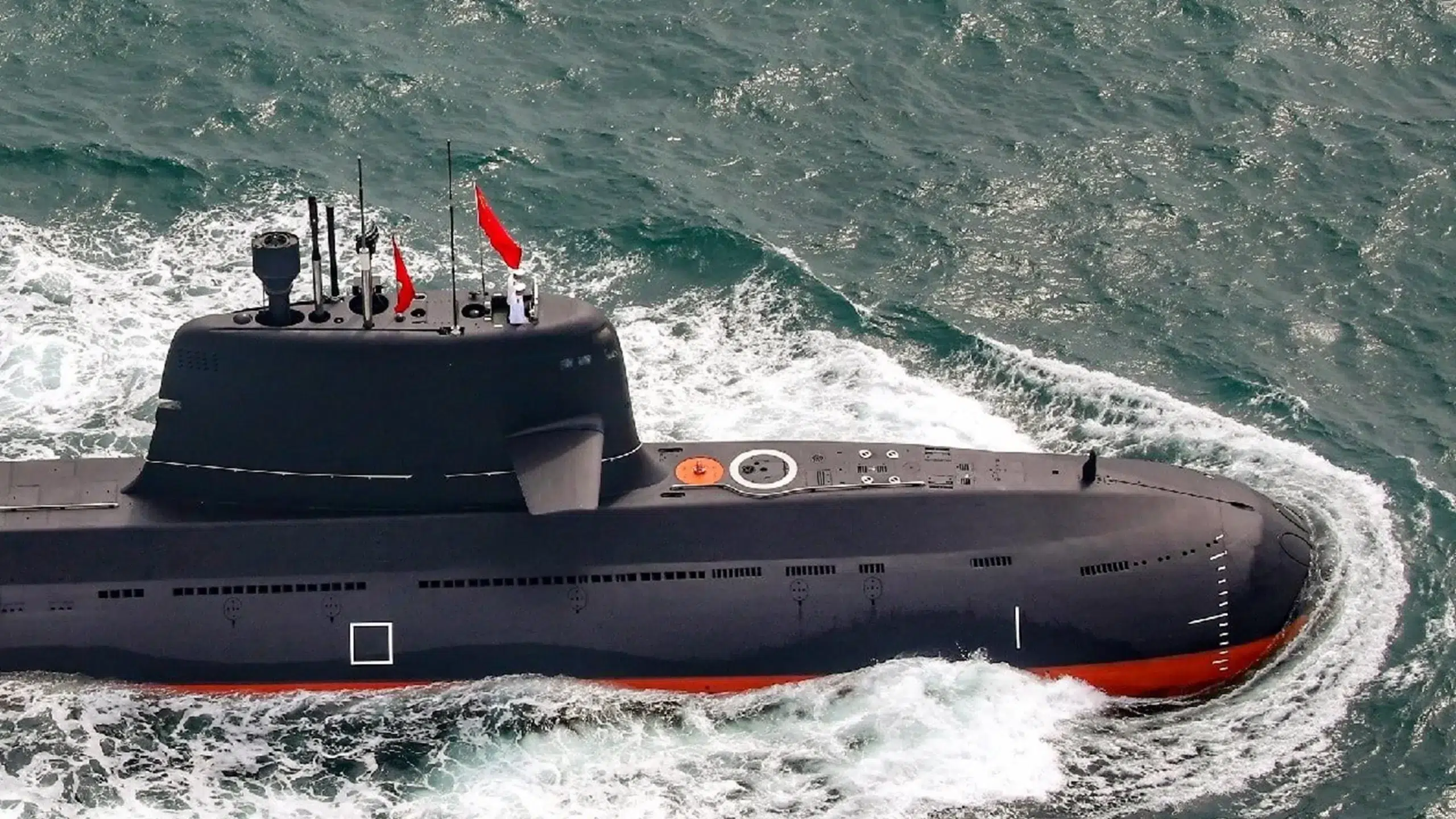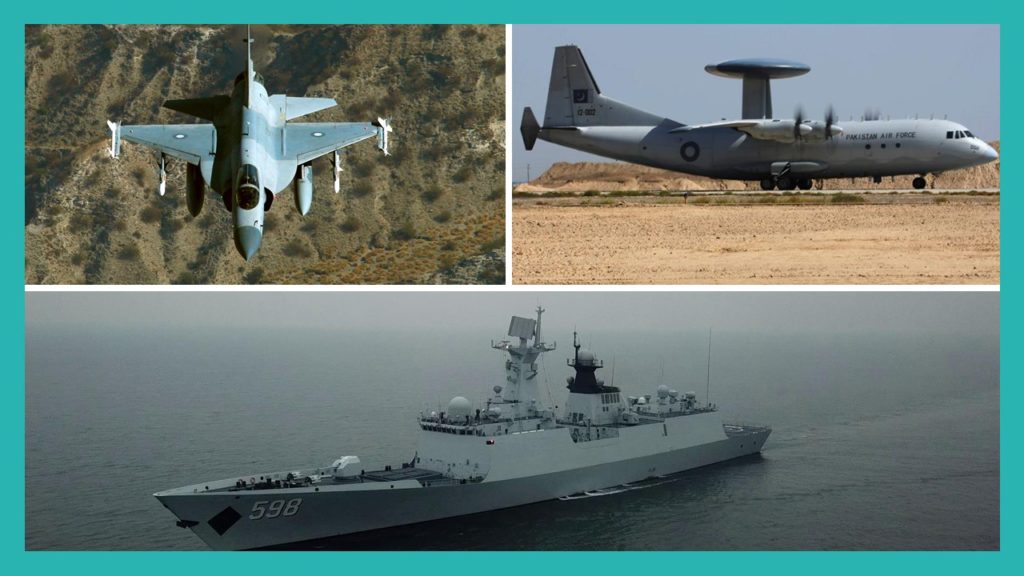
Today, the Armed Forces of Pakistan have at least three marquee and indispensable big-ticket weapon systems in the pipeline from China: in 2015, it inked a purchase of eight air-independent propulsion (AIP)-powered submarines; in 2017, the Pakistan Air Force (PAF) confirmed that its fifth-generation fighter (FGF) program – Project Azm – is being developed with Chinese support; and in 2018, the Pakistan Navy ordered two additional Type 054A frigates, totaling its order to four ships by 2021.[1] [2] [3]
Be it fiscal constraints, struggling ties with the West (particularly the US), inability to access analogous technology from other sources or – and potentially, most importantly – an alignment of strategic interests (or concerns) between Islamabad and Beijing, the supply of this equipment is vital to Pakistan’s ability to sustain and, potentially, extend its conventional capabilities vis-à-vis India’s advancements. However, the procurement track is assuming more than simply the need for alternatives (to inaccessible Western arms).
Rather, the breadth of these investments – notably Project Azm – could lay the groundwork for Pakistan to leverage China’s research and development (R&D) funding, industrial capacity and the scale generated by the People’s Liberation Army (PLA) to secure qualitatively advantageous solutions.
Most Countries Have a Principal Supplier
The availability of technology, especially core inputs such as engines and semi-conductors, is limited to a handful of countries. This is a critical point because politically-driven claims of indigenization has a general consequence of raising unrealistic expectations or surprises. For example, when Pakistan sought its next-generation submarine platform in the late-2000s, some had asked why Pakistan would need one when it apparently produces the Agosta 90B at Karachi Shipyard & Engineering Works (KSEW).
Quwa Plus
Go Beyond the Headlines on Pakistan’s Defence and Security.
Quwa Plus gives you deeper reporting, briefings, and analysis on Pakistan’s defence programs, foreign policy, national security, and regional strategy. Follow the developments that matter to professionals, analysts, and serious readers tracking Pakistan’s security landscape.
Join ($29.99/Year) Already a subscriber?Sign in