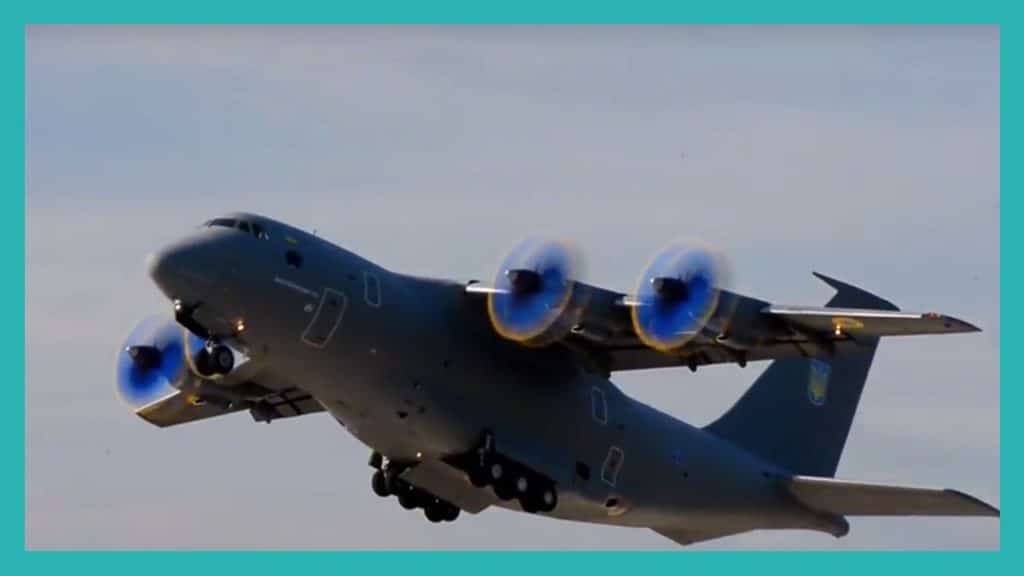
Ukraine is implementing an extensive re-armament program for its armed forces along, in tandem, with growing the output and activity of its defence industry. The policy was cemented in August 2017, when Ukraine’s President, Petro Poroshenko, announced that Kiev was “launching a program of military and technical modernization of the army,” which would include “bringing [Ukraine’s] weapons to the level of the 21st century.”[1] To finance the effort, Ukraine also increased its annual defence budget from $4.9 billion US in 2017 to $6.1 billion US for 2018, a substantial 28% increase.[2] Of this, $603 million US is to be spent on procurement, repair and modernization of equipment for the armed forces.[3]
In terms of Ukraine, the surge of defence spending will translate into funding for its defence industry, which, while beset for many years with slow-moving, technically muddled and, generally, uncertain programs, has genuine potential to generate quality and cost-effective solutions. Furthermore, Kiev has repeatedly expressed its interest in partnering with other countries, namely in Central Europe, the Middle East and South Asia, to share in the funding, development and production of its new weapon systems. In fact, Saudi Arabia has already signed on through the Antonov An-132D, a lightweight transport and special mission aircraft. Others, such as China, Turkey and the United Arab Emirates (UAE), are probing for opportunities. However, curiously – yet also unsurprisingly – Pakistan is not a factor, despite the apparent synergy and Kiev’s willingness to engage Islamabad on cooperation in defence.
Background
Defence ties between Pakistan and Ukraine have not been particularly strong, at least beyond several off-the-shelf purchases, most notably 320 T-80UD main battle tanks (MBT) and 4 refurbished Ilyushin Il-78 in-flight refueling (IFR) tankers from Ukraine’s surplus stocks. In terms of actual co-development, the closest example of it had been the Heavy Industries Taxila (HIT) al-Khalid MBT, for which HIT procured the 6TD-2 1,200 hp diesel engine and dynamic components (e.g. transmission) from Ukraine. However, the paucity of active Ukrainian defence programs and shortage of funding at both ends through the 2000s and early 2010s (leading to the Crimean Crisis) was not opportune for further technical cooperation.
Despite the lack of activity, Pakistan’s ties with Ukraine spurred two important – and arguably strategic – gains for Pakistan. First, an engine for what was intended to be the Pakistan Army’s mainstay MBT, the al-Khalid. Second, air-to-air refueling (AAR) for the Pakistan Air Force (PAF), providing it with the means to offset the inherent endurance deficiencies of its single engine lightweight fighters, namely the JF-17 and Mirage III/5. Lacking long-endurance, long-range and high-payload fighters, AAR is a vital asset for the PAF in its maritime operations and strike efforts. There have also been reports of Ukraine assisting Pakistan in its cruise missile program by transferring ex-Soviet Kh-55.[4] In addition, Pakistan is also regularly importing spare parts and engines from the Ukrainian aero-propulsion manufacturer Motor Sich.[5] This likely relates to Pakistan’s Mil Mi-171 fleet (Motor Sich manufactures TV3-117 and VK2500-series turboshaft engines), though it should be noted that Motor Sich is also a manufacturer of miniature turbofan engines. Motor Sich’s MS400 has a thrust of 3.92 kN[6], a plausible option for the Babur-series of cruise missiles. Thus, the lack of energy on Pakistan’s part to emphasize relations with Ukraine is counterintuitive.
One can acknowledge the inertia of Pakistan’s decision-making (an unfortunate reality), but the Pakistani intelligentsia has shied away from discussing the prospect. The common refrain has been Russia, namely the sense that Pakistan would have to cool its ties with Ukraine to entice Russia. However, it appears that Pakistan is the only country pursuing such a tract, with Turkey, Saudi Arabia and even China nurturing ties – including defence ties – with both Kiev and Moscow. In fact, when Moscow itself is deeply engaging with New Delhi – despite the latter’s closeness with Washington – it is curious why Pakistanis have unilaterally obliged themselves to cater for Moscow when, in all likelihood, there was no such expectation.
Granted, Pakistan’s own paucity of funding and need to prioritize programs of long-term and far-reaching utility will preclude it from partnering in many programs. It would be understandable for Pakistan to look away from the An-132D, but it would be rash to ignore Ukraine’s radar development efforts, its industrial expertise (e.g. gas turbine production), experience in turbofan engines and its overall scientific base, the latter enabling it to genuinely revive its defence industry and to participate in marquee programs, such as the European space program.[7] Pakistan has much to gain, and with Kiev in an amenable state in terms of trading expertise, transfer-of-technology and co-production for funding and scale, it is time to consider it.
Opportunities
Continuing with the theme of relatively unassuming, but strategically important programs – such as AAR or an engine for a mainstay MBT – Ukraine could be an avenue for contributing to industrial development. For example, Pakistan could engage with Zorya-Mashproekt to collaborate on gas turbine development and production. It need not be directed to a tangible defence outcome, it could simply be a program to curtail Pakistan’s imports of such systems for its energy needs. The resultant science and engineering base could later be leveraged to undertake the development of ship propulsion. Likewise, it can forge relations to pursue electronics development and manufacturing work in Pakistan (e.g. establishing a semiconductor fabrication plant) ahead of radar and electronic warfare systems manufacturing.
Industrial collaboration can form the foundation (or simply expand it in Ukraine’s case) in the long-term, but potential collaboration in subsystems development could feed near-term requirements. Such projects could include active radar-homing (ARH) seekers for air-to-air missiles (AAM), anti-ship missiles (AShM) and surface-to-air missiles (SAM); rocket motors for AAM and SAM; miniature turbofan and/or turbojet engines for AShM, other cruise missile applications and potentially unmanned aerial vehicles (UAV). The advantage of such development routes is that the aforementioned inputs are not only scalable (by virtue of both countries needing to induct those weapons in numbers), but if left to solely imports, can become costly. With both Ukraine and Pakistan evidently seeking to procure munitions domestically, collaboration on these fronts would be advisable (and relatively unassuming) for both countries.
Of Ukraine’s marquee programs, Pakistan is presently entertaining the prospect of procuring the Oplot-M MBT off-the-shelf. In August 2017, Ukraine’s Malyshev Factory announced that it was preparing a unit for trials in Pakistan.[8] Considering that a Chinese VT4 was spotted in Pakistan recently, it appears that the trials – which could potentially amount to at least 100 MBTs[9] – are to begin soon. It is unclear if the Oplot-M has been delivered for trials. However, there are no signs of Pakistan expanding this to other areas, notably aviation. Interestingly, in February 2016 the Ukrainian Ambassador to Pakistan Lakov Vladimir Ivanovich stated that Kiev was eager to cooperate with Pakistan in the area.[10] For Ukraine, securing traction for its Antonov-series transport aircraft, such as the An-132D and An-178, is likely the objective.
Quwa Plus
Go Beyond the Headlines on Pakistan’s Defence and Security.
Quwa Plus gives you deeper reporting, briefings, and analysis on Pakistan’s defence programs, foreign policy, national security, and regional strategy. Follow the developments that matter to professionals, analysts, and serious readers tracking Pakistan’s security landscape.
Join ($29.99/Year) Already a subscriber?Sign in