Quwa Premium

Could Decoy Drones be on Pakistan’s Roadmap? Plus

With Shahpar-II production in full swing, will Pakistan carry the momentum with new unmanned aerial vehicle (UAV) designs?

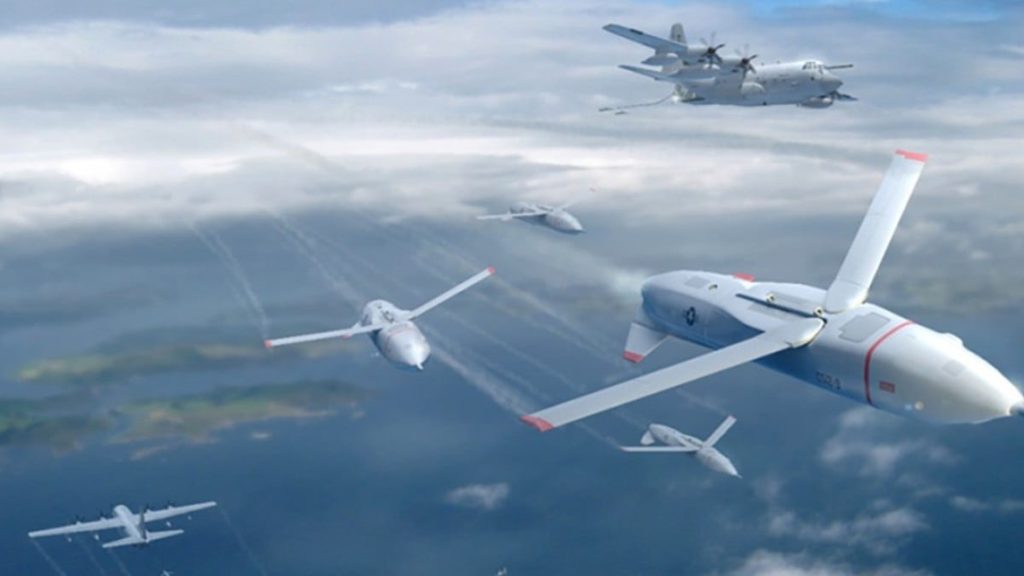
Artist's impression of the Gremlin airborne decoy system. Photo source: DARPA

Timely Defence News with Verified Insights

Stay up to date with the latest Pakistani defence news with reliable research and accurate forecasting
Click Here

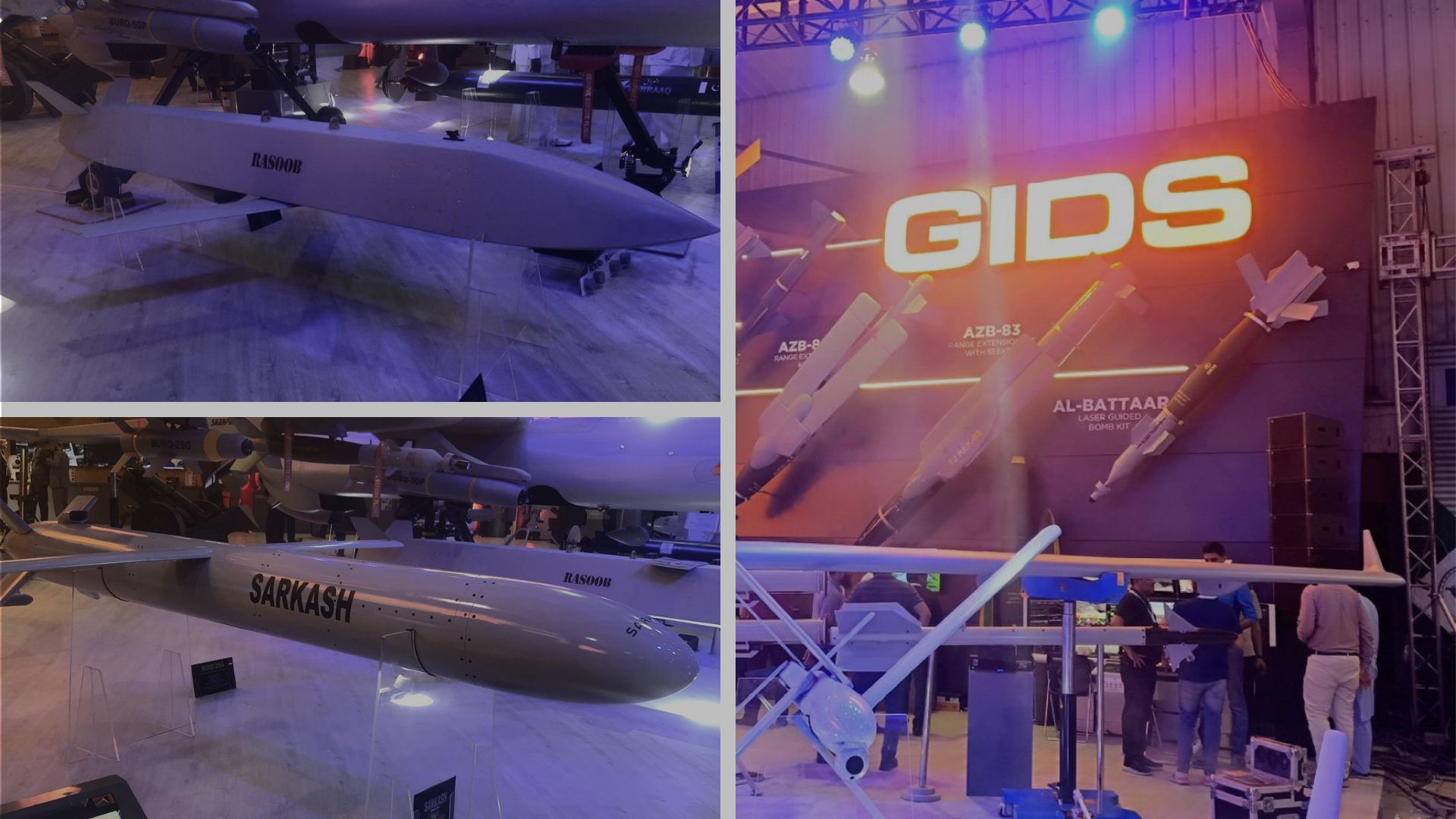
Pakistan’s first indigenously designed medium-altitude long-endurance (MALE) unmanned aerial vehicle (UAV), the Shahpar-II, is off to a promising start. It is being inducted by the Pakistan Army (PA) and the Pakistan Air Force (PAF), while Global Defence and Industrial Solutions (GIDS) is now marketing a Block-II version. The National Engineering and Scientific Commission (NESCOM) is also developing a larger and more capable variant, Shahpar-III.

In terms of developing MALE UAVs, it appears that Pakistan – especially through NESCOM – is making progress. In fact, the jump from the Shahpar-II to the Shahpar-III will be significant.

The Shahpar-III will have a maximum take-off weight (MTOW) of 1,650 kg, payload of 400 kg to 530 kg across six hardpoints, 20 hours of endurance, range of 3,000 km, and service ceiling of 35,000 feet. It will be Pakistan’s largest indigenous drone to-date and a domestic analogue to systems like the Turkish Anka-S, Chinese Wing Loong-II, and American MQ-1C.

However, each of Pakistan’s service arms is looking to leverage drones to augment – or even supplant – key aspects of their operations. From vertical take-off and landing (VTOL) UAVs to loitering munitions of various sizes to unmanned underwater vehicles (UUV), the imperative from all of the Tri-Services is driving the Pakistani industry to develop many solutions.

This work could extend into the development of attritable unmanned combat aerial vehicles (UCAV) for the PAF. In a recent promotional video, the PAF stated that developing manned-unmanned teaming (MUM-T) capabilities was one of its goals. 

While the PAF is likely referring to its use of existing MALE and high-altitude long-endurance (HALE) UAVs in concert with crewed fighter aircraft, the MUM-T concept is evolving to include many types of drones, from loitering munitions to an array of jet-powered systems. The latter include flying-wing strike UCAVs, loyal wingman drones, and attritable decoy drones.

The PAF’s entry into next-generation MUM-T could involve the acquisition – or, potentially, the development – of jet-powered attritable decoy drones. Following loitering munitions, decoy drones would likely be the lightest and lowest cost pieces of a future MUM-T deployment.

However, where loitering munitions are specifically designed to identify and attack a target, a decoy drone could undertake additional roles, such as electronic attack (EA) or electronic countermeasures (ECM), on top of being a loitering munition. Thus, like a loitering munition, a decoy is an expendable system, perhaps akin to a cruise missile, but with the flexibility of drones, such as swarming. In other words, it is a relatively simple and low-cost design, one that can be built in significant numbers to absorb utilization (which leads to attrition).

Quwa Plus

Don't Stop Here. Unlock the Rest of this Analysis Immediately

To read the rest of this deep dive -- including the honest assessments and comparative analyses that Quwa Plus members rely on -- you need access.

Join Today

USD $29.99/Year