With a prototype of the Pakistan Aeronautical Complex (PAC)/Chengdu Aircraft Industry Group (CAIG) JF-17 Block-III flying in December 2019, the Pakistan Air Force (PAF) is a step closer to inducting the improved, and much awaited, upgrade of the Thunder multi-role fighter aircraft.
Of the intended subsystem additions, the lack of infrared search and track (IRST) is intriguing. IRST is now becoming a standard capability on so-called “4+” and “4.5” generation fighters, providing those jets with a complementary means of situational awareness (in addition to radar and data-link-based sensor feeds).
This is an important capability as the future of South Asia’s air warfare environment is poised to see heavy use of electronic warfare (EW) and electronic intelligence (ELINT) assets to jam and identify, respectively, radar emissions. Passive sensors, such as IRST, will become a necessity in the future.
However, despite apparent interest in adding IRST to the JF-17, IRST seems to have fallen off from the JF-17 Block-III’s intended feature set. Though the PAF is apparently content with using targeting pods (i.e., ASELPOD) as an infrared sensor, this would not entirely fulfill the role – or benefit – of IRST.
What is Infrared Search and Track (IRST)?
IRST is a sensor that detects and tracks aerial objects using the objects’ infrared signature. IRST systems do not emit any signals of their own, so they are passive. In other words, the aircraft using an IRST system is not vulnerable to exposure as a result of using the IRST.
This is in contrast to using radar which does pose risk of exposure to electronic intelligence (ELINT) and electronic support measures (ESM) suites, such as radar warning receivers (RWR). Of course, to overcome this issue air forces (including the PAF) are adopting active electronically scanned array (AESA) radars with low-probability-of-intercept (LPI) qualities. However, the risk of exposure is still present.
Likewise, because IRST operates outside of the electromagnetic spectrum, it is not vulnerable to electronic warfare (EW) jamming. Thus, if the aircraft is stuck in an EW/ELINT/ESM dense environment with both electronic jamming and exposure, it can rely on IRST as a fallback option to track and target enemy aircraft.
Finally, though IRST relies on infrared signatures, modern IRST systems can track targets at beyond-visual-range (BVR). Likewise, modern IRST systems can also differentiate specific aircraft within formations, so they are not crude by any measure (while still retaining the benefits of being passive sensors). In effect, a fighter with IRST can track its enemies without (necessarily) being tracked itself (if its radar is inactive).
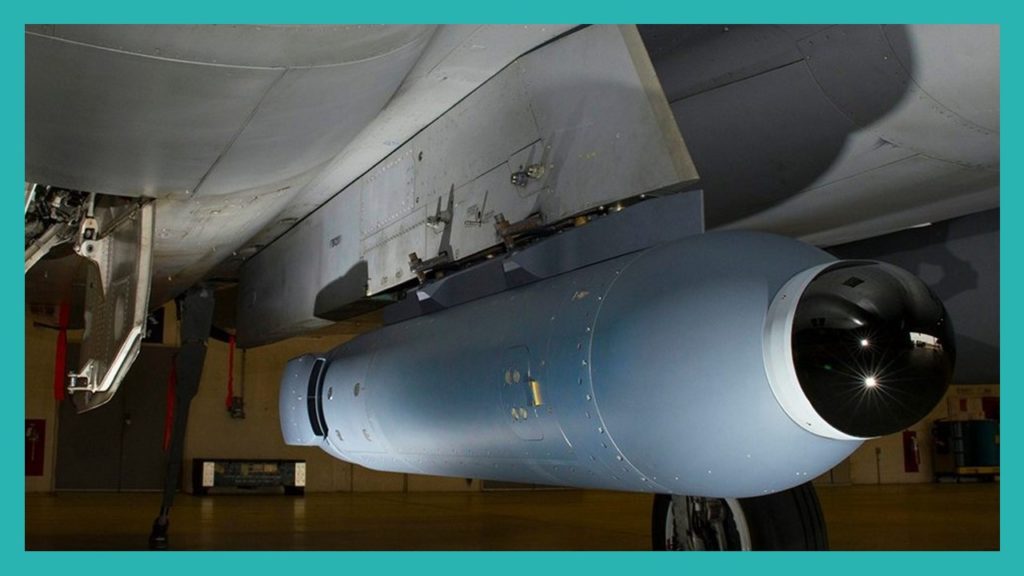
Today, IRST systems are either integrated directly to the aircraft (as is the case with modern Russian and Western European fighters), or deployed through special mission pods, such as the Legion Pod in the US.
Quwa Plus
Go Beyond the Headlines on Pakistan’s Defence and Security.
Quwa Plus gives you deeper reporting, briefings, and analysis on Pakistan’s defence programs, foreign policy, national security, and regional strategy. Follow the developments that matter to professionals, analysts, and serious readers tracking Pakistan’s security landscape.
Join ($29.99/Year) Already a subscriber?Sign in