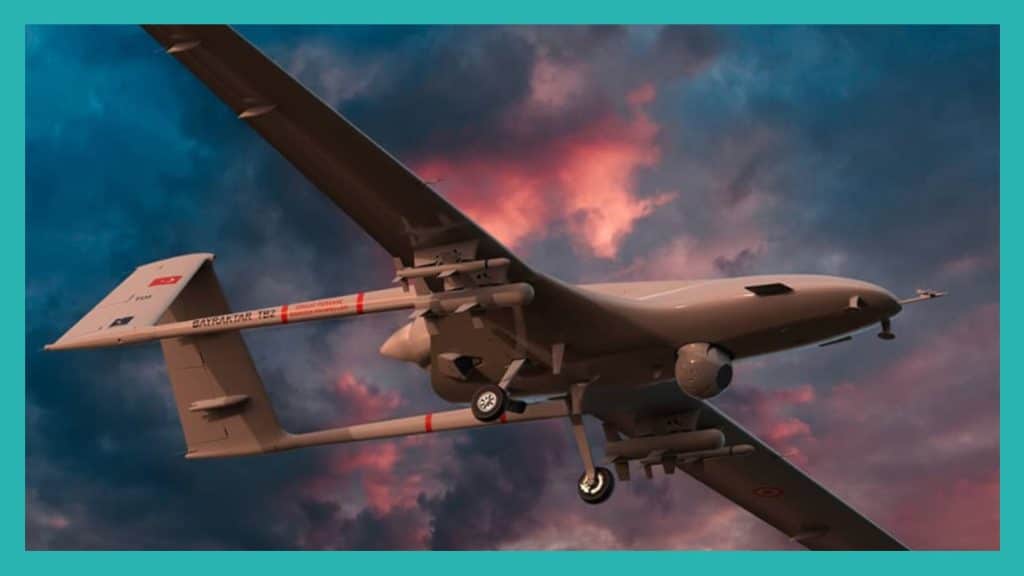
There is no doubt that drones are now a rallying emblem of Ukraine’s resistance against Russia’s invasion. Turkey’s Bayraktar TB2, for example, created enough of an impression to earn itself a place in Ukrainian folklore, and that too with its own theme song. From strike and reconnaissance medium-altitude long-endurance (MALE) aircraft like the TB2 to loitering munitions like the Switchblade, Ukraine is arguably writing the rulebook for drone use conventional and asymmetrical warfare.
Today, the United States is doubling down by transferring four General Atomics MQ-1C Gray Eagle drones to Ukraine. This is on top of the Switchblade and ‘Phoenix Ghost’ loitering munitions it is already supplying to the Ukrainian forces. One can reasonably expect Ukraine to receive additional drones in the future too.
However, ultimately, what will an abundance of drones strategically achieve for Ukraine?
When one examines the reality, they can see that Ukraine’s drone usage is having an effect. In the earlier leg of this war, Ukraine used its drones in a successful area-denial mission against Russian armour. In fact, Ukraine may have also used the TB2 in a targeting role against the Russian Navy’s Moskva cruiser.
Thus, at some level, drones work. They can inflict significant damage against conventional warfare assets, such as tanks, infantry, armoured personnel carriers, and potentially even surface-to-air missile (SAM) or air defence systems. Likewise, loitering munitions can be a potent precision-strike asset for lightly-armed units, such as infantry and lightweight vehicles.
Quwa Plus
Go Beyond the Headlines on Pakistan’s Defence and Security.
Quwa Plus gives you deeper reporting, briefings, and analysis on Pakistan’s defence programs, foreign policy, national security, and regional strategy. Follow the developments that matter to professionals, analysts, and serious readers tracking Pakistan’s security landscape.
Join ($29.99/Year) Already a subscriber?Sign in