
By Arslan Khan
Author Profile: Arslan Khan is an aerospace engineering student and an analyst/observer of Pakistani defence issues.
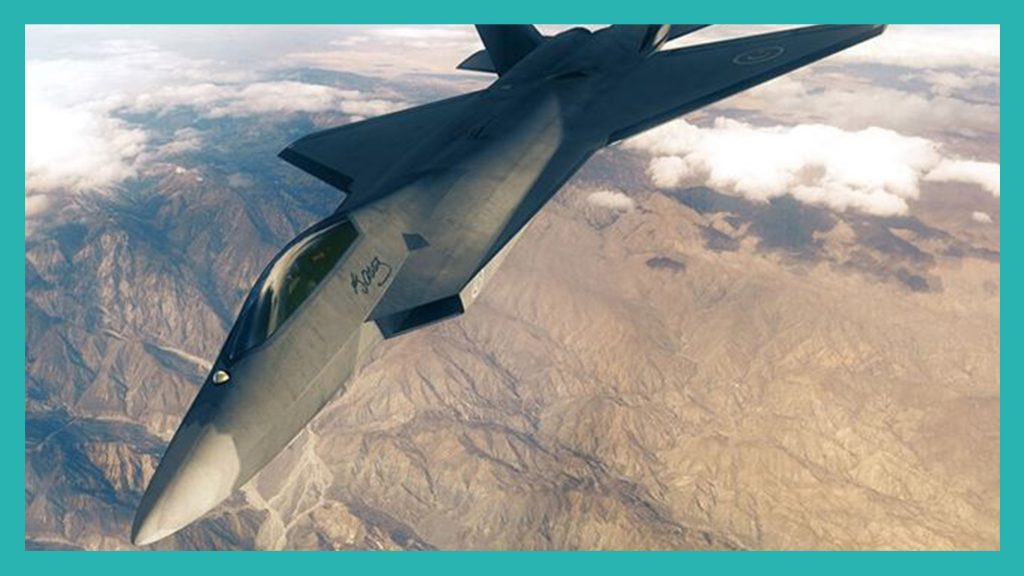
On 19 November, the Royal Air Force’s (RAF) Air Chief Marshal (ACM) Mike Wigston tweeted a comment about the TFX, Turkey’s next-generation fighter program.[1] ACM Wigston seemingly reaffirmed the U.K’s – and in particular, BAE System’s – involvement in the TFX. In 2017, Turkish Aerospace Industries (TAI) signed an agreement with BAE Systems in which the latter agreed to help design and develop the fighter.
Having lost its access to the F-35 Lightning II, the TFX is of importance to Turkey as its sole (albeit current) option for a next-generation fighter. However, Ankara was also clear about exporting the fighter; but considering its current development track (and inputs), is this a realistic option?
How Realistic is the TFX?
There is skepticism about Turkey’s ability to develop the TFX, at least within its aggressive timelines and – more importantly – indigenization goals. In January 2020, the Presidency of Defence Industries (SSB) led by Dr. Ismail Demir reportedly said that the indigenous engine-equipped TFX would fly in 2029.[2] To achieve a goal of this magnitude on one’s first attempt at an in-house fighter and engine is unprecedented.
In one respect, the TFX is fully tenable. In this context, one can trust Turkey’s ability to manage the project (from its past history manufacturing F-16s and, as of late, designing advanced drones) if it relies on reliable foreign inputs, such as engines and electronics. The Turkish industry – including both public sector giants such as TAI and private sector upstarts like KALE – was also involved in the F-35’s supply channel. Thus, its ability to support design, development, integration, manufacturing, and support is all established.
However, the caveat in this scenario is that the critical inputs – i.e., the most valuable and difficult to build – components are of foreign origin. If Turkey can take these inputs for granted, the TFX will be as capable and successful as the T129 ATAK attack helicopter and Altay main battle tank (MBT). However, if the Turks fail to secure these inputs, the TFX will suffer the same delays or export roadblocks as the ATAK and Altay.
It is simply unlikely that Turkey will develop an inhouse engine from scratch (with minimal to not outside intellectual property and support) in less than a decade. China had invested multitudes more funds in the gas turbine industry as a whole to get serviceable versions of its WS-10 turbofan engine 15 years after its first test-run in 2002 (where it could exclusively rely on the design rather than imports).
In its current roadmap, Turkey will use the General Electric (GE) F110-GE-129E to power the TFX.[3] TAI had even signed an agreement in 2018 with France’s Dassault Systèmes to co-develop various elements of the fighter using the latter’s 3DEXPERIENCE software stack.[4] It is worth noting that Embraer had used the very same platform to develop flight control systems (FCS) for its various aircraft.[5] This, it is possible that TAI is – or at least was – intended to develop the TFX’s FCS with Dassault Systèmes’ support. Currently, Turkey will source the radar, avionics, and electronic countermeasures (ECM) suite domestically.
Based on the engine and FCS alone, the TFX already has several key fault-lines. Given the recurrent spats Ankara and Paris get into, the Dassault Systèmes angle is not something Turkey can take for granted. And while Turkey’s bilateral ties with the US industry are strong, foreign policy disputes can jeopardize entire programs – e.g., Turkey’s involvement in the F-35. The causes for this instability may be Ankara’s volatility, but that volatility is a ‘fixed variable’ in that it occurs on a regular basis. In other words, the TFX would be under constant threat of issues due to this volatility.
Don't Stop Here. Unlock the Rest of this Analysis Immediately
To read the rest of this deep dive -- including the honest assessments and comparative analyses that Quwa Plus members rely on -- you need access.