Introduction
In his speech during the AirTech ’17 conference in December 2017 at Air University Islamabad, the Chief of Air Staff (CAS) of the Pakistan Air Force (PAF), Air Chief Marshal (ACM) Sohail Aman, stated that Pakistan would send two astronauts into space with China’s help by 2020.[1] In light of the unfortunate reality that Pakistan did not maintain a sufficiently robust space program to undertake a feat such as that on its own, the promise was met with a mixed response, with some quarters skeptical of Pakistan doing much more with the opportunity than simply sending people into space (i.e. not conducting research as is generally expected of state-sanctioned astronauts and manned space missions).
However, this might be an unfair assertion considering the current PAF CAS’ commitment to not only securing the long-term requirements of the PAF through domestic industry inputs (i.e. Project Azm), but to implement it such that the Pakistani manufacturing and research and development (R&D) base can substantively grow in concert. Overall, the mission to send-up astronauts may have less to do with the event and more to do with building national excitement towards space development, something that had gotten lost in national narratives since the initiation of the country’s nuclear weapons program.
Objectives
Pakistan’s Space and Upper Atmosphere Research Commission (SUPARCO) deserves an article or report in its own right, especially in terms of its history, achievements and its gradual remission since the 1970s. However, the focus for this piece is to discuss Pakistan’s current space development plans, especially its “Space Vision 2040” initiative which basically seeks to revive SUPARCO as a mature and, above all, a truly technologically progressive entity that could be analogous to other space development programs, not the least Indian Space Research Organization (ISRO). This is not to say SUPARCO will match ISRO by 2040, but rather, the hope is that SUPARCO could become (from 2040) an entity that undertakes extensive research and development (R&D) of satellite technology, rocket propulsion, air-breathing engines and other areas of interest to space development and national security. Ultimately, sufficiently meet national needs.
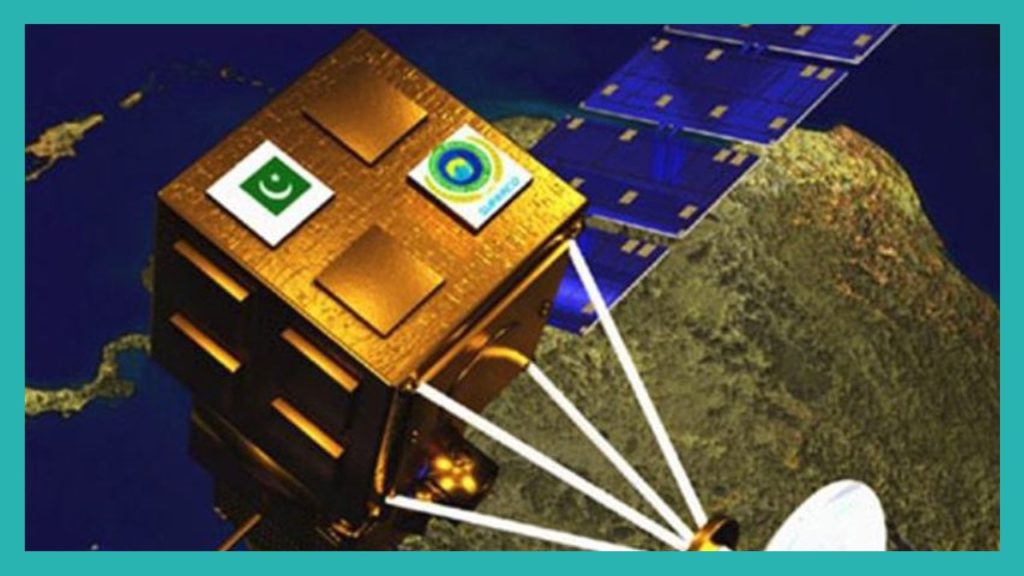
Launched in 2012, Space Vision 2040 is the intermediary step comprising of near-term objectives for national requirements and to position SUPARCO to – in the words of then SUPARCO Chairman, Maj. Gen. (retired) Ahmed Bilal – “make, produce and launch our own [Pakistan’s] satellites.”[2] From 2012 to 2020, SUPARCO should deploy at least three remote sensing satellites (RSS), each of “different types” in terms of “their applications.”[3] However, this is conditional on state-sanctioned requirements, which “will dictate the number of satellites the country needs.”[4] Prior to announcing Space Vision 2040, China had launched the PakSat-1R communications satellite for SUPARCO. PakSat-1R is being used for television broadcasting, telecommunications and secure broadband internet connectivity.[5] Maj. Gen. (retired) Ahmed Bilal had indicated that another communications satellite could be in orbit by 2021.[6]
Quwa Plus
Go Beyond the Headlines on Pakistan’s Defence and Security.
Quwa Plus gives you deeper reporting, briefings, and analysis on Pakistan’s defence programs, foreign policy, national security, and regional strategy. Follow the developments that matter to professionals, analysts, and serious readers tracking Pakistan’s security landscape.
Join ($29.99/Year) Already a subscriber?Sign in