On 06 May 2020, the RAND Corporation published an article outlining several challenges many countries face in their efforts to deploy long-range surface-to-air missile (SAM) systems.[1] The main point of the piece is that the upfront cost of long-range SAMs, such as the S-400, are not indicative of the true cost required to exact enough value out of those systems. Rather, to effectively use long-range SAMs, the end-user must invest in different radar types to cover blind spots, build a secure, high-speed information exchange (i.e., data link) system to share target tracking data, and fine-tune training and processes to eliminate errors.[2]
In other words, the end-user must acquire and acclimate to an eco-system of high-cost assets before even contemplating the induction of a long-range SAM. Otherwise, the end-user will either fail to use the long-range SAM effectively, or worse, risk losing it to enemy fire. In terms of the latter, for example, the enemy can saturate an air defence battery with a large number of cruise missiles.[3] In fact, this is one of the ways Pakistan can potentially work to counteract India’s S-400, and wider air defence network in general.
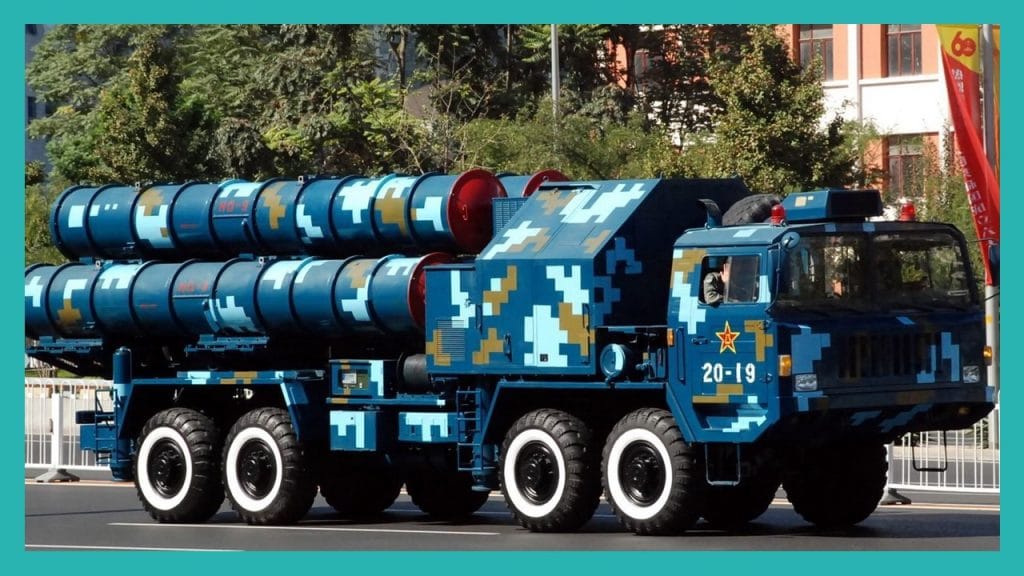
However, on the other end of the spectrum, one can also argue that Pakistan also built the eco-system it would need to one day employ its own long-range SAM. Indeed, there have also been reports of Pakistan expressing interest in such a system. In 2018, a Ministry of Defence Production (MoDP) official told Russian News Agency TASS that the armed forces were studying the feasibility of procuring three or four FD-2000 batteries from China.[4] But Pakistan’s interest in the FD-2000 dates back to the early 2000s, and though it has not followed through on it yet, in the years since it built an eco-system to fully leverage it.
Project Vision: Eliminating Blind Spots, Giving Situational Awareness to All
In 1999, the Pakistan Air Force (PAF) started ‘Project Vision,’ an initiative aimed at building one situational awareness picture using land, sea, and air-based assets.
The single ‘Recognized Air and Maritime Picture (RAMP)’ leverages the PAF’s airborne early warning and control (AEW&C) aircraft and the army and navy’s land-based radars. The RAMP offers 24/7 coverage of both Pakistani and foreign territory, with the latter reaching some several hundred miles across Pakistan’s borders on both land and sea. The latter varies based on the location of the ship.[5]
Quwa Plus
Go Beyond the Headlines on Pakistan’s Defence and Security.
Quwa Plus gives you deeper reporting, briefings, and analysis on Pakistan’s defence programs, foreign policy, national security, and regional strategy. Follow the developments that matter to professionals, analysts, and serious readers tracking Pakistan’s security landscape.
Join ($29.99/Year) Already a subscriber?Sign in