Quwa Premium

RIBAT-2018 (Part 1): Improving PAF-PN Interoperability Plus

Introduction:

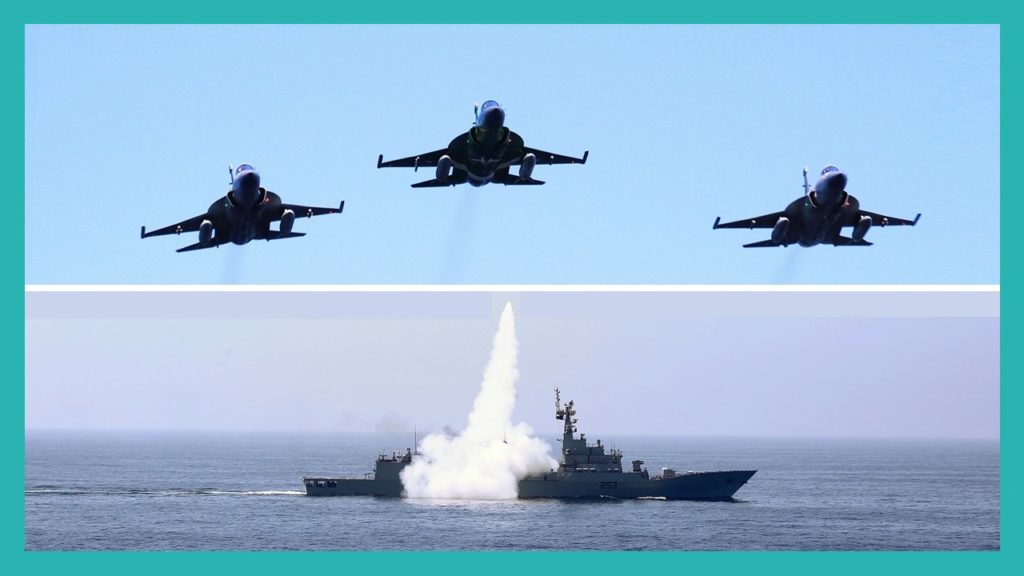
The Pakistan Navy (PN) and Pakistan Air Force (PAF) conducted a joint exercise in the North Arabian Sea – RIBAT-2018 – from 24 February to 06 March 2018 to “validate … war fighting concepts under evolving multi-faceted threats” involving both “conventional and sub conventional” threats.[1] RIBAT-2018 placed “special emphasis” on enhancing the “interoperability between naval and air assets”.[2]

The joint-exercise contributes to Pakistan’s efforts to secure its littoral waters and its exclusive economic zone (EEZ). In part, this security is to occur through a credible anti-access and area-denial (A2/AD) posture for conventional threats along with a robust coverage and reaction element asymmetrical challenges.

This specific exercise tends to both aspects, but with an emphasis on effectively leveraging Pakistan’s air assets with its naval surface platforms. For example, the utilization of aircraft radars on maritime patrol aircraft (MPA) for stand-off range targeting and guiding anti-ship missiles (AShM), among other tasks. The exercise also drew upon the PN’s coastal and logistics units.

However, RIBAT-2018’s relevance relates to another aspect, i.e. the importance Pakistan could be placing on strengthening its maritime air operations capabilities. The specific technical aspects of this area have been discussed in previous Quwa Premium articles. This article will lean on the organizational aspects of the conventional warfare aspect, such as how the PN and PAF collaborated in previous years to fulfil their respective maritime operations requirements and the future of these service arms’ cooperation.

The Pakistan Navy’s Mission

The PN’s current – and projected – force-size dictates that its primary objective is to implement an A2/AD strategy to deter activity towards Pakistan’s coastlines (and its coastal assets, such as ports), sea-lines-of communication (SLOC) or sea lanes and to secure its EEZ from enemy force presence and criminal activity. Granted, securing the aforementioned areas are the objectives of all navies (with some given additional tasks, such as expeditionary operations and sea-control in other regions), but A2/AD adds nuance that is relevant to the PN and, in general, the Armed Forces of Pakistan.

Technically, one can state that A2/AD is the role of every military. However, the reality of the term in the defence studies and analysis realm is that A2/AD is the threat or obstacle the US and Europe face in their respective strategic theatres, such as East Asia and Eastern Europe, respectively. In other words, A2/AD is the means that the likes of China, Russia and Iran would use – through a multitude of assets such as guided stand-off range weapons (SOW), submarines and aircraft, among others – to prevent US (et. al) access to an area of interest and, if that area is comprised, to deny it from being of strategic value by contesting it.

The inherent assumption in this categorization is that the party deploying A2/AD is, at the broadest level of perspective, weaker (e.g. quantitatively smaller and qualitatively inferior) than its intruder. The extent of weakness varies between countries, e.g. China is a respected power with strong conventional warfare capabilities, while Iran is currently at the fringe in the way of modern conventional weapons, thus heavily reliant on asymmetrical strategies. If seen through a spectrum, Pakistan would reside in the middle of it.

In India, Pakistan faces a superior adversary, especially in the maritime space where the Indian Navy (IN) fields surface, sub-surface and aviation fleets that are superior in quantity and quality to their respective PN counterparts (note: this is at the broad-level, there are specific nuances which are important to the PN A2/AD strategy). However, Pakistan can maintain an inherently credible naval force comprising of modern surface, sub-surface and aviation assets, it just cannot match India ‘ship-for-ship’ to deter an IN maneuver to deny Pakistan of its SLOC usage. Thus, the deterrence goal falls upon an asymmetrical A2/AD strategy.

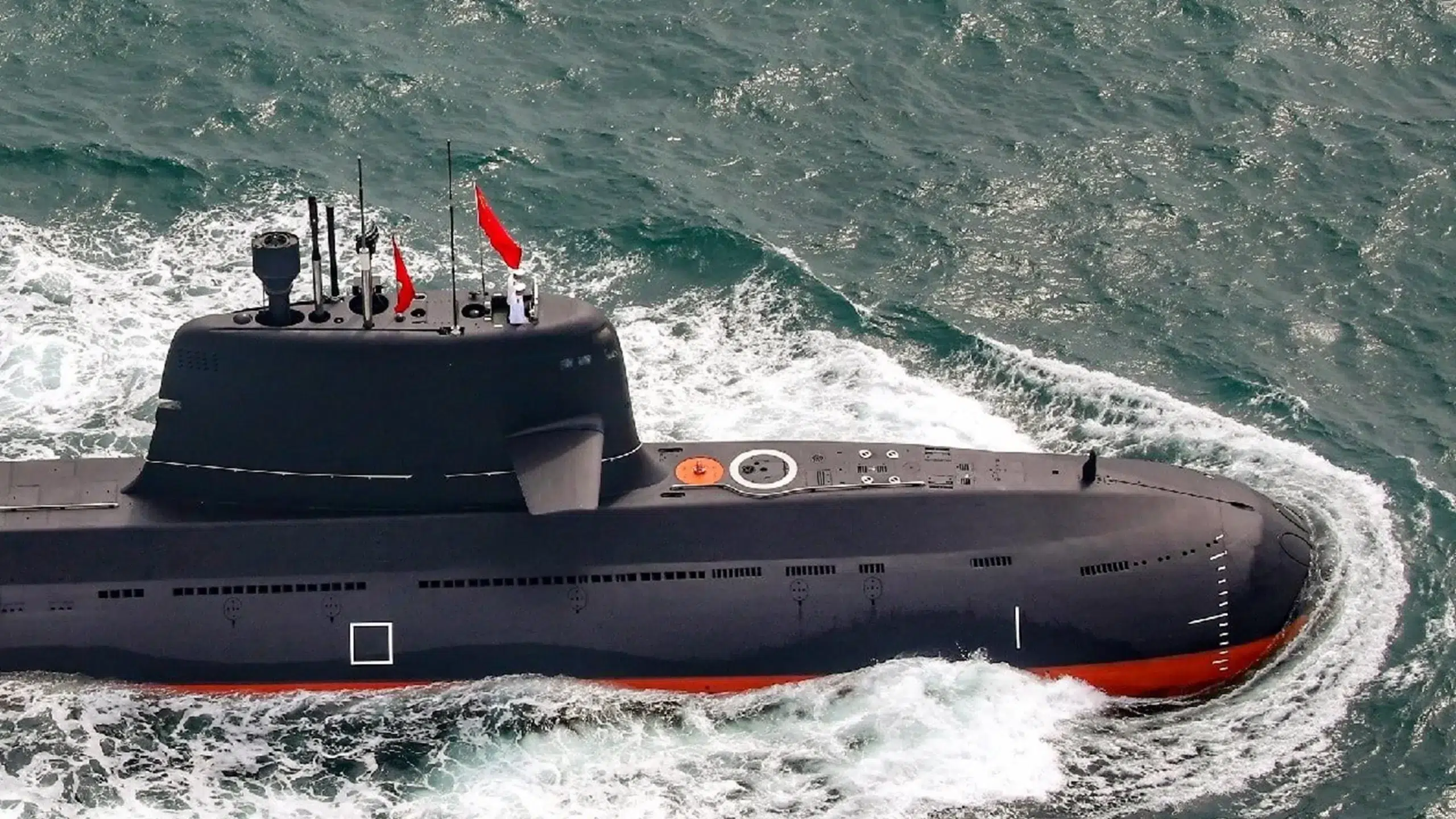
In that A2/AD strategy is the effective utilization of air assets with surface, sub-surface and land assets to (1) generate a thorough situational awareness ‘picture’ for all networked assets and (2) enable for stand-off range attacks using anti-ship missiles (AShM) and land-attack cruise missiles (LACM). Quwa Premium’s article on the Harba dual-AShM/LACM discusses the technical side of this in detail, including the long-term manifestation once several new assets – such as the Type 054A frigate and ATR-72 maritime patrol aircraft (MPA) – are inducted.[3] The desired objective of this A2/AD arrangement is to demonstrate the ability to credibly disable intruding assets through long-range strikes executed by many platforms (i.e. the concept of ‘distributed lethality’). The PAF’s relevance to the PN stems from primarily two areas: (1) boost the targeting and intelligence, surveillance and reconnaissance (ISR) element and (2) provide air cover for the PN against aerial threats, such as AShM-equipped fighters from the IN and Indian Air Force (IAF).

Air Force-Navy Interoperability

Speaking to Quwa, retired PAF Air Commodore and now historian and analyst Kaiser Tufail, outlined that a concerted effort to build a PAF maritime operations element commenced in the 1980s, specifically in 1983 with the allocation of Dassault Mirage 5PA2 and 5PA3 (via the Blue Flash IV purchase of 1978) to the No. 8 Squadron and the subsequent formation of the No. 32 Tactical Wing (32TW) at Masroor Air Base in Karachi. The Mirage 5PA3 was the first to equip the PAF with the ability – via the Agave radar – to guide AShM (i.e. the MBDA AM39 Exocet). It fired its (and the PAF’s) first AShM in 1993 during an exercise.[4]

Quwa Plus

Don't Stop Here. Unlock the Rest of this Analysis Immediately

To read the rest of this deep dive -- including the honest assessments and comparative analyses that Quwa Plus members rely on -- you need access.

Join Today

USD $29.99/Year