Timely Defence News with Verified Insights
Stay up to date with the latest Pakistani defence news with reliable research and accurate forecasting
Click Here
The Pakistan Air Force’s (PAF) development efforts for this decade are driven by three factors: First, Pakistan’s skirmish with India in 2019. Second, the ongoing Russia-Ukraine War. Third, the increasing availability of advanced military technology from key partners like China and Turkiye.
Of these, the initial catalyst the skirmish with India, which led to Operation Swift Retort, the PAF’s air operation over India in retaliation to the latter’s incursion in Balakot, Pakistan.
The Balakot episode exposed both tactical gaps for the PAF and, for the Pakistani military generally, a strategic concern. The tactical gap was the freedom India had in undertaking stand-off range strikes from its side of the border. While such an attack was an eventuality (since the PAF also had comparable munitions), the fact that it occurred in peacetime was a problem.
Up until 2019, Pakistan had relied on the idea that its nuclear weapons capability would deter enemy attacks, be it nuclear or conventional.[1] The basic rationale was that any adventure would result in escalation which, eventually, will lead to a nuclear exchange and, therefore, mutually assured destruction (MAD). Nuclear weapons were supposed to prevent military incursions by India.
Not only has India disregarded the nuclear umbrella, but it also created another problem: the risk of additional ‘probing.’ From Pakistan’s standpoint, if the PAF did not respond to the Balakot attack with Operation Swift Retort, it would be at risk of India carrying out additional strikes. These strikes could extend deeper into Pakistani territory and, in turn, create widespread insecurity and instability across Pakistan’s frontiers, especially Azad Kashmir and Northern Areas.
Nuclear weapons will not deter this activity; thus, Pakistan had to start investing in its conventional capabilities from land, sea, and air. Basically, it began taking conventional deterrence seriously, even amid economic uncertainty and fiscal vulnerability.
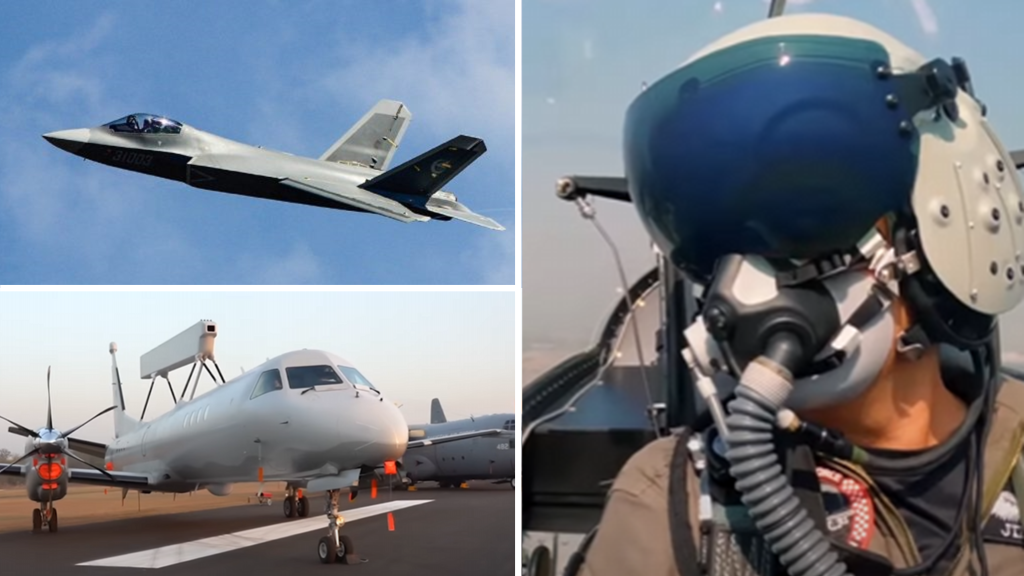
For the PAF, this conventional deterrence posture would require building upon the template of Swift Retort, arguably its largest air operation to date. Swift Retort involved a composite mix of 12 to 18 fighter aircraft, an airborne early warning and control (AEW&C) aircraft, and an electronic attack (EA) and electronic countermeasures (ECM) aircraft.[2] To the PAF, Swift Retort was a success in that it not only demonstrated a retaliatory capability, but it also inflicted greater damage unto India than what the IAF achieved through Balakot, at least in technical terms. For example, the IAF lost a MiG-21bis alongside a Mi-17 and, according to the PAF’s claims, a Su-30MKI.[3]
Quwa Plus
Go Beyond the Headlines on Pakistan’s Defence and Security.
Quwa Plus gives you deeper reporting, briefings, and analysis on Pakistan’s defence programs, foreign policy, national security, and regional strategy. Follow the developments that matter to professionals, analysts, and serious readers tracking Pakistan’s security landscape.
Join ($29.99/Year) Already a subscriber?Sign in