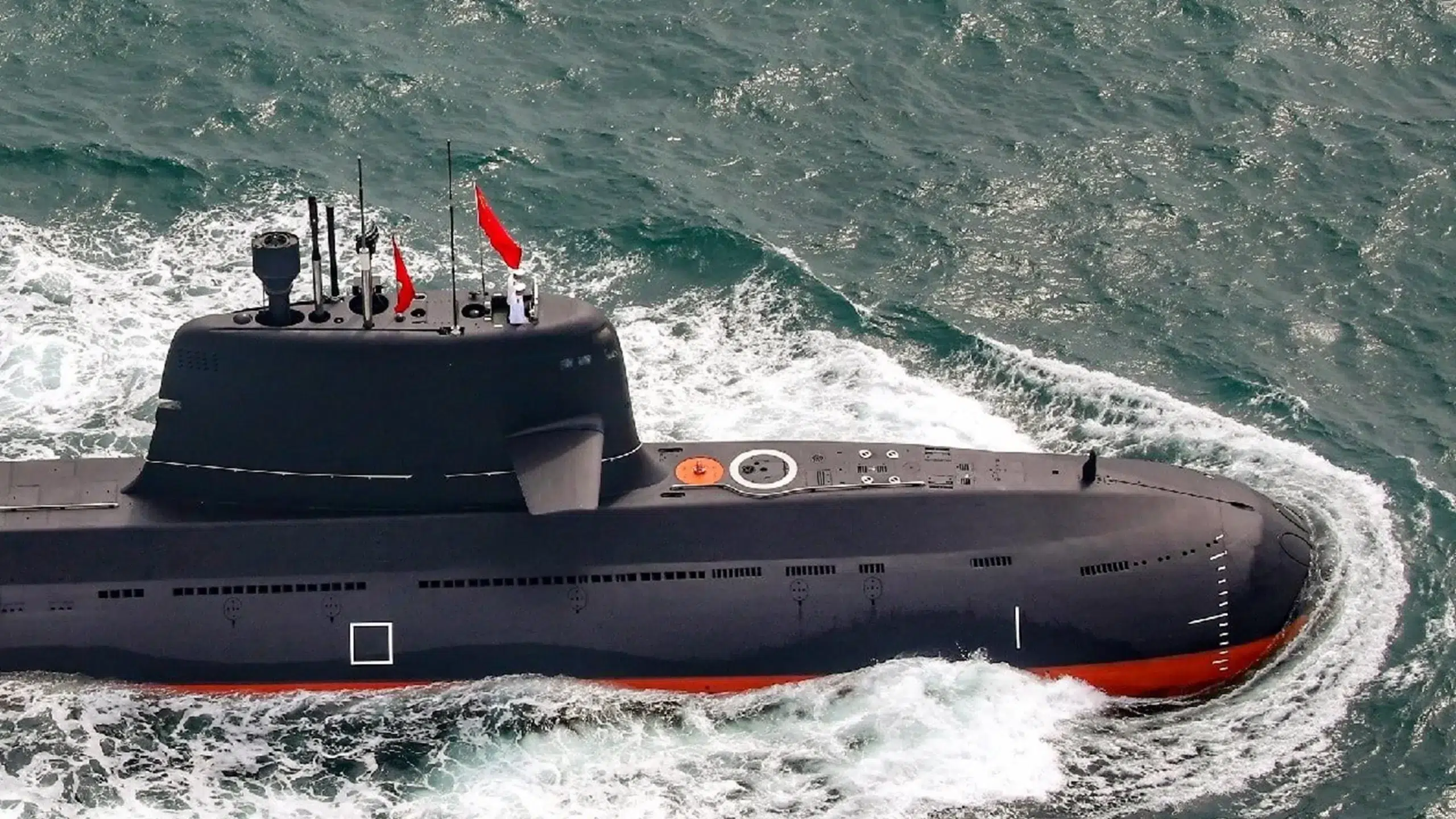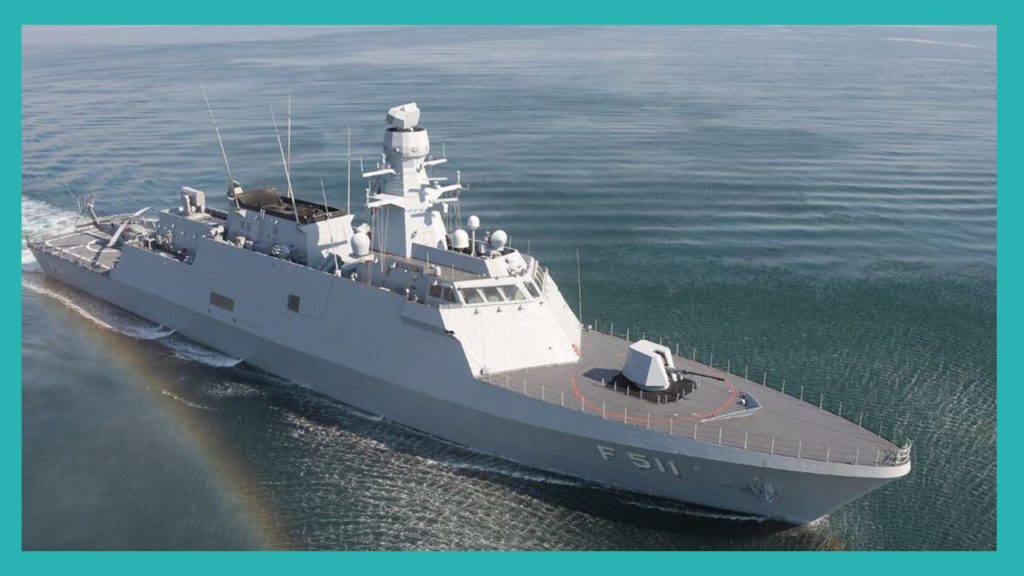
In July 2018, Pakistan signed a contract with Turkey’s Military Factory and Shipyard Corporation (ASFAT A.Ş.) for the purchase of four MILGEM corvettes for the Pakistan Navy (PN). This was following two years of negotiations (and change in prime contractors) when the PN expressed interest in the MILGEM in 2016.
Under the agreement, two of the ships will be built in Turkey at the Istanbul Naval Shipyard, while the last two will be constructed by Karachi Shipyard & Engineering Works (KSEW). The PN is to receive all four of its ships by 2024, with the first due in 2022-2023.
In addition, Pakistan was to get “complete transfer of technology and the transfer of intellectual property rights for the design of these ships.” Finally, the fourth ship was to be “designed jointly” as Pakistan’s “first indigenously designed and constructed frigate.”
During the 2018 International Defence Exhibition and Seminar (IDEAS), a PN official termed that frigate as “the first Jinnah-class frigate.” It now appears that at least the final ship will be a substantially re-designed version of the MILGEM, one that will include vertical launch system (VLS) cells.
In the middle of its multi-national exercise, AMAN-2019, the PN’s Chief of Naval Staff (CNS) Admiral Zafar Mahmood Abbasi reportedly stated that the Jinnah-class will use a 16-cell VLS to deploy the Chinese LY-80 medium-range surface-to-air missile (SAM). The PN’s Type 054A/P frigates will also use the LY-80 SAM.
When it was finalizing the deal in 2016-2017, it seemed that the PN was procuring the same general design as the MILGEM Ada, i.e., a ship optimized for anti-submarine warfare (ASW) with standard-fare anti-ship warfare (AShW) and short-range anti-air warfare (AAW) capabilities.
Quwa Plus
Go Beyond the Headlines on Pakistan’s Defence and Security.
Quwa Plus gives you deeper reporting, briefings, and analysis on Pakistan’s defence programs, foreign policy, national security, and regional strategy. Follow the developments that matter to professionals, analysts, and serious readers tracking Pakistan’s security landscape.