
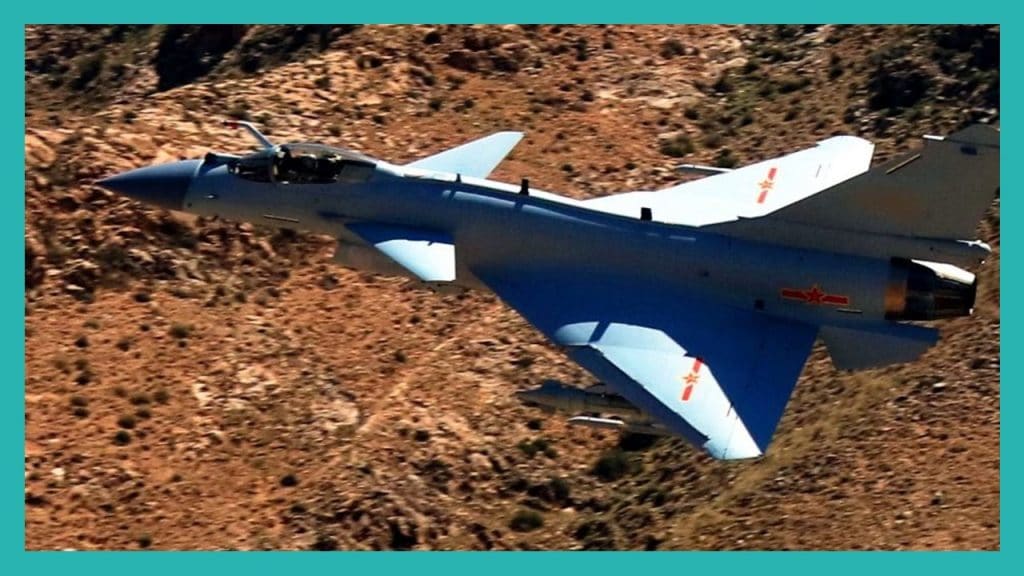
On 29 December 2021, Pakistan’s Minister of Interior, Sheikh Rasheed Ahmed, revealed that the Pakistan Air Force (PAF) will induct J-10 fighter aircraft from China. Ahmed said that the PAF will induct the aircraft by 23 March 2022, i.e., in time for the country’s annual national day parade.
The PAF has yet to comment on the matter. However, multiple observers following the PAF’s procurement activities have confirmed that the PAF will acquire the J-10CE, with deliveries slated to start in 2022.
Not a Surprise: Off-the-Shelf Fighters Were Always on the Radar
The PAF was seeking an off-the-shelf fighter to complement its fleet modernization strategy since at least 2016. Initially, the PAF had sought additional F-16C/D Block-52+ so as to expand its fleet of 18 aircraft. But the deal fell through over the U.S.’ refusal to let Pakistan use Foreign Military Financing (FMF) to help fund the acquisition. The F-16 contract – and, in all likelihood, the PAF’s hope for additional F-16s in general – fell through, thus prompting the PAF to seek alternatives.
In 2017, then PAF Chief of Air Staff (CAS), Air Chief Marshal (ACM) Sohail Aman, said, “Pakistan definitely has to induct new aircraft. We have both Chinese and Russian options.” This statement may have indicated the PAF was choosing between the J-10CE and, potentially, the Su-35.
However, a Russian fighter was unlikely for many reasons. First, Moscow is reluctant to sell big-ticket arms to Pakistan out of fear of losing its much larger market in India. Second, the Su-35 at the time was offered as a tightly integrated package. The PAF likely wanted several key modifications that Russia was unwilling or unable to cost-effectively support. Russia generally preferred countries to buy the Su-35 as configured. Third, acquiring the Su-35 would have forced the PAF to add an entirely new operating stack (i.e., training, maintenance, logistics, weapons, interoperability processes, etc). This would have been time-consuming and, above all, very costly. The PAF likely preferred sticking to familiar American and Chinese systems.
With the F-16 off the table, the only realistic off-the-shelf fighter solution was the J-10CE. The J-10CE fits within the PAF’s fiscal constraints and comes from a willing supplier. In fact, China is likely offering a type of credit or financing arrangement to help Pakistan pay for the fighters.
Ultimately, the PAF likely greenlit the J-10CE purchase several years ago. Interestingly, the previous PAF CAS, ACM Mujahid Anwar Khan, had hinted towards an off-the-shelf fighter in 2020. In an interview, ACM Khan said, “We have to be aware of modern technologies, and if the acquisition of a new fighter fits into our doctrine then we will try to acquire it. The balance has to be maintained.”
The PAF set a criteria for the off-the-shelf fighter – it must introduce a significant net-gain in terms of its capabilities. Since the JF-17 Block-3 was already delivering a AESA radar plus a new integrated electronic countermeasures (ECM) suite, the PAF must have sought the J-10CE for its air-to-air missile (AAM) stack.
Quwa was told a number of times that the availability of the PL-15 was not a given. In fact, in 2018, well-placed sources told Quwa that the PAF would likely integrate an improved SD-10 variant with the Block-3. However, in 2021, Aviation Industry Corporation of China (AVIC) added the PL-15E – a long-range AAM with a reported range of over 140 km – to its catalog of export-ready solutions. In any case, the PAF must feel that it is getting a significant improvement in its air-to-air capabilities through the J-10CE.
Though the initial J-10CE batch may involve 18~24 aircraft, the PAF is unlikely to stick to such a low number of aircraft. When using national funds to finance procurement, the PAF always committed to purchasing 90 units of each aircraft type. In fact, one can see this from the PAF’s procurement history with the Mirage III/5, F-6, F-16, F-7 and JF-17. Granted, sanctions and/or a shortage of funds could (and have) cut programs short of their potential, but when it comes to planning, the PAF aims for at least 90 units. This makes sense as adding a new infrastructure base for a fighter is expensive. It is always more cost-effective to leverage an existing overhead as much as possible by adding more units of the same type.
Don't Stop Here. Unlock the Rest of this Analysis Immediately
To read the rest of this deep dive -- including the honest assessments and comparative analyses that Quwa Plus members rely on -- you need access.